Tuesday’s Federal Budget did something quietly disgraceful. It cut the funding of Invictus Australia, the charity that has helped more than 30,000 wounded, injured and ill veterans rebuild their lives through sport, recovery and rehabilitation.
The organisation was told less than two hours before the budget dropped. No consultation. No transition plan. No acknowledgement of what the money had actually been doing for men and women whose service left them broken in ways most of us will never understand.
Chief executive Michael Hartung said it best: ‘Invictus Australia is not a recreational outlet. It is a lifeline.’
The government just cut it.
Whatever you think of the Duke of Sussex, who founded the Invictus Games in 2014, the work the foundation has done in Australia is real. It is measurable. It has saved lives. The veterans it has helped do not care about royal melodramas, Netflix deals or what was said on Oprah’s couch. They care that the program gave them purpose, community, and a reason to get up in the morning when nothing else worked. The fruit is what matters, not the family tree.
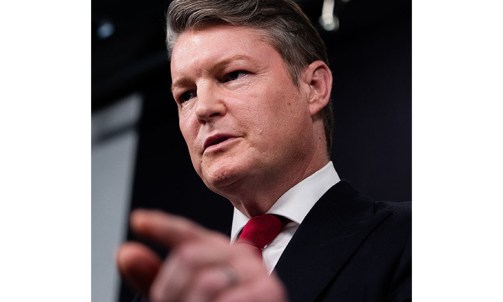
The timing makes it worse. Less than a month ago, the Minister for Veterans’ Affairs, Matt Keogh, stood at the Invictus Australia Reception and praised the organisation as ‘part of the broader veteran support system we’re actively strengthening’. He spoke about the regular feedback he received on the difference Invictus was making. In April, Invictus was a national asset. In May, it is defunded. Either the Minister was insincere then, or someone above him has overruled him now. Either way, the veterans pay.
If this were a one-off, you could call it carelessness. It isn’t. It is the latest chapter in a long, ugly history of Australian governments, Coalition and Labor alike, treating those who served as a line item rather than a debt of honour.
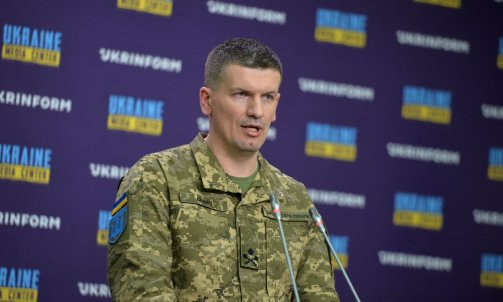
Look at the numbers. The Australian Institute of Health and Welfare has documented at least 1,677 suicides among serving and ex-serving ADF personnel between 1997 and 2021. The Royal Commission estimates the true number of preventable deaths is upwards of 3,000. The Royal Commission into Defence and Veteran Suicide handed down its final report in September 2024, with 122 recommendations after a three-year inquiry. It found that female veterans take their own lives at a rate 107 per cent higher than the general population. For male veterans, the rate is 42 per cent higher. The commissioners pointed out that there have been around 60 inquiries into military culture over five decades from which they produced around 750 recommendations. Few have been met. Royal Commissioner Nick Kaldas said the bluntest thing a senior official can say about his own government: that many in power had simply turned a blind eye, that they felt the problems were too hard, or that they ‘didn’t care enough to tackle’ them.
Then there is the housing. Around 6,000 Australian veterans are homeless on any given night. That is three times the rate of the general population. These are the men and women we sent to Afghanistan, Iraq, East Timor, the Solomon Islands, and on peacekeeping deployments across the globe. They came home with injuries, trauma, broken marriages, and the slow realisation that the country they served had quietly moved on without them. Only 1.1 per cent of homeless veterans actually access homelessness services. The comparable figure for the general homeless population is 3.4 per cent. Some are sleeping in cars. Some are couch surfing. The Royal Commission specifically recommended that housing vulnerability be assessed as part of military transition. The recommendation is sitting on a desk somewhere while the government writes media releases about its commitment to veterans.
Consider what this same budget did find money for. In a budget that grew by $47.5 billion, the government could not locate the few million required to keep a veterans’ charity operating. It could, however, locate an extra $58.5 million for the ABC, lifting the national broadcaster’s funding to $1.28 billion. The ABC, which most veterans would not consider a friend, got a pay rise. Invictus got the chop. The Commonwealth also found $5.4 million in tax concessions to ensure that players and staff of the new PNG Chiefs NRL team can pocket their salaries tax-free. The take-home pay of a 1.2 million contract for a footballer based in Port Moresby is a budget priority. Our veterans are not.
Into this gap stepped Gina Rinehart. Last month, Hancock Prospecting committed $200 million to acquire hotels, motels and apartment blocks and turn them into veterans’ housing. It is the largest private donation for Australian veterans in our history. Rinehart, named the Honorary Guardian of Australian Veterans by Soldier On, called the homelessness crisis a ‘national crisis and disgrace’. She also offered a list of practical suggestions that nobody in Canberra seems to have considered. Open the unused military barracks at Leeuwin and Irwin in Western Australia. Repurpose empty federal office space. Stop duplicating departments between State and Commonwealth so that money goes to people rather than payroll. None of this required a working group, a discussion paper, or a roundtable. It required someone to care enough to act.
That is the whole problem. Veterans are not asking for sympathy. They are asking the country they served to keep faith with them. They want housing, mental health support, recognition, due process, and continuity of the programs that actually work. Invictus works. The Royal Commission documented in painful detail what does not. And now the Albanese government has axed the funding of one of the few organisations quietly doing the job the Commonwealth refuses to do properly itself.
There is something wrong with a country that can find money for a thousand other priorities but cannot find a few million dollars to keep a veterans’ charity running. There is something more wrong with a country where a private mining magnate has to write a $200 million cheque because the federal government will not house the men and women it once sent to war.
A nation reveals its priorities in its budget, not in its ceremonies. We can say ‘lest we forget’ as often as we like. The budget says otherwise.