The way the mainstream media talks about populism and the manifest anger of voters is deeply frustrating.
Anger is an emotion that is always directed towards an object. Merely describing anger as the root cause of so-called populism is a way of avoiding the question: What is it they are angry about?
And it is facile to write, as they do, that in Farrer and elsewhere we saw anger directed ‘towards the major parties’ or ‘at a political system they feel is broken and unfair’ (in the words of the ABC).
Millions of Australians are angry at the major parties, but for very specific reasons, ones quite accurately delineated between ALP, Liberal, and National, thank you very much.
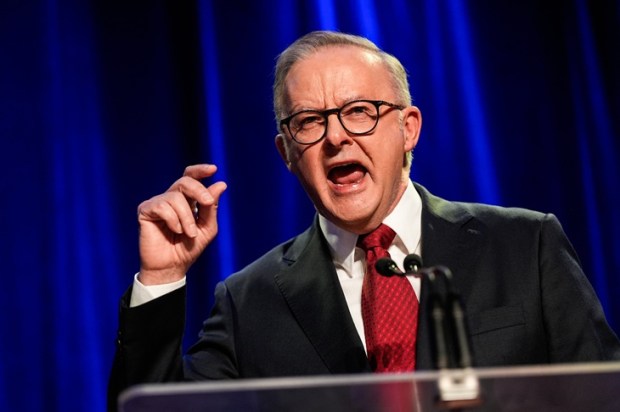
This week’s budget encapsulates why many are angry at the ALP. It is the final repudiation of the social contract that then-ALP Prime Minister, Bob Hawke (1983-1992) tried to engineer, which had two key elements:
- Legislate for a more dynamic free enterprise economy to sustainably fund the expanded welfare state and health system the party desired; and
- Preserve a unified nation with ‘no hierarchy of descent’ where ‘commitment (to Australia) is all’.
The budget reveals the government’s active hostility towards the free enterprise system that enables the generation of wealth, implementing policies directed against holders and deployers of capital, with the sole aim of income and wealth redistribution.
Projections of stable economic growth in that environment are fanciful. Private sector investment is collapsing, the federal government continues to expand past record levels with unsustainable deficits and debt, and mobile capital will be even more encouraged to pass over (if not flee) Australia.
The efforts to portray broken promises (capital gains, negative gearing, and more) as ‘tough decisions’ involving great deliberation are performative. What we are seeing is the real agenda revealed (an agenda deliberately hidden after Bill Shorten was way too frank in 2019). The current weakness of the Opposition and disunity on the right is the chance to put the original agenda into action.
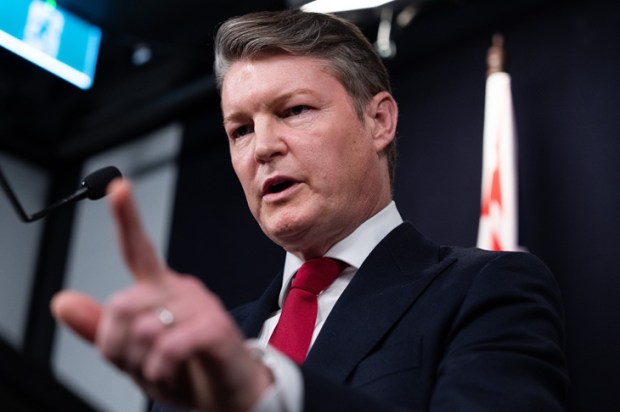
We all know that the Treasurer, Dr Chalmers, wrote a doctoral thesis about Paul Keating. The sad thing is Dr Chalmers did not write an economics PhD about how Keating as Treasurer helped set us up for 26 years of uninterrupted economic growth, but rather a political science thesis on Keating’s leadership style. Eighty thousand words literally focused on the style not the substance. What a waste.
The ALP’s financial mismanagement, and its impact on the cost of living, is why so many voters are angry with them. But does that mean they will vote for the Liberals and Nationals? Well, no, not necessarily, because those parties in their most recent period in office, especially post Covid, diminished their claims to sound fiscal management. A long, slow grind back towards a balanced budget was replaced by a spendathon justified by an unnecessarily destructive shutdown of the economy and much of society, with tyrannical premiers declared a protected species.
NDIS reform was ‘off-limits’ and Malcolm Turnbull gave us Snowy Hydro 2.0, a second-rate pumped hydro scheme which he laughably said would cost $2 billion. It is now on track (under ALP stewardship) for $40 billion plus.
The Prime Minister and Dr Chalmers are harnessing the ‘OK Boomer’ memes of social media to pit the younger generation against older cohorts, but the first corrective to that strategy is to look at what life has been like for the latter. IPA Adjunct Fellow and clinical psychologist, Clare Rowe, had a very thoughtful article in the Australian Financial Review:
Generation X, broadly those now in their mid-40s and 50s, sits squarely in the middle of the economy and the family system. They are at peak earning years, often with large mortgages taken on in a very different interest rate environment, raising school-aged children, and increasingly supporting ageing parents.
These are not marginal pressures. They are cumulative and sustained, and they sit largely outside the current policy focus.
That is psychological insight, drawn in part from clinical practice, which has a political dimension:
From a psychological perspective, sustained pressure without acknowledgement does not simply resolve itself. It often presents more quietly through fatigue, disengagement or a gradual withdrawal from institutions that are perceived as no longer speaking to your experience.
Some Generation X voters appear to be drifting towards parties such as One Nation – not out of a sudden ideological shift, but as a signal that they no longer feel represented by the mainstream.
And that feeling of not being heard and not being represented is directed against the Liberals and Nationals, whom they believe took them for granted, and they are further angered by those parties’ ineffectiveness at combating the ALP government’s economic crime wave. Unfair or not, those experiencing increased levels of fear and anger expect their champions to show emotions which at least mirror theirs, if not perhaps to the same degree. But in its absence, the demonstrative emotions of right-wing populism are more to taste.
As it happens, I was on the heartland side of the Great Dividing Range the day after the Farrer by-election, not far across the Murray River from Farrer, in northern Victoria. One of my old school mates told me that in their Covid response the Liberals under Morrison broke the trust that he had in them all his adult life, and they would never get it back.
Farmers to whom I was speaking were extremely interested in how the water management issue played out in Farrer. We must never forget that the key fact of Australian rainfall is its unreliability – even more important than the fact that in many areas it is low. For the eastern states, the Snowy Scheme and the Murray-Darling system were built to deliver high-security water to the inland, enabling investment and intensive agriculture (the electricity was just the means to pay for it).
The mainstream media, incurious as it is, completely fails to understand that One Nation’s candidate (now MP) David Farley wasn’t talking about ‘water buybacks’ as a topical policy issue, but as the exemplar of decades of revolt against the management of the Murray Darling Basin and the relentless prioritisation of environmental flows amidst specious demands to maintain freshwater in Lake Alexandrina and out the Murray mouth.
The IPA has written about these issues for decades, and shares – more or less – the concerns of irrigators. In 2016 I appeared with two IPA colleagues at a Senate ‘Inquiry into the Social, economic and environmental impacts of the Murray-Darling Basin Plan on regional communities’ demanding (in vain) there be a proper assessment. In 2019, the IPA said End the Man-Made Drought. Rip Up the Murray Darling Basin Plan.
And now the Nationals as well as the Liberals are paying the price for the pent-up frustration. It’s not the only issue or political dynamic in Farrer, to be sure, but when David Farley is the candidate, you know it’s a big part of it (this also explains his previous flirtations with other political movements).
Groups like Speak Up 4 Water are explicit in saying (angrily) that it was the Moderate faction of the Liberal Party led by South Australians, who comprehensively outplayed those fighting for the retention of high-value water upstream for productive use.
Thus the ‘anger’ being observed is not inchoate and amorphous – it is for the most part grounded in lived experience and is a critique of very specific policies pursued by the major parties, sometimes separately, and sometimes together.
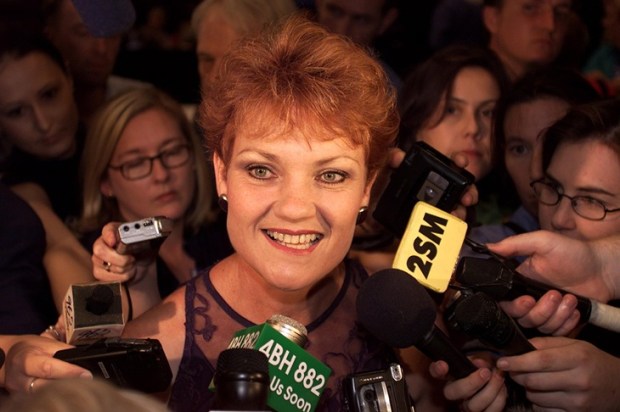
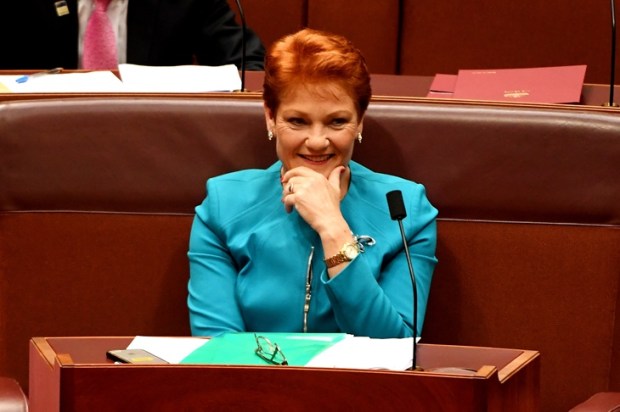
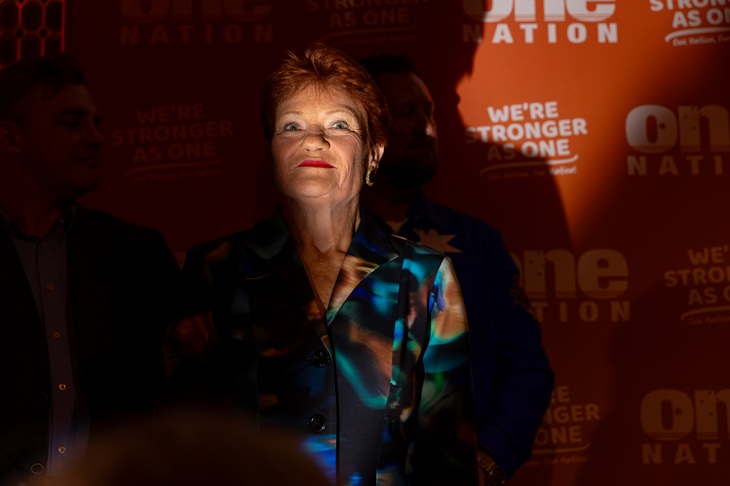
In that environment Pauline Hanson will make hay but note also that One Nation has already released more policies than the Coalition parties and has promised more to come. And many of those policies address the specific wrongs like those referred to above, and more (like Net Zero, another Morrison special).
Policy development is also a key focus for the IPA in 2026 (join here). God knows how the political realignment will resolve itself, but we are in the relatively fortunate position of standing outside the formal political structures and can concentrate on measures to restore our freedoms and free enterprise system (and the commitment to a unified nation), encouraging whomever has claims to office to adopt them now or in the future.
Scott Hargreaves, Executive Director, Institute of Public Affairs