The recent Abortion Care in Victoria report by the Animal Justice Party (AJP) and Legalise Cannabis Victoria (LCV) has been heralded by its authors as a bold step toward ‘reproductive justice’.
However, once we look beyond its emotive language and carefully curated anecdotes, a troubling truth emerges: this isn’t a call for justice, in our opinion it’s a manifesto for ideological extremism masquerading as healthcare.
In the escalating push to normalise abortion as just another aspect of ‘healthcare’, one often-repeated tactic is the use of unverifiable, emotionally charged anecdotes that present pro-life or religious institutions as cruel villains standing in the way of ‘essential’ medical care.
The following quote, featured in the AJP and LCV’s Abortion Access in Victoria report, is a case in point:
‘…a publicly funded hospital, refused to give me a D&C [dilation and curettage] for an incomplete miscarriage. Even though there was no longer a foetus there. This was after waiting 48 hours in the ER to confirm I had lost a much-wanted pregnancy. If you refuse to give medical care based on religion you should not be able to be a public hospital.’
Hospitals in Victoria, including those with a Catholic ethos, do not refuse treatment for incomplete miscarriages or other obstetric emergencies. That is an outright falsehood. Catholic hospitals across Australia routinely perform D&Cs when clinically indicated – for example, when a miscarriage has occurred and the mother is experiencing excessive bleeding, infection risk, or incomplete expulsion of tissue.
If a D&C was not performed, there are far more plausible clinical reasons:
- A D&C may not have been medically indicated. Many miscarriages resolve naturally without surgical intervention. Hospitals are not obligated to offer invasive procedures unnecessarily – especially when a non-surgical management path (watchful waiting or medical management) is safer or more appropriate.
- The timeline may not have suited the patient’s emotional expectations, but hospitals are not fast-food chains. Emergency departments are triage-based. A 48-hour wait, while distressing, is not evidence of denial of care – it may simply reflect patient volume and clinical prioritisation.
- Finally, there is no independent verification of these accounts. It could be misunderstood, misrepresented, or fabricated – as is often the case when reports rely on anonymous, unverified testimonials.
Yet such stories are exploited by activists to justify stripping Catholic hospitals of their right to practice according to conscience – despite their unparalleled record in providing compassionate, ethical care for women across every stage of pregnancy. To use this as a pretext to demand that all public hospitals be stripped of conscience rights is not just dishonest – it is totalitarian. This is not about patient care; it is about silencing opposition. When the state begins to dictate moral compliance, we cease to be a democracy and become something much darker.
The claim that abortion access is being ‘denied’ because of a hospital’s religious values is part of a calculated effort to discredit institutions that dare to see both mother and unborn child as patients deserving care. It’s also a disservice to women suffering miscarriage, who deserve accurate information, safe care, and honesty – not political manipulation.
We should demand better – better standards of debate, better policies that reflect the dignity of all human life, and a culture that recognises freedom must always be tied to responsibility. Because no amount of propaganda will change this truth:
A society that values convenience over commitment, and death over difficulty, is not progressing. It is unravelling.
This report casually claims that ‘abortion care is healthcare’ and that it should be treated like any other medical decision between a patient and a doctor. But this ignores a mountain of medical evidence revealing the severe risks posed by chemical abortions – now the most common method.
Insurance data from over 865,000 Mifepristone abortions in the US revealed that more than 1 in 10 women experienced serious adverse events, including haemorrhaging, infection, or sepsis. That’s a 22-fold increase from the supposed safety claims found on the drug’s label.
Where is the outcry? Where is the informed consent?
One of the recommendations of the report is to establish no-ultrasound abortion pathways, which any competent medical professional would recognise is a direct threat to women’s safety, as ectopic pregnancies cannot be excluded.
The Victorian abortion agenda, emboldened by this report, is actively dismantling what few safety barriers remain. The report appears to view doctors who have conscientious objections as inconvenient relics – barriers to be ‘removed’ rather than valued participants in providing ethical healthcare for all patients involved. They demand total compliance, not compassionate pluralism.
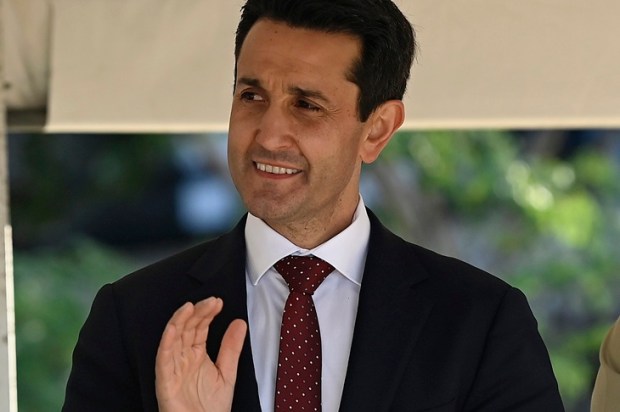
The same report echoes recent moves in Queensland, where Premier David Crisafulli has passed a motion to prevent conservative MPs from addressing abortion law reform for four years. This is not democracy. It’s enforced silence – political censorship designed to prevent debate on one of the most profound moral issues of our time.
Meanwhile, the physical and mental fallout for women remains deliberately underreported to advance a political agenda. A record linkage study in Finland found that women who had abortions were 252 per cent more likely to die within a year of the event, compared to those who gave birth – including 6.5 times the risk of suicide. In Queensland, maternal suicide following abortion remains a grim reality, with 22 such deaths documented between 2004-17, occurring at a higher rate than after women who suffer pregnancy loss through spontaneous miscarriage. Ignoring this evidence in the name of advocating for ‘equity in access’ is unethical and the opposite of healthcare.
And what of the ‘lived experiences’ the report highlights so glowingly? It cherry-picks stories that support a single narrative, while ignoring the thousands of women who have experienced abortion regret – some even seeking to reverse the effects of the abortion drug mifepristone, through progesterone therapy that supports threatened miscarriage, a process that has some evidence of successfully saving the pregnancy and unborn child, if initiated early.
The truth is, many women are not empowered by abortion – they are failed by a culture that offers death as a solution to a crisis. They are failed by lawmakers who promote abortion as a ‘reproductive right’ but neglect the support systems, resources, and life-affirming alternatives that lead to better clinical outcomes for both patients. Real choice means real options – and abortion is often a choice made in desperation, as a single permanent option, not freedom.
Let’s also talk about the taxpayers.
Why are everyday Australians – many of whom are struggling with the cost of living – compelled to pay for abortions, particularly when the majority result from consensual sex between adults who understand there are consequences to their actions? Abortion should never be a substitute for basic responsibility, or a publicly funded pass to end human life.
And before someone inevitably cries, ‘What about rape and incest?’ – let’s be crystal clear: these are horrific, tragic exceptions, for which abortion adds an additional layer of trauma to an already traumatic situation. The perpetrator of the crime should be punished, not the innocent child.
Perhaps the most chilling part of this report, is the call to strip conscience rights from medical professionals and institutions. In a country that prides itself on pluralism and diversity, this authoritarian move should send alarm bells ringing across the political spectrum.
What we’re seeing is not a campaign for compassion. It’s a campaign for compliance.
If a doctor believes that ending a healthy pregnancy is a violation of their oath to first do no harm, the state has no moral right to coerce them into complicity. If a hospital built on religious convictions refuses to electively end a human life, it should not be punished – it should be respected, as part of a diverse healthcare system.
The alternative is this: a state that punishes dissent, compels participation in killing, and silences any institution that dares to uphold the dignity of life.
That’s not progress. That’s totalitarianism.
Let’s be blunt: abortion is cheap.
Supporting a mother and her baby takes time, compassion, housing, health services, financial assistance, and community programs. But funding a quick abortion? Easy. Impersonal. Cost-effective.
Governments support abortion because it’s the path of least resistance. For every dollar spent on abortion, it takes four dollars to provide legitimate support and healthcare to sustain that life. The abortion industry – backed by ideological lobbyists – love this model. It keeps profits high and moral questions low.
The report fails to mention one glaring omission in all abortion discourse: adoption.
Australia has one of the lowest adoption rates in the Western world, which is not due to lack of demand. The system is riddled with barriers, bureaucracy, and stigma. Why?
Much of this stems from legitimate trauma over the Stolen Generations, and we must never forget those wrongs. But to let that history prevent us from offering a compassionate, ethical alternative to abortion today, is a grave injustice to women and children alike.
We’ve created a culture where:
- Killing a child in utero is ‘empowering’
- Keeping the child is ‘burdensome’
- And placing the child for adoption is ‘taboo’
The choice to carry a child and gift them to a loving family is heroic. It is selfless. It is something to be honoured, not hidden in shame. Yet governments provide no meaningful support or incentive for adoption. No national campaign. No funding for streamlining ethical, open adoptions. No narrative that says this is a brave and beautiful choice.
Why? Because adoption isn’t profitable, and it doesn’t align with the pro-abortion narrative, that ‘only two options’ exist: parenthood or abortion.
Australia stands at a moral and cultural crossroads. We can continue down the path of decline: where life is disposable, values are optional, responsibility is unfashionable, and dissent is punished, or we can choose a different path – one that embraces truth, upholds life, respects freedom, and rebuilds a culture where children are not an inconvenience, but our future; where sex is not divorced from consequence; where compassion includes acknowledging our most vulnerable patients, the unborn.
We must ask: Who do we want to be?
Because the answer is being written now – not in parliamentary bills or activist reports – but in the values we defend, the freedoms we preserve, and the lives we choose to protect.
The Abortion Care in Victoria report is not progress – it is propaganda.
It ignores evidence, silences dissent, and promotes an industry that profits from women’s pain. We can – and must – do better. The very fabric of our society and the future of our nation depends on it.
We need to promote a culture where every life is valued, where women are supported rather than shunted toward an irreversible decision, and where truth is not sacrificed on the altar of ideology.
Until then, no amount of glossy reports or virtue-signalling slogans, will cover the blood on our hands.
Ms Naomi Bunker is a Registered Nurse based in Victoria and an executive member of Pro-Life Health Professionals Australia.
Dr Melissa Lai is a Neonatologist based in Queensland and the Director of Pro-Life Health Professionals Australia.