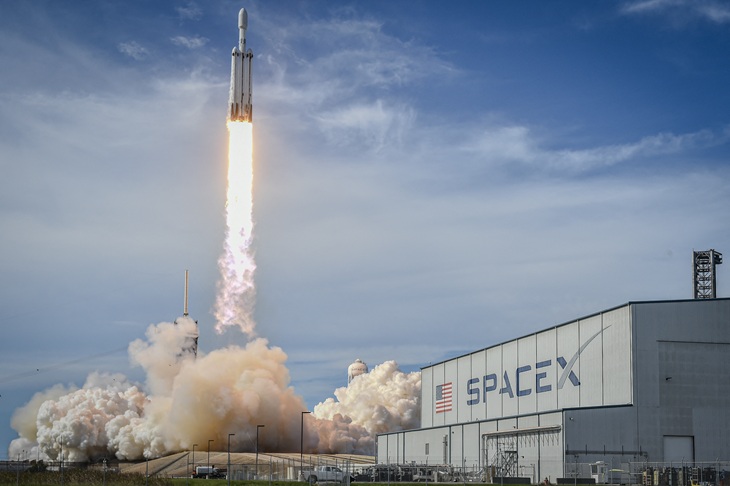
The upcoming listing of Elon Musk’s SpaceX is shaping up as this year’s blockbuster event for financial markets.
SpaceX plans to sell roughly 500 million shares at a price of $135, making it the largest IPO in history and valuing the company at roughly $1.8 trillion. Musk’s own stake alone stands at over $600 billion. Fund managers are clamouring for a piece, and Musk fans are drooling.
But before you reach for your wallet, there are a few things worth knowing.
The company lost $4.9 billion in 2025, with its primary revenue streams coming from its Starlink satellite internet service.
Musk plans to use funds raised through the offering to further develop his Starship rocket business and expand xAI’s data centres.
SpaceX has a monopoly on the low-Earth orbit launch industry, operates roughly three-quarters of the satellites in orbit, and has improved the cost of launching satellites by powers of ten.
It is worth noting that the company’s biggest revenue driver is not its celebrated rocket systems, but rather the rental of its Nvidia chips to Anthropic.
There is no denying what it does is extremely cool. But it is my view that the SpaceX IPO is a classic case of the story getting ahead of the fundamentals, and the numbers are out-of-this-world.
SpaceX claims a total addressable market of $28.5 trillion, equivalent to the entire GDP of the United States, a slippery figure that encompasses the financial opportunities in the ‘lunar economy’, space data centres, energy production on the moon, asteroid mining, and logistics to Mars.
At its current valuation, the company would trade at over 100 times sales. For context, Google went public at only ten times sales, and Nvidia, a massively profitable company, currently trades at 21 times sales.
There is no price-to-earnings ratio to speak of, a standard measurement for company valuations, for the simple reason that there are no earnings.
Some analysts have valued SpaceX at roughly half its asking price, warning that the future promise of its untested technologies and Grok AI potential remain unclear.
The Financial Times has gone further, describing it as the ‘Enshittification of the Stock Market’.
It is also expected that SpaceX will eventually merge with Musk’s Tesla, a prospect that adds yet another layer of uncertainty to the valuation.
The red flags do not stop there.
The company plans to sell 30 per cent of its shares to retail investors, well above the industry average of 10 per cent.
The cynic in me would suggest this is because retail investors are considered less sophisticated and more likely to be ‘believers’ in the story over the numbers.
And if the prospectus, full of glossy photos of rockets and the company’s stated mission to ‘extend the light of consciousness to the stars’, did not ring alarm bells, a glance at the material risks listed on page 26 should do the trick.
The prospectus cites Musk himself as a primary risk factor to the company’s future performance. His polarising public behaviour has been shown to dramatically impact the share prices of the companies he runs, a phenomenon known as the ‘Musk effect’.
It also lists the risk of satellite collisions and major debris events, known as ‘Kessler syndrome’, which could cripple the Starlink business entirely. And none of the satellites or rockets are insured.
The historical pattern with IPOs is a guide: while history doesn’t repeat, it does rhyme.
Analysis has shown that while listings often rise on their debut day, they go on to underperform the market over the following three months.
Cerebras, another recent AI-themed listing, has already plummeted 50 per cent from its peak since debuting just a fortnight ago.
Guzman Y Gomez, now down 40 per cent from its much-hyped ASX listing two years ago, serves as a painful reminder, even if it operates in a very different sector.
For many, initial public offerings are increasingly regarded as the ‘last gasp’ of capitalism: when the rivers of gold from the private sector run dry, public markets are used as exit liquidity.
‘We think the company has been significantly overvalued and investors will have opportunities to buy the stock at more attractive levels after the IPO,’ says Nicolas Owens, equity analyst at Morningstar.
Do not get me wrong. I am a genuine admirer of Elon Musk. He is one of the few true visionaries left who can tap into our collective imagination and love of science fiction.
But there is a time and a place for Elon’s sci-fi wonder, and investing in SpaceX at these prices, in my view, might not be the right time, place, or even dimension for it.
IPOs like this attract enormous headlines and fanfare, especially when the company is a household name, but investors need to remember that sound investing is one small step at a time, not a giant leap for mankind.