This year’s World Cup, already full of controversy, is being held across an unprecedented three countries: the United States, Mexico and Canada. ITV’s coverage will be based in Brooklyn with a view of the Statue of Liberty and the New York skyline, while the BBC’s fallen king Gary Lineker will be perched above Times Square making podcasts for his wealthy new paymasters at Netflix.
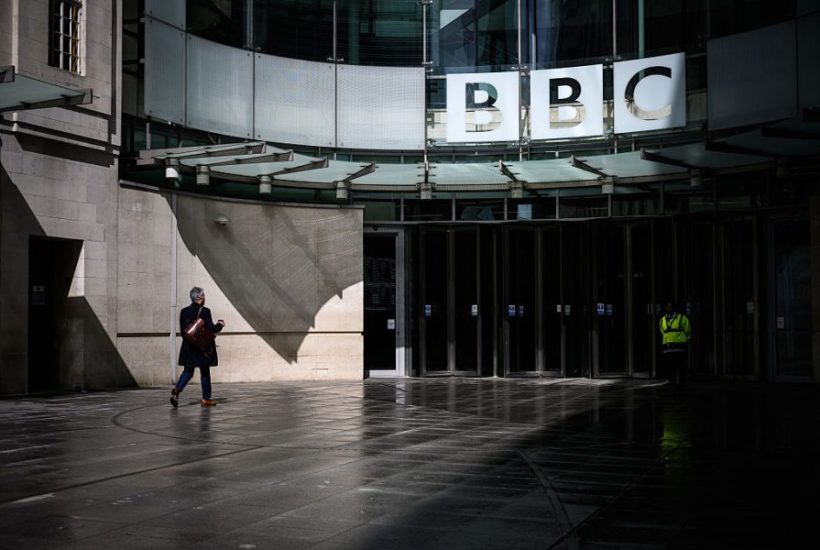
It is only the BBC itself which is stuck in the UK, with presenters and pundits based in Salford and a giant panoramic screen to make up for the lack of a real view. Match of the Day’s Kelly Cates told the Guardian she was ‘a little bit disappointed’ to be in Greater Manchester rather than Manhattan but consoled herself by thinking they’re ‘going to be in that slightly unreal, middle-of-the-night, mad World Cup kick-off time zone’ with all the rest of us. She is clearly enthused about the group game between Austria and Jordan which starts at 0500 BST.
Being in Salford makes the BBC an easy target for its rivals with airline tickets, and there is still a whiff of metropolitan condescension about anything coming from the north of England. But it is a decision driven more than anything else by the corporation’s finances. The days when I was director of sport – in which we could afford to send 437 people to the 2008 Beijing Olympics – have gone, and a World Cup spread across thousands of miles would have been an even greater logistical challenge. At least this way there is no tabloid frothing about transport and hotel bills, and it underlines the reality that licence fee income is dwindling.
It is a decision driven more than anything else by the BBC’s finances
But there is another powerful reason too. Wherever the presenting teams are, they are watching most of the matches on television monitors. ‘How many games are in Brooklyn?’ asks one veteran broadcaster, knowing that the answer is zero. What’s at a premium if you go abroad is an iconic view rather than being at the heart of the action. For decades, broadcasting organisations have also commentated on some sports events in remote locations – ‘off tube’ in the jargon – and audiences have seldom spotted the difference. One broadcaster I spoke to dates his first off-tube World Cup back to 1998.
For the biggest events, lead commentators being in the stadium is still standard practice – and that will be true for both the BBC and ITV at this World Cup. But some sports do not lend themselves to on-site commentary. I had somehow assumed before I worked in TV sport that the London Marathon team were floating above the course in a hot air balloon – ‘there’s Mo Farah, just below us now’ – but the truth is that for years they were in Television Centre, some miles away from the action.
The Covid era made this kind of thing more common, with a number of Premier League matches being commentated on remotely, and technology has also played its part. ‘The quality of the circuits has improved, and the logistics are easier,’ says one producer. The explosion in the number of hours available across digital platforms means concentrating the effort in a broadcast centre becomes even more economical.
The virtual studios can look great, too. For the Tokyo Olympics, travel restrictions forced the BBC into creating Japan in a green box in Salford, which it did with some aplomb. This included a twinkling city skyline and, beneath the presenters’ feet, a pond of fishes – presumably to create a freshly available sashimi vibe. For this World Cup, they have unveiled the latest kit – described by bosses as ‘beautiful and state of the art’ – which they claim will give us the illusion of being in the host cities and stadiums throughout the lengthy group and early knock-out phases. The BBC is, however, still planning to send its stars out to America for the semi-finals and final, just to be sure.
And that points to the potential downside of not deploying in significant numbers to host countries. I have no problem justifying the number of staff we sent to Beijing or to other landmark events because they worked extremely hard: audiences loved the output and the BBC was an award-winning global power in sports broadcasting. When they had finished their shift, young producers could use their passes to get into some of the Olympic events – and it’s only by seeing them in real life that you fully understand the sport. If our staff also got a flavour of modern China, so much the better.
It is, after all, one of the best traditions of UK broadcasters to send reporters and camera operators around the globe to capture events firsthand and to convey to those of us back home what it’s really like on the ground. It is unlikely, I’d say, that someone who has never been to a World Cup match can truly convey its atmosphere. So while I applaud the enterprise in Salford and wish all the broadcasters well in their labours, I hope we are not going to lose that vital experience. Screens and digital technology are wonderful things, but it is the unfiltered human reaction to being live at the biggest moments that matters too.