There is something wonderfully iconic happening at Harvard University.
Just as artificial intelligence (AI) threatens to make some university education redundant, students are competing for places in a course requiring them to read books. Actual books. From beginning to end. This is mind-blowing stuff.
Harvard’s Humanities 10, affectionately known as Hum 10, has become an unexpected academic attraction. According to the Wall Street Journal, applications have risen by 40 per cent, with 180 students competing for just ninety places. Students read a book a week, write essays and debate. Digital devices are unwelcome. Intellectual curiosity is compulsory.
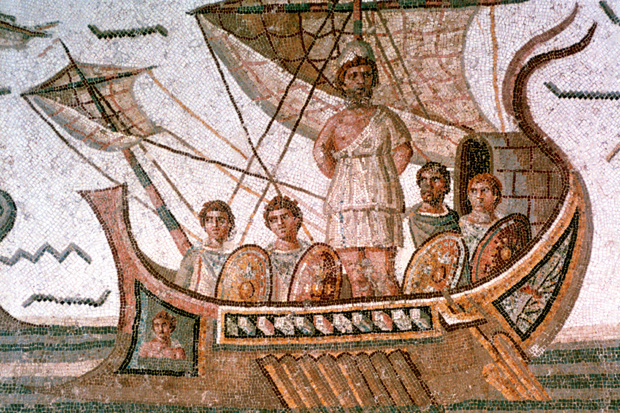
The reading list includes Homer, Plato, Shakespeare, and James Joyce. There is no shortcut through ChatGPT. Students must demonstrate that they have understood what they have read. Once again, this is mind-blowing stuff. This might seem eccentric in an age obsessed with technological progress. It may instead signal a reassessment of what makes a university graduate valuable.
Australia should pay attention.
In 2020, the Morrison government introduced its Job-Ready Graduates reforms, increasing student contributions for humanities subjects while reducing them for disciplines considered more closely aligned with employment demand. For subjects including history, philosophy and politics, the increase was an extraordinary 113 per cent. The message was unmistakable. Australia needed more graduates with practical skills, particularly in science, technology, engineering, and mathematics (STEM). Studying history, politics and philosophy was apparently an expensive indulgence. There was an obvious problem. Governments were attempting to predict which skills would remain valuable over the working lives of students who had not yet entered university.
Then AI arrived.
For decades, computer programming required specialist knowledge of programming languages. Technical proficiency opened doors that remained closed to those who could not write code. Increasingly, however, the human interface with these systems is ordinary language. Someone can now describe a problem and instruct AI to produce software or analyse information. The engineers have not become redundant. Someone must still assess and correct these systems. But the ability to tell a machine what to do, and recognise when it is wrong, is becoming valuable in its own right. And this creates an intriguing possibility. The quality of a person’s written instructions may become as economically significant as their technical proficiency.
Consider two employees asking AI to examine a complicated government policy. One asks the machine to summarise it and suggest improvements. The other specifies the institution’s historical purpose, its statutory obligations, the difference between efficiency and effectiveness, the interests of affected citizens, uncertainties in the evidence and circumstances under which an apparently successful reform might nevertheless be unjust. Same technology. Potentially vastly different results. The distinction is not simply vocabulary. It is knowing which questions to ask, which assumptions to challenge and what the machine might have misunderstood.
That is precisely where a serious humanities education becomes interesting.
Shakespeare develops sensitivity to language, motive, and ambiguity. Plato forces us to examine assumptions. History reminds us that similar events may have very different causes. Philosophy requires arguments to be constructed, challenged and defended.
Writing matters too. Constructing an argument without outsourcing the intellectual work forces students to organise their ideas, confront contradictions and distinguish what they know from what they merely assume. Precise language also permits precise distinctions. Legitimacy is not popularity. Compliance is not consent. An AI system may produce a confident answer without recognising why the difference matters. The great irony is that the humanities may become more valuable not despite AI, but because of it.
Australia already has institutions taking the humanities seriously. The Ramsay Centre for Western Civilisation supports Great Books-based undergraduate programs at the University of Wollongong, Australian Catholic University, and the University of Queensland. From 2027, the University of Melbourne will also offer Ramsay-supported humanities scholarships, under a slightly different arrangement. These programs invite students to confront competing ideas about justice, authority, liberty, and human nature. That is hardly nostalgia. It is an education in questions that technological calculation alone cannot settle.
Perhaps the larger lesson is not that humanities degrees need to become more technical. It is that we have spent far too long misunderstanding for what a humanities education is actually. For years, universities have been judged increasingly by how effectively they prepare graduates for particular occupations. The humanities have accordingly been obliged to defend themselves against the accusation that studying Homer or Shakespeare is of little practical use.
Yet this rather misses the point.
History is not simply about remembering dates. It asks why events unfolded as they did, why people acted as they did and why good intentions have so often produced disastrous consequences. Literature confronts us with the complexities of human nature. Philosophy asks not merely how we should accomplish something, but whether we should pursue it at all. An AI system might explain Edmund Burke’s political philosophy in seconds. It cannot relieve a student of the responsibility of deciding Burke was right.
Nor should we confuse producing an argument with understanding one. A machine can assemble a persuasive defence of liberty or justice. But deciding what these ideas mean, why they matter and how they ought to guide our conduct remains a human responsibility. This is why Australia’s treatment of the humanities deserves reconsideration.
The Albanese government should reverse the financial penalties imposed on humanities students under Job-Ready Graduates. It is a peculiar arrangement when a government praises critical thinking while making the disciplines devoted to cultivating it considerably more expensive. But the problem goes deeper than fees. We have allowed employability to dominate our understanding of education, as though the university was merely a training institution tasked with filling vacancies in an economy whose future nobody can confidently predict.
Of course, employment matters. Students must earn a living. Yet preparing someone for their first job while neglecting the intellectual capacities they will need throughout their life is a rather limited achievement. Universities should do more than produce competent employees. They should cultivate educated human beings, who are capable of independent judgements, of questioning prevailing orthodoxies and of understanding the institutions and traditions they will inherit.
None of this requires hostility towards STEM. Science has transformed civilisation and technical expertise remains indispensable. But science alone cannot tell us what constitutes a just society, what obligations we owe one another or what ends technological progress ought to serve. Those questions belong, at least in part, to the humanities.
There is something amusing about the possibility that technological revolution supposedly designed to render the arts degree redundant might become its most persuasive advertisement.
Harvard’s Hum 10 may prove a passing enthusiasm. Its popularity alone does not establish a revolution in graduate employment. But it poses an uncomfortable question for Australian policymakers. What if the degrees they deliberately made more expensive are becoming more economically valuable? More importantly, what if their value was never adequately captured by their immediate economic return?
The students competing to read Homer may have recognised something governments overlooked. When machines become extraordinarily good at producing answers, the person capable of asking the right question becomes more important. The last generation was taught to speak the language of computers. The next generation may succeed by teaching computers to understand the language of human beings.