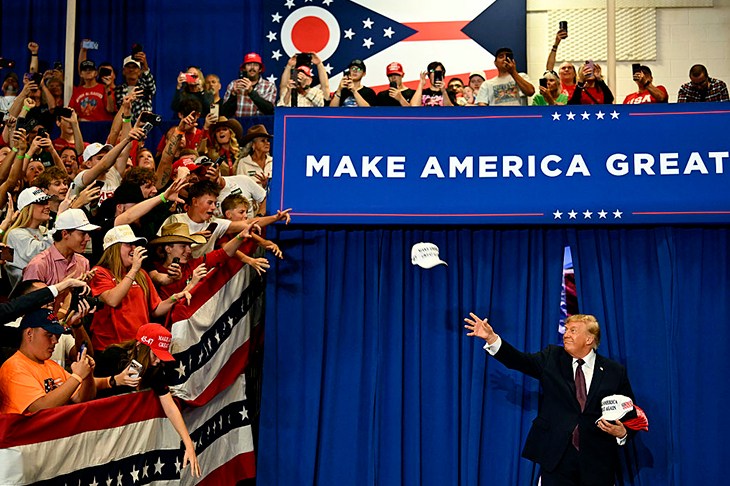
Trump’s Maga has suffered a spectacular rebuke. But the demand that gave it life – for a country that works for ordinary Americans – is available to anyone who can argue for it. Some Democrats have noticed.
In 1989, the year the Berlin Wall fell, Francis Fukuyama posed his famous question about the end of history. Liberal democracy appeared to have seen off its great ideological rivals. Many conservatives took that apparent victory as permission to stop defending the principles that had helped secure it.
The progressive left continued its march through the institutions. Freedom of speech, equality before the law, constitutional restraints and individual responsibility became embarrassments to be qualified or explained away. The values that had helped make Western societies free and prosperous still needed defenders, but over the years defenders too often stayed quiet.
Trump has always been more symptom than cause. Think the 2011 White House Correspondents’ Dinner, when Barack Obama mocked Trump’s presidential ambitions and the entire room guffawed. Yet outside that room, resentment of the political establishment was already gathering.
Over those years and since then progressive politics became a business model for universities, bureaucracies and crony capitalists. Its post-modern enthusiasms hardened into tests of moral fitness. Not toeing the line on race, gender, colonialism, DEI and even climate became grounds for professional ruin. The luxury beliefs paraded and enforced by progressives affronted ordinary people, Christians and conservatives. They also started to cost money.
The stage was set for a rich, freewheeling iconoclast with zero interest in obtaining the establishment’s approval. Trump gave voice to millions – not just in the US, but everywhere – who knew that the progressives had seriously overreached. He deserves lasting credit for that.
But Trump’s economic prescriptions were always another matter. His antediluvian faith in tariffs and protectionism required Americans to believe they could become richer by making things more expensive. That manufacturers could flourish while paying more for inputs. That farmers could prosper while trading partners retaliated.
Trump won elections by promising affordability, then made taxing imports the centrepiece of his economic programme. There was always going to be a long tail of trouble with that.
The midterm exit polls were emphatic. Reuters reported that nearly nine in ten voters regarded the cost of living as crucial or a major factor in their vote. Nearly two-thirds blamed Trump for high prices. The NBC exit poll found just one in five thought tariffs had helped the national economy.
The Iran war was important too, but mostly because of fuel prices.
And then there is the spectacle of huge wealth gathered at the honeypot of power. Democrats have billionaire patrons of their own. But Trump’s and his family’s conspicuous intimacy with tech and crypto plutocrats, and theirs with him, have given Democrats plenty of fodder.
Unhappy voters result in unhappy midterms for incumbents. But parts of the so-called New Right compounded the problem. An administration struggling to demonstrate economic competence could ill afford allies making it look less serious. Trump’s allies allowed too many Republican first principles – even constitutional ones – to become negotiable. While many American conservatives jumped on board Trump’s substitution of market competition for political direction, they went further and said liberty should be sacrificed to achieve the right moral outcomes. Those who have imagined a bizarre restoration of a pre-Enlightenment political settlement will never be able to explain how they propose to compel goodness without producing something thoroughly ugly. Memo to those so-called conservatives: when Abdul El-Sayed – from the pro-Hamas wing of the Democratic party – invokes Thomas Paine’s Common Sense on MSNBC (and frankly does it well) while you have been navel-gazing about the failings of the Founding Fathers, you have a bit of cleaning up to do.
Parts of the online elite right also made name-calling and their own form of cancel culture a badge of purity. The middle America that had previously embraced Trump over progressive moral policing had not asked for yet another movement of zealots just as nutty as the previous mob.
Back to the Democrats. Thirty-three military veterans and six pastors will represent the Dems in the Congress, compared with nine members of the Democratic Socialists. Listen to the language of some of the party’s most interesting victors. There is no lecturing about identity or climate change. Instead there is talk of God, family, country or the everyday business of making a living. Trump gets no credit, nor much criticism, for deportations and shutting down the southern border; just grief for the methods that he used. Going forward, expect Democrats in power to hold the fort.
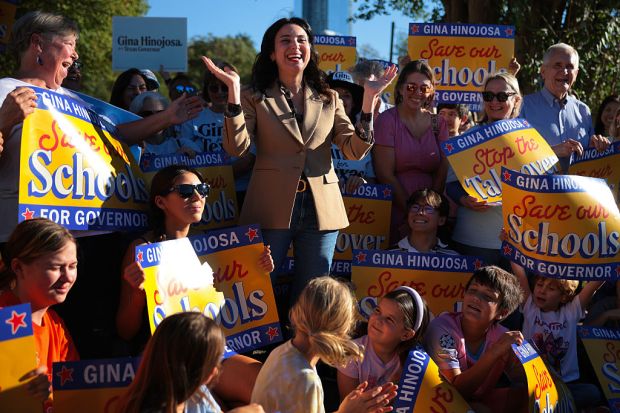
Gina Hinojosa, Texas’s Hispanic governor-elect, offered a sharp response to accusations that she was too woke: working people were too broke. She declared her pronouns to be, ‘Mom, Texan, and soon to be: Governor.’ She is serious when she says embraces populism – of the economic kind.
James Talarico, the state’s US senator-elect, clearly impressed voters. I could do with less Jesus being invoked to settle economic questions, and might prefer him as my pastor to my senator. But he sees an obvious opening. His account of the country’s great divide is ‘not left versus right, it’s top versus bottom’. Not so long ago Trump could have said that. No more.
So brace for a swag of Democrats abandoning woke and invoking faith, family and country in support of even bigger government, higher spending and way more political control over economic life. Less woke, more broke.
Republicans must recalibrate and reassert the foundational principles that made America great. Defending those principles requires leaders who can explain how they improve ordinary lives, and govern competently. In the United States the old is now new. They are refocusing on the same questions being asked when Fukuyama posed his famous question: who can best manage the economy and promote human flourishing? How do we then distribute the gains. Do you want capitalism or socialism? Taxing the rich – how much and how many – is about to get big.
The republic looks wobbly, but it will surely endure. The Maga project goes on, but in unexpected ways. Eyeing their own recalibration – in truth a capitulation – some smart money is on Democrats appropriating elements of Maga’s original appeal. For the moment, Republicans have left the door wide open.
Got something to add? Join the discussion and comment below.
You might disagree with half of it, but you’ll enjoy reading all of it. Try your first month for free, then just $2 a week for the remainder of your first year.