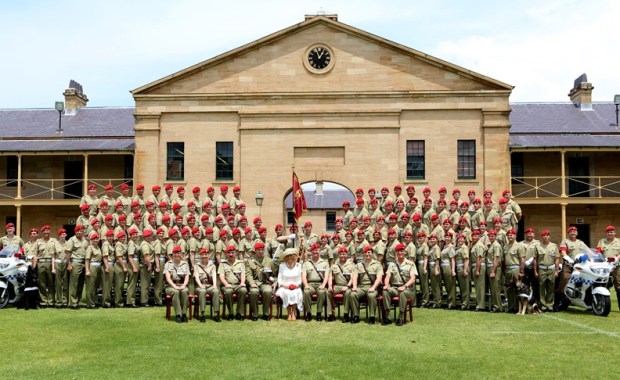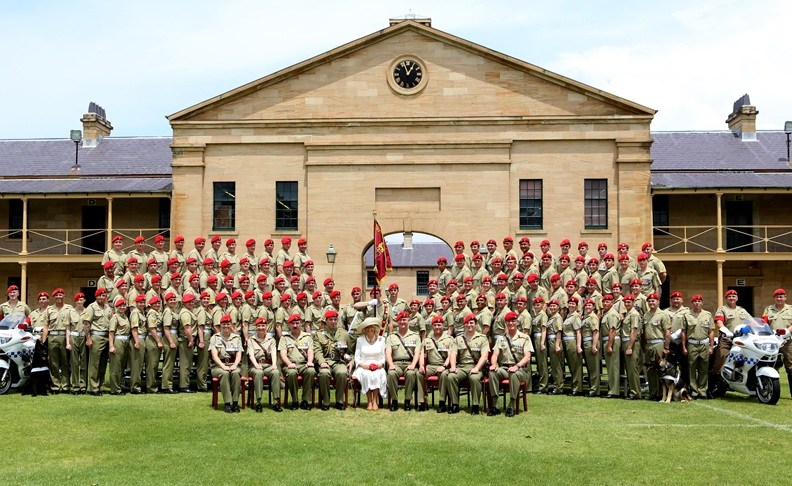
The backdown by Prime Minister Albanese on the sale of Victoria Barracks in Sydney (and, I believe, two other heritage sites) is welcome, but it seems to me the plan to open it to the public is misguided.
The best way to preserve a heritage site is to continue using it for its original purpose, if that purpose still exists, as it does in the case of Victoria Barracks.
The Army has many small independent units spread across the country that might usefully be accommodated there. These include the School of Intelligence which is currently located at Kokoda Barracks in Canungra in Queensland. There is no operational reason why it should be there. It shares the site with the Land Warfare Centre, which was originally set up as the Jungle Training Centre. But since Vietnam we have not engaged in jungle warfare so there is no real reason why the LWC should be there either. It could be moved to another site, say Singleton, Puckapunyal, or Wagga. And Kokoda Barracks has no historical heritage. In my opinion, it could be closed without causing any angst.
There is also the Army School of Health, currently at Bonegilla in Victoria. It could be moved to Victoria Barracks. I am sure there are other such units.
And a section of the Barracks could be set aside as a permanent ready response training and operational facility.
I now turn to a couple of personal reflections.
Defence Minister Marles noted, regarding the heritage value of Victoria Barracks, that very few soldiers ever served there. That is true. But let me tell you one story about the Barracks.
Many years ago, after I had left the Army, I met a Signals Corps Staff Sergeant who told me that, as a digger posted to a unit somewhere in Sydney, he and a few mates would be routinely seconded to form the Victoria Barracks guard for a week at a time. It was bloody hard work. A lot of spit and polish, and when they weren’t doing that, they were posted at various gates, standing to attention, and saluting when necessary. He told me that, overall, they really enjoyed doing this duty, arduous as it was. They were proud to be the face of the Army in Sydney. (And to be fair, I guess they enjoyed the delights of Paddington in their off-duty hours.) It’s a little thing that Marles would not understand – esprit de corps – without which an army cannot function.
The other slight that Marles bestowed upon Victoria Barracks was that it was merely ‘our oldest wine cellar’. That is clearly a swipe at the elitist concept of the officer’s mess inhabited by Colonel Blimps. Certainly, it is true that, in certain barracks, the officer’s mess offers a degree of old-world elegance and a good wine cellar. The vast majority of messes, however, are just bland functional buildings. So, is it such a crime that on one or two postings, an officer should enjoy the luxury of a good wine cellar and rather more opulent décor than usual?
Politicians like Marles and Albanese make a lot of noise about how we should fully support our veterans, but God forbid they should be accorded the odd perk while they are still serving. Another advantage of retaining Victoria Barracks in use is that the existing mess (and its wine cellar) will still be available to officers serving in rented CBD accommodation.
That aspect of service, a perk if you like, is also fundamental to the concept of esprit de corps and the maintenance of unit morale and discipline which depends on a certain social demarcation between soldiers, senior NCOs, and officers. If the lines between the three become too blurred, then unit cohesion – which includes discipline and morale – can start to break down.
Victoria Barracks must be allowed to fulfil its purpose as the spiritual home of the Australian Army by continuing in the service of that Army.