The trouble with Labor governments is that they live by Karl Marx’s maxim: ‘From each according to his ability, to each according to his needs.’
Needs are endless.
I need a 1979 Moto Guzzi Le Mans. I need to pay the rego and insurance on my Royal Enfield 650 Interceptor. I need an overseas holiday again soon, too.
It’s such a stupid maxim.
Marx was in England when he wrote his major works because he would have been vanquished anywhere else. We’ve seen the same lately where everyone who hates the West is living in the West because they couldn’t be such activists in their countries of origin.
Everyone’s sick of it.
But there is an outcome for small businesses that is not inevitable. It would, however, require some real chutzpah on the part of small business owners.
Imagine the sole small service station in a regional village closing for two days in protest. Empty bowsers, community disruption, you get the drill.
I’m not talking about Marrickville where you have to drive at least another five minutes if the local independent servo is closed. I mean in places like Weipa where the local Woolworths gets its deliveries every Monday and Friday via a barge.
When I worked east of there in the 1980s, the milk was sold in ye olde cardboard cartons in the freezer section because cold, unfrozen milk was a luxury. And that was a big business.
Imagine a small business where the business is not just a profit centre, but a place that sustains local people. I have so many examples of how small businesses help real people with real problems, but they are so personal it hurts. Suffice to say that I can guarantee you that small business owners know who they help and why.
It is little wonder, then, that small businesses are the backbone of regional Australia and the economy.
Yet small businesses are disproportionately burdened by Labor’s federal and state policies.
These include adjustments and fiscal settings contributing to bracket creep effects, regulatory fines, and wealth redistribution.
But this is a matter of fairness. Why does Labor treat community-serving small operators the same as multinationals? Well, they don’t.
It is my opinion that Labor doesn’t like small businesses because their employees are less likely to be union members. Indeed, many industrial relations laws protect small businesses from rules that would effectively prevent small businesses from operating at all.
But that doesn’t mean they are protected from Labor’s redistributive policies. The opposite usually applies.
Labor’s wealth redistribution and bracket creep realities are one result of the federal stage 3 tax cuts adjustments and reversals and fiscal settings that have led to bracket creep.
These effects, amid persistent inflation, are squeezing small business owners and their ability to retain staff or invest in future capabilities. Small businesses face higher effective burdens without the scale of larger firms. Yet they are carrying a proportionately higher regulatory burden.
ASIC has reported record revenue of some $830 million in fines. The NSW government is riding high on the back of increased revenue from fines including small businesses. This is set to continue.
For example, NSW’s FuelCheck scheme requires real-time price reporting for transparency. This is supposed to ensure that consumers are not being ripped off by servos.
Instead, some 100 servos have been hit with on-the-spot fines of $1,100, escalating to $5,500+ for repeats, with court penalties ranging from $22k to $110k.
While the policy targets misleading consumers through advertised versus actual prices, some regional servos don’t even advertise their prices. Everyone knows there’s nowhere else to get fuel.
In an unregulated market, these local servos could charge whatever they want. They don’t, but if they don’t have a sign out front advertising their prices, they get fined. With no economies of scale, in my opinion these fines are nothing short of a tax.
While the rules apply uniformly, they hit small and regional servos hardest. These are the servos with the lowest margins that often play a community service role (not gouging like potential big players). Yet there is no strong evidence of differentiated scrutiny in sources. Critics argue the rules burden small operators providing essential rural access.
While this is just one example of how regulatory burdens are impacting small business, there is a broader context worth considering.
Rising insolvencies are at record highs for small firms. These are typically blamed on increased red tape, energy costs, and policy pressures. In terms of affecting working Australians, there has been a net loss of some 33,500 small employing businesses since Labor came to power. Many of these small businesses are in the hospitality and construction sectors or in regional areas.
The problem for small businesses is that they lack centralised power.
The small business owners I have spoken with unanimously suggest that small business lobby groups are more interested in feathering their own nests rather than actually looking after small businesses and their interests.
Given the lack of lobbying support, it begs the question, what can small businesses do?
Repeatedly, I’ve seen major business groups brown-nosing newly elected governments.
They don’t lobby for tiered compliance, or exemptions and subsidies for small and low-volume operators, or outcome-based (actual consumer harm), rather than blanket solutions. As long as they are in the circus tent, then she’ll be right.
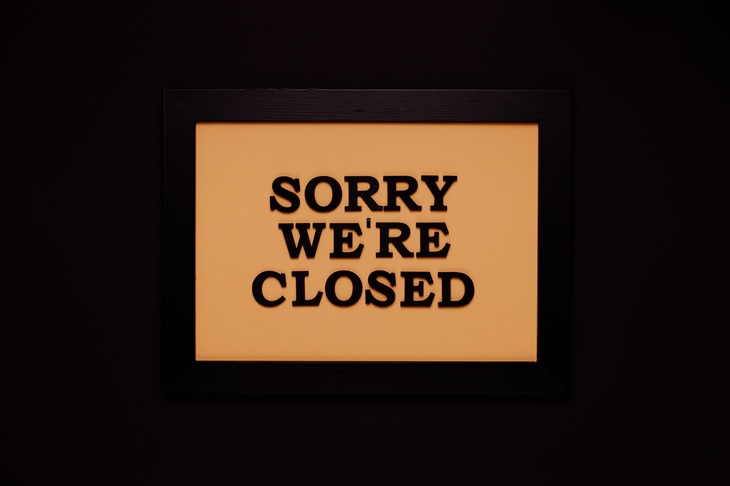
But what if small businesses united for just a moment and went on strike for two days during the week? What would happen then?
About 97 per cent of the 2.7 million small businesses employ between 40 to 50 per cent of the private workforce. They contribute between $500-600 billion+ to output, which is a significant GDP share.
A nationwide two-weekday closure could disrupt supply chains (fuel, food, retail, and services), delay deliveries, hit regional economies hardest (no fuel would result in a transport standstill), and cause daily losses in billions. The existing insolvency trends already signal this fragility. Put simply, it wouldn’t be pretty.
And that’s just the economic impacts. The disruption caused by closed cafés and shops, fuel shortages affecting emergency services and farmers, eroded trust in policy would be catastrophic.
But it sure would highlight the ‘forgotten’ regional and working people against the public servants and the urban and big business workers.
It might even pressure governments to notice how their redistributive policies ignore the interconnectedness of Australia’s small business ‘engine room’, and how small business closures would compound existing pressures from increased costs amid labour shortages.
While it may not be catastrophic like major industry strikes, it would certainly be symbolic and cumulative in our current strained economy.
But it might also reiterate fairness, the importance of resilient small businesses, and the need for a policy rethink favouring productivity over redistribution.
In the meantime, we take for granted the important role that small businesses play in Australia, while the Albanese government runs their community spirit into the ground.
You’d reckon the government-in-waiting would be all over this by now. The data’s been telling for years now. Can I hear crickets or is that just my tinnitus playing up again?
Dr Michael de Percy @FlaneurPolitiq is the Spectator Australia’s Canberra Press Gallery Correspondent. If you would like to support his writing, or read more of Michael, please visit his website.