Australia’s inflation problem is back, and the RBA has responded with three interest-rate hikes in 2026 alone, lifting the cash rate to 4.35 per cent today. Headline CPI hit 4.6 per cent in the 12 months to March 2026, and underlying measures remain well above the RBA’s 2-3 per cent target. Mortgage holders are once again feeling the squeeze, and many families are struggling with repayments.
The government pointed to the war in Ukraine in 2022 and the more recent conflict involving Iran as the chief culprits. Global fuel prices have indeed spiked, and the RBA itself has noted the risk of higher energy costs feeding into broader inflation. Yet this external-shock narrative is incomplete. Persistent domestic demand pressures, low productivity growth, and policy choices that expand government spending while discouraging self-reliance have made Australia more vulnerable than it needed to be. The result is an economy less resilient to shocks. This is precisely what an ideological preference for big government and high spending does.
Indeed, high spending and low productivity are structural problems.
Since Labor took office in 2022, federal spending has grown faster than the economy. The 2025 budget projected a $42.1 billion deficit, with gross debt approaching $1 trillion and spending as a share of GDP heading toward 26.9 per cent. Both the Parliamentary Budget Office and Treasury have identified Labor’s policy decisions as the main driver of a significant deterioration in the medium-term budget position. When government pumps extra demand into the economy without corresponding supply-side gains, inflation becomes harder to tame.
Productivity data underscore the weakness. Multifactor productivity fell 0.5 per cent in 2024-25, continuing a pattern of stagnation. Without productivity growth, higher wages or spending simply translate into higher prices. Labor’s approach, which includes expanded welfare, subsidies, and public-sector hiring, has instead fostered greater reliance on government funding. This reduces the incentive for individuals and businesses to lift output, compounding the problem when external shocks arrive.
The impact on inflation is not purely about economic policy. Many of Labor’s policy choices amplify the pressure on the economy.
One of the major culprits is energy policy, which has left Australia exposed. While the government has highlighted rebates and gas-price caps, the dogmatic focus on renewables has not shielded households from volatility. Petrol and diesel prices surged again in 2026 as Middle East tensions disrupted supply. The government’s temporary halving of fuel excise provides short-term relief but does nothing to address long-term structural dependence on imported fuel and the slow pace of domestic supply responses. Critics from both sides of the energy debate note that policy uncertainty has deterred the investment needed for genuine resilience.
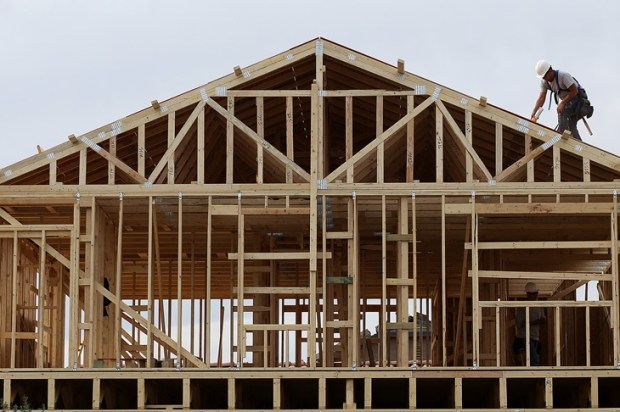
Immigration policy has added demand without matching supply. Net overseas migration remains too high with forecasts for 2025-26 remaining well above the pre-Covid average, driving population growth that outstrips housing construction. The Department of Home Affairs has admitted it has never modelled the full impact of these numbers on housing and infrastructure. The result has been predictable. Record rental growth and house-price pressure are feeding directly into CPI. High migration can support labour supply in theory, but when it coincides with chronic under-delivery on dwellings and skills shortages, it becomes inflationary.
High immigration also carries broader implications for social cohesion. Events such as the Bondi massacre and protests featuring slogans like ‘Globalise the Intifada’ have heightened community concerns about integration and the importation of overseas conflicts. These pressures compound the economic challenges by testing public confidence in government policy settings.
Further, education and skills policy illustrates the same logic. The Fee-Free TAFE program has enrolled more than 700,000 Australians since its rollout, a headline success for access. Yet industry observers report that free places are often oversubscribed by people treating courses as hobbies rather than pathways to higher productivity. Private training providers, which historically tailored offerings to genuine workplace needs, now struggle to compete with subsidised public options. Completion rates in VET remain modest, and the net effect has been to distort the skills market rather than expand the productive workforce. When reskilling is the logical response to mortgage stress, government policy has inadvertently made that response less effective.
All this means that more Australians have become dependent on government. This has diminished our economic and social resilience.
The deeper issue lies in Labor’s consistent philosophical preference for redistribution, public spending, and expanded safety nets over incentives for private effort and productivity. The result is a nation with millions of individuals more dependent on government support and therefore less able to absorb shocks.
When inflation returns, the RBA has little choice but to raise rates. Labor’s expansionary fiscal policy has already done much of the heavy lifting on demand through sustained high government spending, new welfare measures, subsidies, and public-sector expansion. This has kept aggregate demand elevated even as supply-side constraints persist.
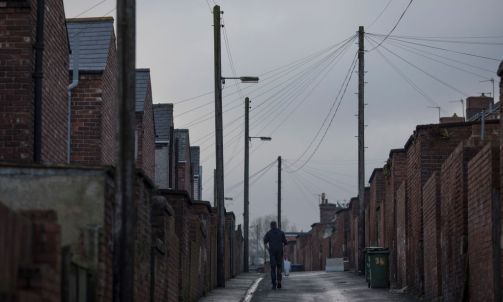
Households with large mortgages, many of whom bought or refinanced at record-low rates during the pandemic, are now confronting significantly higher repayments. They face this pressure without the real wage growth that stronger productivity gains would have delivered, because Labor’s high-spending approach has prioritised redistribution and dependence over the structural reforms needed to lift output per worker.
But it’s not just those with large mortgages. Even modest mortgages have been hit with repayments almost doubling for many variable-rate holders since Labor came to power. Labor’s response has included efforts to expand public housing, which risks extending the cycle of government dependency.
The direct consequence of these policy choices is that monetary policy must now tighten to offset the inflationary impulse created by Labor’s fiscal policy settings. In effect, the RBA is left cleaning up after years of unchecked government demand injection.
This is not merely bad luck. Twice in four years the government has reached for the ‘war abroad’ explanation. Meanwhile, domestic settings including high spending, open migration without infrastructure planning, and skills policies that favour quantity over quality have actively worsened the cost-of-living pressures.
A more balanced approach would have emphasised spending restraint, productivity-enhancing reform, and targeted migration that matches housing and training capacity.
Many analysts overlook the significant emphasis placed by the Treasurer in last year’s budget on rising private sector demand alongside a reduction in public sector demand. No meaningful justification was given for this change other than the assumption that the post-pandemic economy would readjust to the ‘new normal’. That never happened. It will be interesting to hear what other assumptions are built into next week’s budget.
The consequences of such loosely based assumptions will likely be continued higher government spending, funded through higher taxes. Earlier this year, Treasury officials confirmed that roughly 60 per cent of the medium-term budget deterioration stemmed from increased payments, with revenue write-downs accounting for around 40 per cent. If Labor continues prioritising spending over restraint, the only realistic path to balance the books will be higher taxes for Australian households and businesses.
What Australians don’t need is another round of blame-shifting. They need policies that rebuild individual and national resilience. This cannot be achieved without lower relative government spending, genuine productivity growth, and incentives that reward work and enterprise rather than dependence. Until that shift occurs, the RBA will keep doing the heavy lifting.
As a consequence, mortgage holders will keep paying the price of an approach that has consistently favoured high spending and dependence over productivity and self-reliance.
Dr Michael de Percy @FlaneurPolitiq is the Spectator Australia’s Canberra Press Gallery Correspondent. If you would like to support his writing, or read more of Michael, please visit his website.