In 1973, Albert Grassby, the Minister for Immigration under the then-Labor (Whitlam) government, issued a paper titled: A multicultural society for the future, and the word ‘multiculturalism’ was born.
In that paper, Grassby warned that:
A widespread ignorance seems to prevail about what is actually happening to the fabric of Australian society under the continuous impact of a migration which, in terms of proportionate numbers of newcomers to the base population, is virtually without parallel in modern times.
Something of a conspiracy of silence persists in many quarters about the social impact of other than Anglo-Saxon influences on our national life.
Grassby uses the phrase ‘melting pot’ which arose in the United States. Its usage goes back to 1782, seven years before the US Constitution was ratified. John Hector St. John, a French-born naturalised American, wrote:
‘Here individuals of all nations are melted [emphasis added] into a new race of men, whose labours and posterity will one day cause great changes in the world.’
But sociologists now prefer the phrase ‘salad bowl’ where ‘the country becomes like a large bowl of easily distinguishable ingredients held together by a “dressing” of common laws and an overall identity as citizens of the country. This concept is in contrast to the idea of the melting pot, where immigrants seamlessly adopted the culture, language, and practices of their new country’.
In 2021, researcher Janine Ungvarsky noted that until the 1960s, ‘It was common for people to want to learn to speak English and to adopt the clothing, food, and habits of the United States. While they might have kept some traditional practices, the new arrivals generally wanted to shed their immigrant image and be seen as Americans [emphasis mine].’ However, from the 1960s, sociologists noted that ‘newer immigrants to the United States often opted to maintain their cultural heritage instead of rapidly adopting American customs’.
Today, when an Egyptian or Indian or Chinese person arrives in New York city or Sydney for the first time, they find an abundance of their own diaspora, making it easier to retain and enjoy their own language, cuisine, clothes, music, and traditions. A society that goes from a melting pot to a salad bowl can no longer easily return to a melting pot ethic.
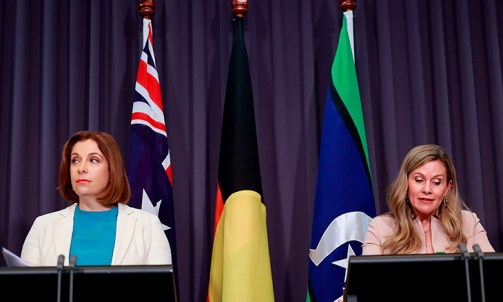
In Australia, the federal Minister for Multicultural Affairs Anne Aly, vigorously defended multiculturalism in October 2025, putting the concept front and centre as ‘fundamental to Australia’s identity’. In my view, Aly assumes a salad-bowl society without using that term. But if we must live in salad-bowl societies, is a set of common laws and a passport enough to qualify as a dressing?
No. Firstly, the laws in themselves may be insufficient or even unjust. For a start, the Australian Constitution does not protect free speech. At least Pauline Hanson promises a constitutional amendment to correct this if One Nation wins the right to form government. Interestingly, Labor and the Coalition do not.
But we also need something more – we need a universal set of values worth fighting for, an ethic that binds a society of people with different tastes in food, music, and sports. What are those universal values?
To never initiate violence or fraud
This is often cited as the Non-Aggression Principle, or NAP.
Here, in Australia, we have state laws against violence, threats of violence (affray), and public disturbances. They must be enforced diligently against citizens and immigrants alike with none of the UK-like racial discrimination.
Self-actualisation within the confines of the NAP
To seek to actualise one’s talents and passions, and to allow others to do the same within the confines of the NAP, and to become good at both, are what may be termed as the four orders of humaneness.
The first two values require an ingrained honesty and authenticity in all our normal dealings (German philosopher Immanuel Kant was wrong, you should lie to a killer looking to kill your daughter about where she is).
A respect for reason, and thereby for science and technology
The world around us consistently obeys the laws of nature, which allows the reasoning mind to grasp them through observation and experimentation. This observation may be arguably Aristotle’s biggest gift to humanity. A respect for reason translates to a healthy scepticism of ‘experts’ who tell us what ‘science says’. It’s as plain as day that truly independent experts seem commonsensical and willing to debate the government-chosen ones, while the latter rely on intimidation and the cancellation of rivals, whether it’s gender fluidity or climate change that’s at stake.
A respect for the rule of law, requiring that faith is beneath the law
When we encounter what we think are unjust laws, we must try to overcome them through a process of reason and persuasion in the political and judicial arenas.
Our Constitution protects the freedom of faith. But the key distinguishing characteristic of universal values is that religion must be beneath the law. If a religion itself contains a legal doctrine, such as Sharia Law, it is patently unconscionable for it to supersede the law of the land.
Allowances for Sikhs to carry a knife around because their religion requires it is, in my view, mindless pandering. It violates universal ethics to let only Sikhs carry a dagger on airplanes, but Canada did cave in to this medieval demand.
So did the UK. Under UK law, ‘carrying a knife or bladed article in public is an offence under the Criminal Justice Act. But the law allows the carrying of a bladed article where there is a good reason to do so, including religious practice and national dress’.
In December 2025, in Southampton, UK, Vikram Digwa was carrying two daggers when he murdered Henry Nowak. Had he not been carrying a weapon, Nowak may still be alive. It’s perfectly fine for citizens to be allowed to carry weapons, provided that is a universal case for all adults, save those convicted of prior violent acts.
In Australia, a school incident prompted a temporary ban on students carrying daggers that was later reversed after consultation with Sikh organisations. Here, too, we are needlessly appeasing a religion.
Anyone can invent a religion – that’s what Ron Hubbard, the founder of the Church of Scientology, did. If you invent one which regards income taxes as unjust, are you to never receive a tax bill? If, as a male, you are allowed four wives in your religion, must we appease this faith by accepting polygamy, but only for your religion? Of course not, religion has to be beneath the law.
A healthy respect for the traditions of the host country
If we join, by choice, a different culture to the one we grew up in, we must try to understand it, to partake of it when possible. Let’s all observe the minute of silence on Anzac Day and Remembrance Day, and get rid of the divisive ‘Welcome to Country’. If immigrant parents insist on their offspring wearing traditional attire and respecting the customs of their country of birth, they are imposing themselves on their children and violating the second order of humaneness. They are also alienating their children from the society they live in.
A government should never use taxpayer money to encourage foreign cultures, such as councils spending ratepayer money to fund ethnic festivals, and taxpayer-funded SBS carrying news and articles in over 60 languages. Nor should such activities be banned from private areas.
But it’s nauseating for a mosque to be allowed to preach via loudspeakers on public streets in Australia. If one mosque secures that right, where will this pandering stop? A government must not spend taxpayer funds on innumerable translations. The government should not enforce a melting pot doctrine, but neither should it encourage a salad-bowl society. The Australian government cannot magically create a whole nation of steak lovers who enjoy Australian sports, barrack for the local footy team, love beer, and are fans of Tame Impala. Nor can any other Western government today. To some extent, salad bowls are all over the West, and there’s no turning back.
But then, many Victorians who do not watch the rugby league State of Origin tri-series even on TV, revel in Aussie Rules football, or wake up before 4 am to get to Federation Square for an international ‘wogball’ (soccer) match. There are others, even white Caucasian males born here, who have no interest in any sport. To each his own. The sheer size of modern cities is of a scale monstrously bigger than small-town communities of three hundred years ago. We live in an internet world where numerous cultures yearn for clicks and attention.
But what we must do is articulate the universal values doctrine, where no compromise is made for immigrant culture and religion. Immigrants do not need to enjoy the Bunnings sausage sizzle, change their personalities to become larrikins, or go topless at beaches (where allowed) if overly self-conscious doing so, just to become part of a ‘melting pot’.
And the most critical – Language!
Language proficiency is by far the most critical aspect of the engagement of productive, law-abiding immigrants with locals. How can we enjoy the same music and a society’s works of print literature, media news, and TV shows, if we do not grasp what the words and idioms mean? Fortunately, we do share our national language with the UK, Canada, New Zealand, and the US (South Africa has 12 official languages!). Which means that we get to enjoy American movies and British pop stars like they are our own.
But even English-proficient immigrants take time to understand Australian accents. What we must do is not expect instantaneous command of local idioms and accents; even the Americans and the Brits do not always get it all. But we could applaud the effort that will bear fruit over the long term. The highest possible score on the International English Language Testing System (IELTS) is a Band 9.0, which represents an ‘Expert User’ who has a fully operational, accurate, and fluent command of the English language. Even many Australians born here will not get all 9s across reading, writing, speaking, and listening. But when a person transfers from a non-PR visa status to a PR (permanent resident), a minimum requirement of, say, an IELTS score of 6.0 overall with no band under 5.0, could be mandatory. When transferring to a full citizenship, a minimum IELTS weighted score of 7.0 overall with no score under 6.0 would be beneficial. The Australian government provides free English lessons to eligible migrants and humanitarian entrants through the Adult Migrant English Program (AMEP). Eligible participants can receive up to 510 hours of tuition – and potentially more – covering language, communication, and settlement skills. There is no excuse for not getting reasonably good scores over time.
Uniculturalism
The universal values of rule of law and non-aggression brought the Allies together to defeat the Nazis. These values brought to Australia the Aukus, the Quad, and the Five Eyes alliances. We share these values with the broader West (except language) as well. It would be folly to lose sight of these values in the craze for an undefined ‘multiculturalism’.
No one’s forcing you, whether immigrant or local, to give up Egyptian music, Spanish-language classes, or French wine, if any of those are your fancies. Today, almost every shopping centre ‘food court’ contains international cuisine. Every global city caters to Latin dancing, Eastern martial arts, and Afro-American hip-hop. Many groceries or retail shops sell everything from halal meat to Chinese spring rolls, most cafés do chai lattes, while the Nepalese street shops do delicious masala teas. All of this arrived on our shores via free enterprise and trade, whose success depends on universal values – it’s this Uniculturalism that is critical for a peaceful, cohesive, and prosperous society.
Let these Unicultural values become the thick, creamy, avocado-lime dressing that unifies our salad bowl.