Politics is undergoing a transition. In the recent Newspoll, ‘Almost 70 per cent of voters agreed that “the people who built this mess aren’t going to fix it” and that “Australian politics is overdue for a big shake-up”.’
For much of the 20th Century, radical intellectual elites sought to replace capitalism with socialism, recruiting support from working people by dangling the carrot of sharing the profits accruing to capitalists. At least in the democracies, the carrot was not sufficiently enticing – or credible – to attract a majority of voters. But to accommodate the marginal voter, politicians (many of whom sympathised with socialist redistribution) adopted collectivist plans that raised the government share of GDP from under 20 per cent to 40-50 per cent today.
The more extreme forms of socialism in Eastern Europe collapsed in the late 1980s as the contradictions of refusing to reward personal enterprise and savings led to stagnation. The Chinese government managed a transition, albeit imperfect, to capitalism.
Elsewhere, the contradictions inherent in socialist controls and prosperity led to attempts by intellectual elites to find a ‘Third Way’ (the term used by UK Prime Minister Tony Blair), a hybrid in which they retained influence and wealth.
Political interference in commerce by bureaucracies almost invariably brings inferior outcomes. Even so, politicians sought an ever-larger role, imposing DEI requirements on workplaces and requiring the replacement of cheap energy with wind and solar, the additional cost of which is compounded by energy’s pervasiveness across all productive processes.
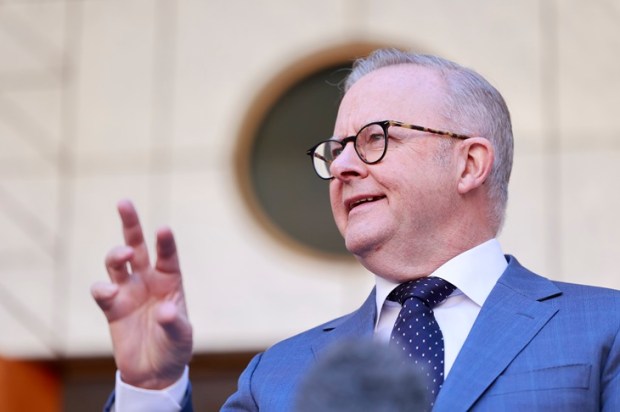
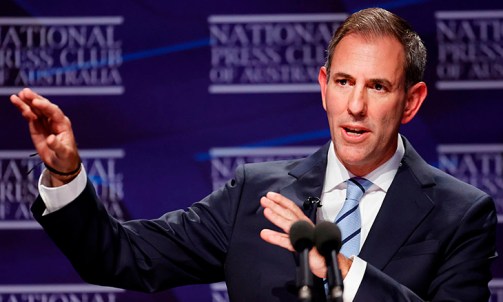
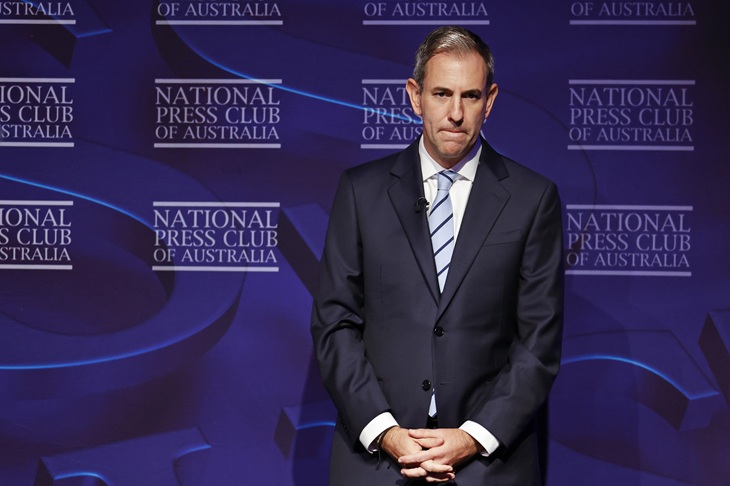
Australia’s Treasurer Jim Chalmers has, in my opinion, adopted the British political economist Mariana Mazzucato as his guru. Mazzucato has developed an agenda based on the ‘Third Way’. This draws on a modern and re-interpreted version of the development model: a voluntary partnership among government, business, and unions, with government making strategic decisions and incentivising business activities in selected directions. It is also founded on the belief that growth is more or less given and that it is up to the government to determine the shares of its bounty. It is possible to draw the conclusion that, as a result of future affluence being predetermined, it allows a prepayment of that bounty, which involves taxing the affluent even before they become so, and an assumption that the impost will not materially affect their saving-consumption-investment decisions.
Part of the general strategy is for the government to take a share in promising assets – Norway’s sovereign wealth fund is a particular favourite.
But this overlooks the fact that Norway made a conscious decision to share in the investment and risk of its North Sea fossil fuels, whereas the UK (and Australia) used the revenues from these developments to lower taxes and pay off debts incurred by earlier incarnations of the model. And wherever Australian governments have adopted the innovator-capitalist road, the results (wind-farm blade factories, Hydrogen Superpower, electricity generation) have turned to dust.
The belief in this new form of economics does not stop with politicians. Astonishingly, in an interpretation disputed by an author of the report, Treasury Secretary Jenny Wilkinson claims that research finds that favourable tax treatment of capital gains, beyond compensating for inflation, has no influence on investment. That’s equivalent to saying that no matter how high we tax real capital gains, investment is unaffected. A corollary of this is that we should impose a 100 per cent tax on all real gains and deliver a bonus to a spendthrift government at no cost to the economy!
Not only do incompetents in control of the bureaucracy fail to appreciate that if there is no reward for enterprise and frugality, there will also be much less capital accumulation and risk-taking. They also fail to understand that individuals’ capital is two-thirds derived from savings, the result of frugality and successful enterprise. And that capital accumulated from these activities is derived from labour, and has, overwhelmingly, already incurred taxation.
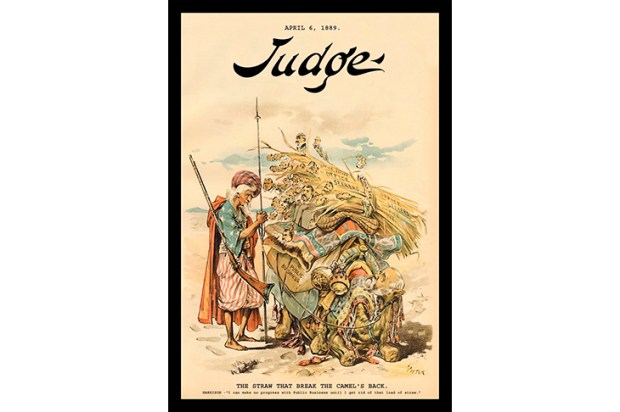
Marxian elites used to explain their failures to persuade workers to throw off the ‘yoke of capitalist exploitation’ to a ‘false consciousness’ that obscured workers’ recognition of the tension between labour and capital. What we really have today is a tension between leaners – those who depend on or benefit from government favours; and lifters – those who actually pay for them. The lifters are not only those in private enterprise but also many in the public sector, especially in health, education, and public works, though few in the ‘policy’ departments, industrial courts, energy institutions, and other regulatory agencies.
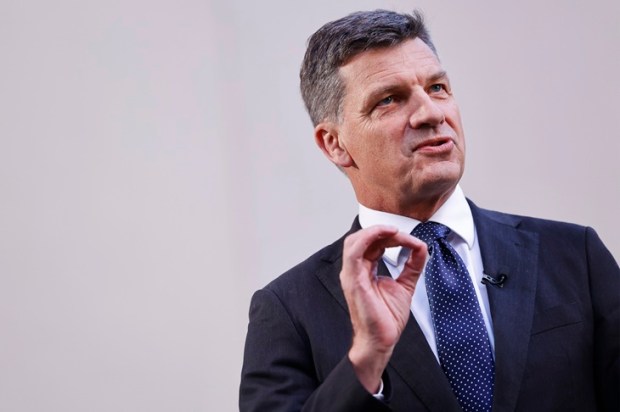
Politicians over the past half-century have mainly sought to recruit the leaners’ voting blocs, in recognition of voters’ dispositions to assist the less fortunate. In some cases, they have sought to bring some lifters into the leaners’ tent. Thus, in a ‘subsidies for everyone’ policy, in 2020, Angus Taylor, as Energy Minister, promised to enable agricultural activities that store carbon in soil to generate Australian Carbon Credit Units (ACCUs). Farmer bodies never let a subsidy go begging and offered strong support.
The respondents to the recent polling seeking a ‘big shake up’ in politics shows that the blindfolds concealing the majority of voters’ true interests are being removed.
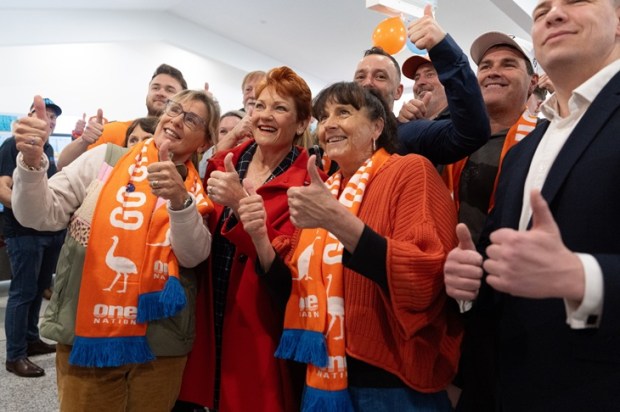
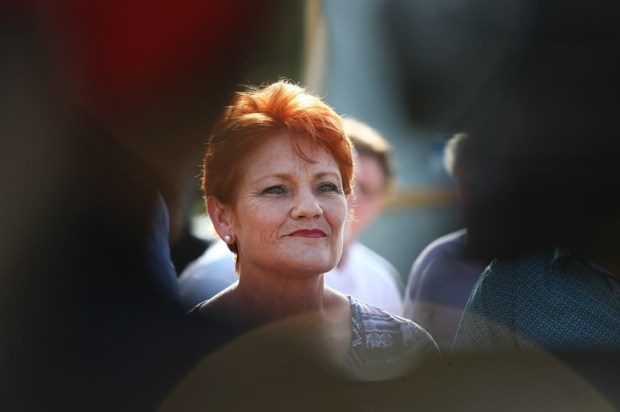
The growth of One Nation is a rejection of the Uniparty’s incessant increase in giveaways from the lifters to the leaners. The most recent budget has accelerated this trend by imposing new taxes on those not yet able to assemble savings to enjoy the benefits of those – including politicians and public servants – who have already accumulated wealth.
Will the blindfolds’ removal be sufficiently comprehensive to bring about the shake-up poll responders say they want?