Democracy struggles to survive when there is a lack of consensus and an unwillingness to accept a government run by unwelcome political parties.
Political murders and attempted murders in the US and Manchester (UK), are symptomatic of deep partisan divides and a departure from the consensual cement characteristic of stable democracy.
Deep fissures in people’s perceptions and aspirations can be seen in their views on the Middle Eastern conflict, sometimes morphing into Jew hatred.
DEI, the #MeToo era, climate change and energy, as well as immigration, are all exacerbated by real income pressures – much of them the result of a 50-year regulatory corset suppressing the supply of housing.
We are also seeing attempts by government to suppress views disputing the radical green-left agenda, both directly with policy and indirectly through social media operators.
The political temperature has clearly risen, but does this represent a serious threat to ongoing democratic institutions?
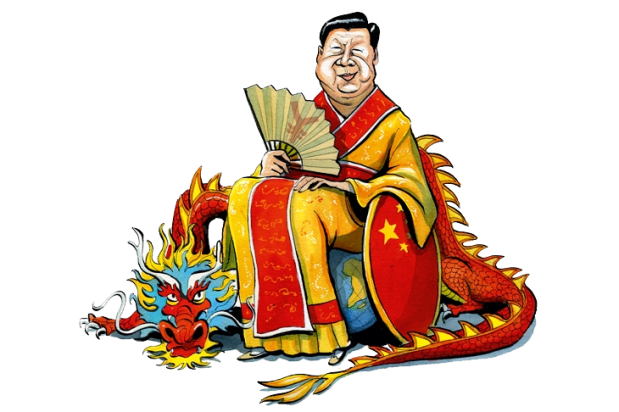
Revolution and ideological dissent have, in the past hundred years, overthrown democracies in Russia (1917), Germany (1933), Spain (1936), and China culminating in the People’s Republic (1948). Market-based democracies sequentially thrived and were then extinguished in Argentina and other Latin American countries from the 1930s onward. In the 1990s, Eastern Europe’s anti-capitalist dictatorships collapsed from internal recognitions of their own inability to deliver the living standards of the adjacent market-based democracies.
With a few Latin American exceptions, democracy and capitalism have generally survived huge political movements.
It is easy to forget that in many countries of Western Europe, notably Italy, communists and their allies all the way through to the mid-1970s pulled some 37 per cent of votes with platforms seeking to replace the free market with systems involving the expropriation a private property. At the same time, highly committed minorities marched against nuclear weapons and in favour of unilateral disarmament in the face of a Soviet government which would clearly have taken advantage of this to extend its control into Western Europe.
There are many examples – and perhaps Australia is becoming one – of democracies regulating and expropriating their nations into relative penury.
The US itself was hardly immune to the socialistic bacillus with highly interventionist presidents – Roosevelt, Carter, Obama, and Biden – juxtaposed by confrontational free market presidents like Reagan and Trump as well as moderates like Eisenhower and the Bushes.
However, there are no modern democracies that have engineered the depth of economic decline seen by socialist dictatorships.
Perhaps the most vivid example of these is resource rich Venezuela, once Latin America’s most prosperous economy, which in the past dozen years has seen real per capita income plummet to 30 per cent of its former level.
What does this mean for Australia?
It is clearly facile to accept anodynes like ‘the Australian people generally get it right in the end’.
Australian electors have always leaned left with unique support for centralised wage determinations and a tariff-sustained high-cost manufacturing sector. The nation’s sheer per capita natural wealth and the property-based institutional protections have allowed prosperity to grow in spite of these self-imposed impediments.
Deleterious political decisions have brought market-hostile Commonwealth governments (Whitlam, Rudd-Gillard, and Albanese) for over a third of the past 50-odd years; in addition, Victorians have voted into office a never-ending supply of left-wing, highly destructive state governments. Queensland has had mostly highly interventionist, big-spending Labor governments for all but six of the years since 1990.
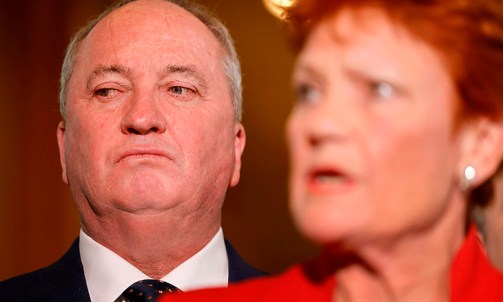
Steven Conroy is surely right when he pricked the bubble that sees One Nation’s support as ‘surging’ by pointing out that over the past few years the Coalition had bled four percentage points of support to the right and 10 percentage points to what he self-interestedly called the centre. This net loss to the interventionist anti-market political forces is having effects. These include attempts to curtail freedom of speech (only, of course, for those disputing the green left narrative), further tax increases/deficit financings, support for increased immigration, and debilitating support for renewable energy.
In the past, income losses from such interventions have brought a reaction. But many within the Coalition are individually heavily dependent for funding on the same forces that have propelled the ALP, Greens, and Teals into dominance.
Though the likelihood of Australia retreating from democracy is slight, the risk is that forces will continue to see a gradual weakening of private enterprise that is the sole promoter of economic growth.
Though having some capable senators, Australia is yet to find a Lower House equivalent of Trump, Nigel Farage, or Japan’s Sanae Takaichi. We do not even have a somewhat reformist Kemi Badenoch capable of devising the message of lower regulation and taxation, with immigration and education programs better tailored to our needs and social preferences.