A tradesperson in Geelong is not automatically recognised as one in Townsville.
Forms have to be filled out and applications made, depending on the trade. Just as there is no single railway gauge – a problem raised by Henry Parkes in calling for Federation in his Tenterfield oration in 1889.
We need national recognition of tradespeople and a single national goods and services market, not a patchwork of different labelling, licensing, and environmental regulations.
Duplication we all pay for.
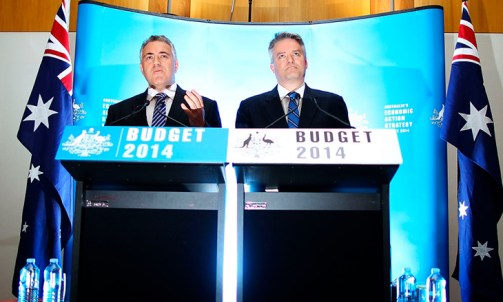
Work on these things was promised in the 2026 budget. Business said
‘…progress towards a single market is emerging … payroll tax harmonisation remains unresolved …’ (AiG).
And called for the Albanese government to ‘continue work’ on national recognition of tradespeople (ACCI).
The government claims its budget reforms will reduce the ‘regulatory burden by $10.2 billion each year and boosting long-run GDP by around $13 billion a year via work underway in National Competition Policy’. According to the Australian Financial Review, this could add another ‘Townsville’ sized economy.
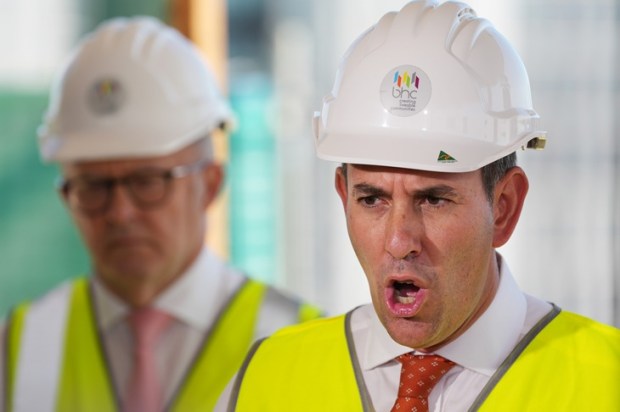
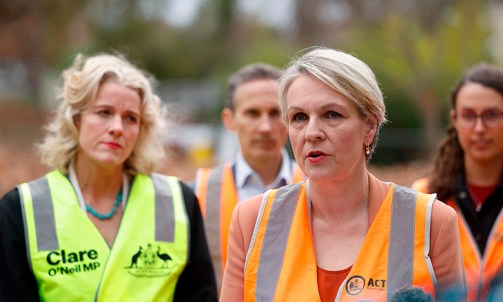
Some of the measures may be ‘shovel-ready’, at least, for a photo opportunity with the Minister leaning on a shovel at a building project with a hard hat (e.g. abolishing 497 nuisance tariffs). But many require a lot of further work.
No one knows how long a national market will take.
Henry Parkes is still waiting for uniform railway gauges.
The benefits claimed may be optimistic numbers…
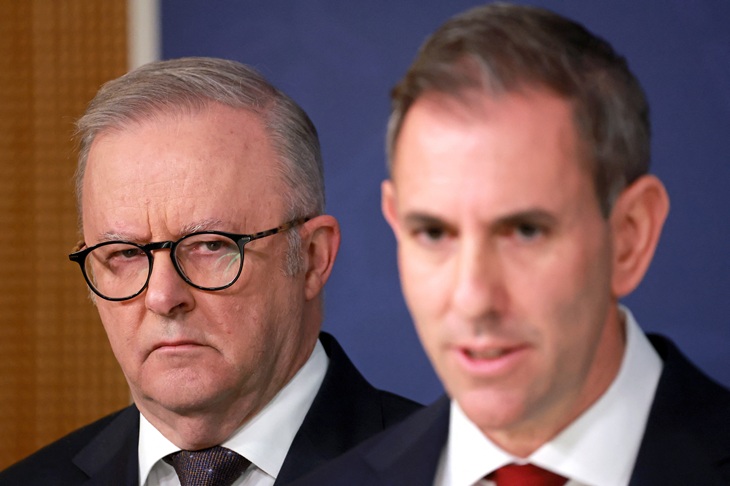
Jim Chalmers’ 2026 budget is a work in progress at best. Even though our productivity growth is currently negligible. For 2024-25 ‘on an hours worked basis: the market sector MFP (Multi Factor Productivity) fell 0.5 per cent; market sector labour productivity decreased 0.2 per cent’. (ABS) And there are new investment taxes.
Meanwhile, our liberal democracy is failing in other ways.
There is a vicious mean spirit abroad in many of our debates and institutions. Boycotts and public campaigns directed at individuals and groups are now a major problem. Unity is strength but mutual hatred is not even if it is diverse.
It is a mistake for Australia to become more Joseph Stalin than Barry Humphries.
Although exactly how far should a relaxed bohemian approach to living go? We may often go too far. Children have to be brought up and trained to be part of a civilised community. This requires a structured life, not chaos. Migrants must be integrated, something comprehensively neglected. These things require a confidence in our history and institutions, not endless qualifications and apologies.
The ‘duck test’ is surely the answer to keep the peace in a fractured society. If it walks, talks, and quacks contrary to liberal democracy and a civilised community, it requires further attention. We have a serious crisis of unity in which some people reject the basic premises of the country and yet are tolerated.
Even without such a baseline test, the governing party is made up of fierce political and cultural warriors. One allegedly unifying answer the federal government gives is ‘progressive patriotism’. I am not sure why it is necessary to flag support for a diverse and growing set of ‘causes’ in this way. We do not tell our spouses or children that we love them deeply except for their fundamental flaws and ‘issues’. Unless you want a divorce.
Why doesn’t the government simply support Australia and its values?
We obviously have values, easily recognisable by their absence if you travel. A ‘vicious mean spirit abroad’ does not capture the extent of the hatred shown in many of the world’s hotspots. Which some insist on bring to our streets, without any apology. That is the reverse of the sort of patriotism we should expect from immigrants and young people.
It recalls the religious wars of Scotland, where in 1662, the government ejected non-conforming Ministers from their houses and churches (kirks). Those Ministers foolish enough not to accept Bishops and a church hierarchy, lost everything. Such disputes belong in the 1600s, not today.
We are the inheritors of the European revolution in tolerance, which while rudimentary (‘we will not kill Catholics if you do not kill Protestants’) at least ended the thirty years of war with the Peace of Westphalia in 1648.
A good course in John Locke, the philosopher of English toleration, might be needed across the education system. We can do as they did in 1662 in Scotland. We can require recalcitrants to sign a piece of paper, this time committing themselves to toleration not bigotry.
If they fail to sign we could use driving offences as an example. People will have to attend long and boring courses to get their driving licences back.
It is obviously contrary to our ordinary values to have people up and down the country denouncing each other for thought crime. These are the new enforcers, the Puritans, who ‘hated bear-baiting, not because it gave pain to the bear, but because it gave pleasure to the spectators’.(Macauley) They banned Christmas.
An education in our Constitutional history might help too. William Wentworth told the NSW Legislative Council in 1853 that he wanted ‘that form of constitution which will be most likely to secure the permanent welfare of the country’.
But if you removed self-hatred and unrealistic demands from some of our history books, even constitutional law books, there might not be much left. Certainly nothing which provides directions for the future in a positive, useful fashion. On my count of two books one third of the chapters, and another close to half of the chapters would be removed leaving little or nothing about the future welfare of the people.
Australia’s early leaders, from Edmund Barton to Alfred Deakin, would be surprised by our governmental and intellectual neglect and weakness. Was it for this that they spent their lives attempting to build a modern country?
The Hon. Reg Hamilton, Adjunct Professor, School of Business and Law, Central Queensland University