Each of us, I suspect, has at least one pretty niche belief. A view so odd that its best chance of ever being revealed may be through the discreet inquiry of a pollster.
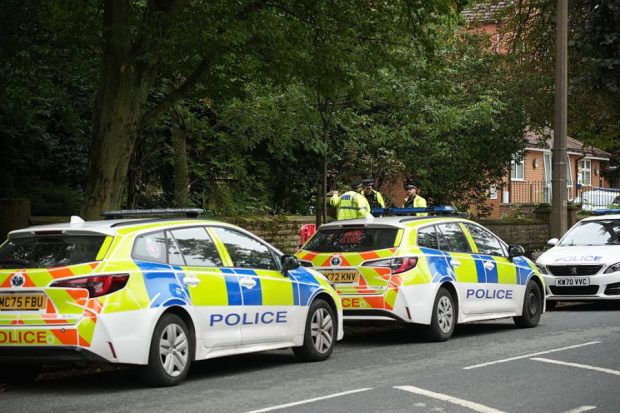
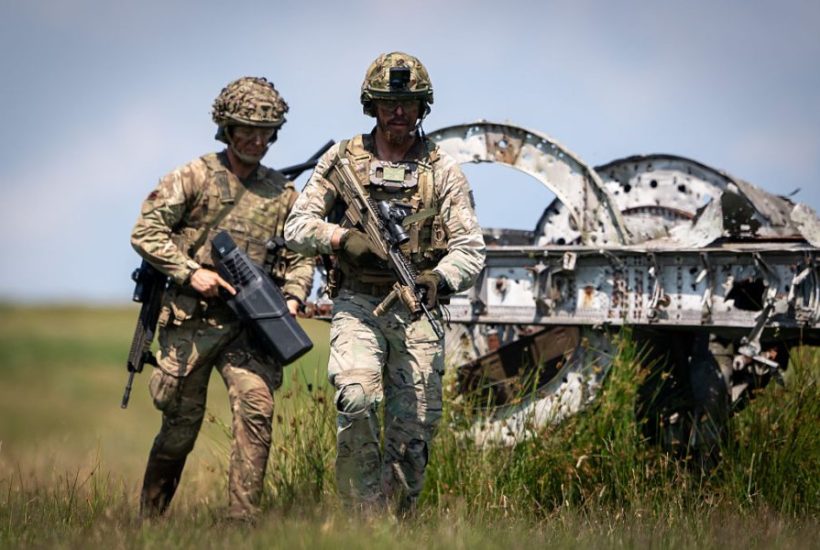
A YouGov survey has discovered just such an unusual attitude among our population. A poll of 2,300 British adults found that a mere 6 per cent would volunteer to fight for their country in the event of an ‘imminent’ invasion. An astonishing figure, even in an unpatriotic age. (A further 14 per cent said they would fight if called up, 17 per cent would refuse any order to do so, and 52 per cent declared themselves ineligible on physical grounds.)
How can we put that very modest number into context? Let me throw out a few examples. What is the proportion of 2024 Lib Dem voters who think we should be able to eat dogs? It’s 6 per cent, again according to YouGov’s figures. (Tory and Reform voters voiced similarly muted levels of enthusiasm, while Labour voters were almost twice as likely to support the idea.)
Six per cent also happens to be the proportion who told the same pollster that they thought 2025 had been a fairly or a very good year for Britain. And, among Americans in 2021, it was the number who said they could defeat a grizzly bear in unarmed, man-on-beast combat.
We may accept there is a pressing need to defend the country – but that’s probably someone else’s job
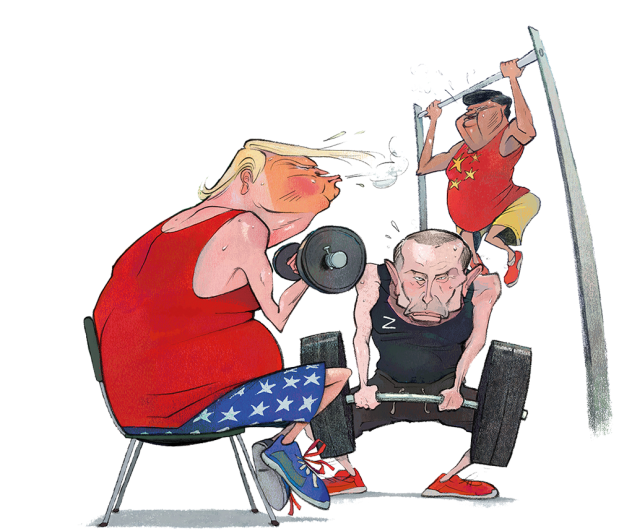
It’s broadly fair to say, therefore, that we are in the territory of the wacko, the kook and the outright loon. It seems that a willingness to volunteer to fight for Britain now places you at the fringes of what society deems reasonable.
The same poll found that a much larger number, 53 per cent, said they were not confident in the strength of our armed forces to defend the country. And what about their funding? Those who thought the government spends too little on defence outnumbered those who thought it spends too much by nearly ten to one.
There is a risk in rushing to judgment here. You might say that war has never been more terrifying. Who wants to be hunted by swarms of drones operated by a remorseless enemy for whom killing you increasingly resembles a game? Our great-grandfathers, though, might have felt much the same about the machine gun.
When it comes to a dearth of fighting spirit, many are fond of saying we are revisiting familiar territory. The most famous repudiation of patriotism is now almost a century old: after a bitter debate in 1933, the Oxford Union comfortably passed the motion that ‘this House will in no circumstances fight for its King and country’.
The vote caused consternation across the globe, and historians have argued over the effect it had in emboldening Hitler and Mussolini. But, when war broke out in 1939, nearly nine in ten Oxford undergraduates who could volunteer to fight did so.
Now, though, things feel different. There are no arguments to engage with over the morality of fighting for an empire, nor is there the long shadow cast by a million dead in a recent war. Today we may accept there is a pressing need to defend the country – but that’s probably someone else’s job.
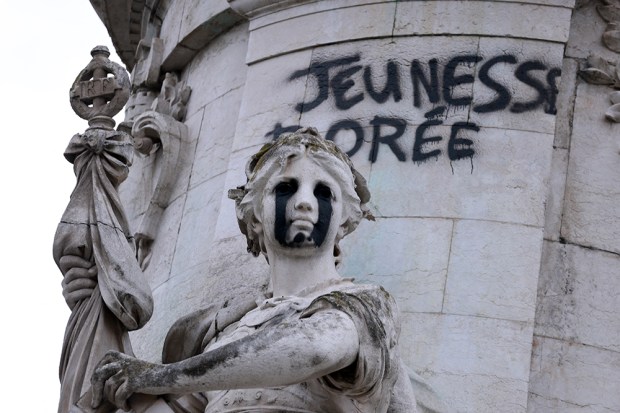
Of course, there’s a growing suggestion in some quarters that Britain may not be worth defending at all. With the albatross of past injustices around her neck, perhaps it would be fairer, and above all kinder, to let Britannia slip beneath the waves.
There are undoubtedly those of that view. This week’s poll happened to coincide with an intervention from one of Britain’s foremost thinkers, Jameela Jamil. Jamil, a former BBC Radio 1 presenter and now an actress in a US sitcom, told the hosts of a podcast in Los Angeles: ‘Americans think British people are so sweet, which is crazy, because British people are truly the most evil people in history.’
‘We colonised the world,’ she confessed. However, when it came to the matter of reparations to India for the ills of colonialism, she said it was not ‘we’ but ‘they’ who ‘owe 43 trillion [dollars]’.
Jamil, privately educated at a girls’ school in Marylebone and of Indian and Pakistani heritage, also declared that she didn’t enjoy visiting Britain, the country of her birth, because ‘there’s literally a race war happening right now.’
Her views were received with something approaching rapture by the two progressive hosts of the podcast Yestergays. But such beliefs are also more mainstream in Britain than you might think. A study of Gen Z attitudes for the Times last year found that half of those between 18 and 29 believe Britain is a ‘racist country’. Only 40 per cent said they were proud to be British, half as many as in a similar poll 20 years earlier.
Who would queue up to defend such a place? It seems likely that, unless this change in attitudes is reversed, the number of those willing to fight for Britain will dwindle still further. And of course, the reluctance to take up arms is not merely a question of national security. Even if Britain faces no foreign threat, what does it mean for a country when so few are willing to defend it?