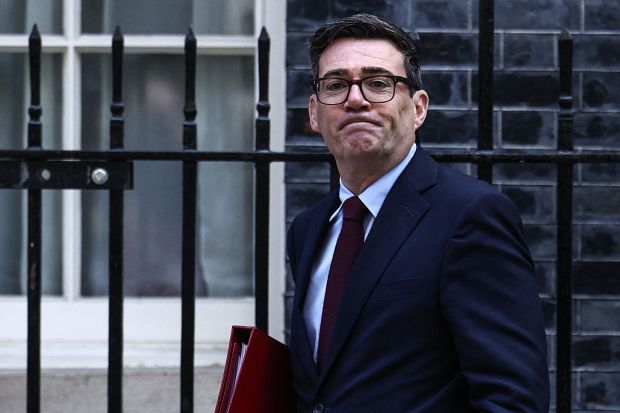
The strange thing about our new Prime Minister Andy Burnham’s professed wish to return to the 1970s, to a prelapsarian age before Margaret Thatcher, is that this kind of wistful, hopeless desire to turn the clock back has always been an accusation levelled at Reform UK and its supporters. How many times over the years have we heard voices on the left sneer at Nigel Farage and his acolytes, deride his and their delusional, insular, xenophobic, borderline racist yearning for ‘the Britain of the 1950s’? Yet few liberal-left figures today seem concerned that the new leader of the Labour party and this country unashamedly pines for The Good Old Days.
Many on the left long for an idyllic Britain that didn’t exist, a time many of them don’t remember, while those on the populist right recall a better time that did actually exist and one they did actually live through
If they did notice this dissonance they might discover something even more disruptive to the cosy liberal-left narrative. This is the reality that many on the left long for an idyllic Britain that didn’t exist, a time many of them don’t remember, while those on the populist right recall a better time that did actually exist and one they did actually live through.
The reasons why Burnham’s nostalgia for the 1970s is mistaken need only brief repeating: rampant inflation, strikes, power cuts, the IMF bailout, manifest national decline. One might also add football hooliganism, IRA terrorism and – a gentle reminder to the left – endemic and acceptable levels of racism, open homophobia and casual sexism.
Things did largely improve in the economic sphere under Margaret Thatcher, when the two boils of inflation and trade union power were lanced. As a result, by the 1990s this country seemed to be in a much better place. It wasn’t just the end of the Cold War which gave that decade its contented, if – in retrospect – complacent air. In this country, it seemed that we had become more at ease with one another, as racism, sexism and homophobia appeared on the retreat. Open bigotry in these fields had certainly become taboo. Society seemed to be integrating. Migration was not remotely the issue it had been in the time of Enoch Powell.
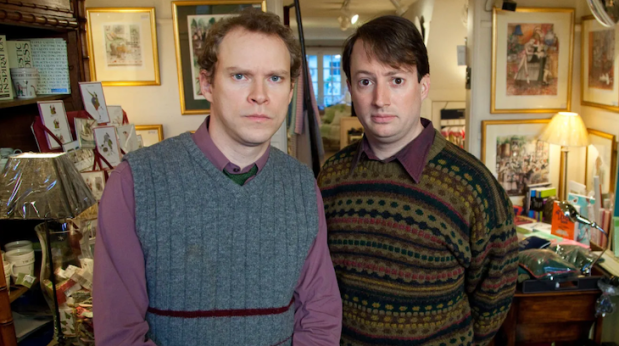
Contrary to myth, many people who support Reform UK or are sympathetic to it, don’t look longingly to the 1950s, if only because they’re too young to remember it. If conservatives and old-school liberals today yearn for any time gone by, it’s the 1990s and the early 2000s. This was a time, as the 25th anniversary of The Office reminded us, when we could still laugh at offensive things, without fear of cancellation or censure. It was a freer age.
This was before the full emergence of the technocracy and the globalist establishment of the ‘quangocracy, Whitehall, and the media class’ (as Robert Tombs described it in the Telegraph last week). This echelon, which effectively rules irrespective of which party is in power, also encompasses the civil service, the BBC, the leaders of the churches and the universities.
This was before the resurgence of mass, unwanted immigration, the first wave ushered in by Tony Blair in 2004, and the second wave welcomed by Boris Johnson this decade. This was before multiculturalism began its inevitable unravelling and Britain began its descent into sectarian politics. Gaza was never a general election issue in the 1990s. Islamism was not a problem. We never heard of ‘two-tier’ anything then, when there remained the hope that we could treat people equally, irrespective of colour.
Yet still we hear that populists on the right ‘want to a return to the 1950s’, even though their oldest allies are the Boomers who came of age in the 1960s. These are the radicals, liberals and hippies of yore, who rebelled against the grey conformity of the 1950s and its associated prejudices. That’s why they are still in revolt today, against woke intolerance and the authoritarian statism that has been inherent in the Labour party ever since Tony Blair became its leader.
Only in this week’s Corriere della Sera, Italy’s best-selling, centrist newspaper, in its write-up of Andy Burnham’s coronation, it repeated the claim that ‘Farage is a nostalgic nationalist, who dreams of a country in which nearly everyone was white and English, beers in pubs, fish and chips, flags fluttering.’ We shouldn’t be surprised to hear that cliché, considering that the Italian press is apt to repeat what it reads in the Economist or Financial Times when it comes to its coverage of Britain.
But it represents a widespread and entrenched, if misguided and distorted, view of what kind of nostalgia possesses those on the right today. Instead, it’s a genuine longing for an age they remember well and the open, healthy spirit that typified it.