Another major peer-reviewed study on so-called ‘gender-affirming care’ has been published, and predictably, Australia’s political class has responded with the same thing it offered after the Cass Review: silence.
The study, published this month in Acta Paediatrica, is as robust as research in this contested field ever gets. Finnish researchers led by Professor Riittakerttu Kaltiala followed every person under 23 who contacted that country’s specialist gender identity services between 1996 and 2019 – 2,083 young people – against 16,643 matched population controls, with up to 25 years of follow-up from complete national registers. No loss on follow-up. No self-selection bias.
Gender distressed adolescents had three times the rate of serious psychiatric morbidity before attending a gender clinic compared with controls (45.7 per cent versus 15.0 per cent). Those referred after 2010 – the cohort driving the global surge – were in worse mental health than earlier cohorts. Psychiatric morbidity did not subside after medical transition. It rose sharply. Among those who underwent feminising reassignment, specialist-level psychiatric treatment jumped from 9.8 per cent to 60.7 per cent; among those undergoing masculinising reassignment, from 21.6 per cent to 54.5 per cent.
Professor Kaltiala has since clarified that Finland’s specialist services are reserved for severe disorders – milder issues are handled at primary care. These numbers represent genuine mental illness. If gender dysphoria were the driver of this distress, medical transition should relieve it. It didn’t. For many, Kaltiala concludes, gender dysphoria is secondary to other severe mental disorders, not the source of them.
This pattern has already been established in Australia. A peer-reviewed 2021 study by Kozlowska and colleagues at The Children’s Hospital at Westmead documented the same picture in 79 patients presenting at the hospital’s gender clinic: anxiety (63.3 per cent), depression (62.0 per cent), behavioural disorders (35.4 per cent), autism (13.9 per cent), and suicidal ideation (41.8 per cent), alongside high rates of adverse childhood experiences – bullying, parental mental illness, family conflict and documented maltreatment. Our own clinicians have known this for years.
Which brings us, shamefully, to Australia’s elected leaders.
When the UK Cass Review – the most exhaustive independent examination of paediatric gender medicine – was published in April 2024 and found the evidence base for medical gender interventions to be ‘remarkably weak’, Health Minister Mark Butler, in my view, dismissed its findings as irrelevant to Australia. It took sustained public pressure – including an open letter from Women’s Forum Australia signed by over 100 public figures including former Prime Minister Tony Abbott, alongside doctors, lawyers, academics, MPs and detransitioners – before he finally commissioned a three-year NHMRC review in 2025.
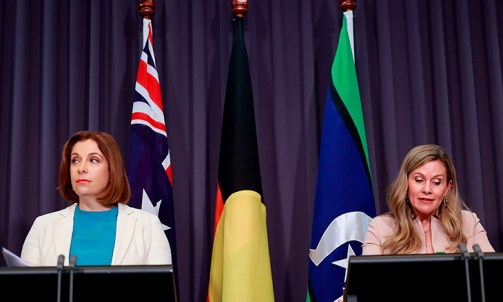
The NHMRC’s final guidelines won’t land until 2028 and interim advice on puberty suppression is not expected until mid-2026. Assistant Health Minister Ged Kearney framed the scope as not an inquiry or investigation but a routine update of ‘excellent clinical guidelines’ at the request of activist groups like AusPATH and Transcend.
The UK has restricted gender hormones for minors, banning puberty blockers altogether. The US Department of Health and Human Services has issued its own damning review. Sweden, Denmark, and the Netherlands have pulled back on the affirmation model of care. Meanwhile, Australia is conducting a ‘routine update’ on a three-year clock, with no interim safeguards, while children continue to be referred for irreversible medical transitions.
Disappointingly, the Federal Liberal Opposition has said nothing. A party that wants to convince the electorate it can be trusted on evidence-based policy remains silent on what may prove Australia’s worst medical scandal since Thalidomide – because the issue is politically inconvenient.
Queensland shows it doesn’t have to be this way. In 2023, then-LNP Shadow Health Minister Tim Nicholls spoke plainly during debate on the Births, Deaths and Marriages Registration Bill, recognising that gender dysphoria in young people is entangled with autism, depression, anxiety, trauma, abuse, and social contagion driven by peers and algorithms. He asked the question every responsible adult must: Can a child meaningfully consent to interventions that may sterilise them and permanently alter their development? Now Nicholls, as Queensland’s Health Minister, has translated those concerns into action, halting new public-system prescriptions of puberty blockers and cross-sex hormones for minors – a pause extended to 2031 pending the UK’s ongoing trial.
Having passed the buck to state and territory health ministers on these drugs, Butler has again remained silent as activists seek to crowdfund private specialists to prescribe young people with the very drugs Queensland has banned in its public system. Reports suggest the public gender service continues to triage new patients before handing them off to private doctors to write the scripts.
In 2021, Australian clinicians at Westmead warned the evidence wasn’t there. In 2024, the Cass Review warned the evidence wasn’t there. In 2026, the Finnish data shows active harm. It is my opinion that children are being irreversibly damaged right now, while our leaders calculate electoral risk. How many more studies, how many more detransitioners, how many more broken young bodies will it take before our political leaders on both sides of the chamber find the spine to do their jobs?
Stephanie Bastiaan is Head of Advocacy at Women’s Forum Australia