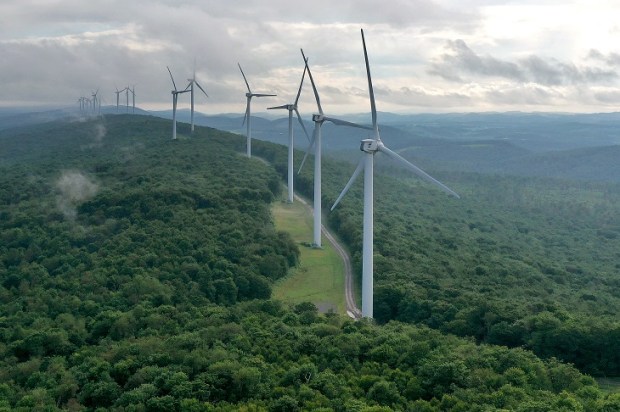
In the US, the Clean Investment Monitor has estimated the effects in investment of the Biden government’s Inflation Reduction Act (IRA), which is the primary Federal subsidy legislation for renewable energy. It reckons the IRA has brought ‘clean energy’ investment, including Electric Vehicles, to comprise 5.5 per cent of total private investment. US ‘clean energy’ subsidies, estimated at $US78 billion a year, are assessed to bring about 5-6 times this in terms of new investment.
In Australia, with subsidised ‘clean energy’ now comprising almost one-third of electricity supply (twice the US share), these subsidies loom even larger.
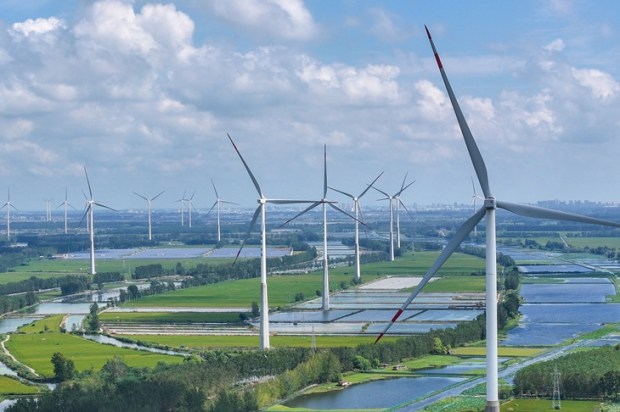
According to the Clean Energy Council, expenditure on large-scale wind/solar and batteries averaged about $4.8 billion per annum over the past five years. Although there is no comprehensive data on rooftop and other small-scale solar, that expenditure would have been at least as much, bringing the annual expenditure on wind/solar facilities to $10 billion.
Driving and augmenting this are government measures that create subsidies for wind and solar without which they would not be competitive. These include the Large-Scale Renewable Energy Target (LRET), the Small-Scale Renewable Energy Scheme (SRES), and recent additional requirements on the top 215 businesses (the ‘Safeguard Mechanism’). These subsidies are from requirements placed on energy retailers (and hence energy customers) to incorporate wind and solar into the electricity supply. They amount to $3 billion a year.
Further measures include the annualised costs of renewables to the system resulting from:
- the operator buying frequency control and contracting emergency supplies ($400 million)
- the Clean Energy Regulator’s costs ($750 million)
- the expansion of the transmission system and of Snowy 2 ($2,200 million)
- the new $68 billion Capacity Investment Scheme’s annual $5,775 million subsidy
- the Future Made in Australia and Hydrogen Headstart subsidies ($1,400 million).