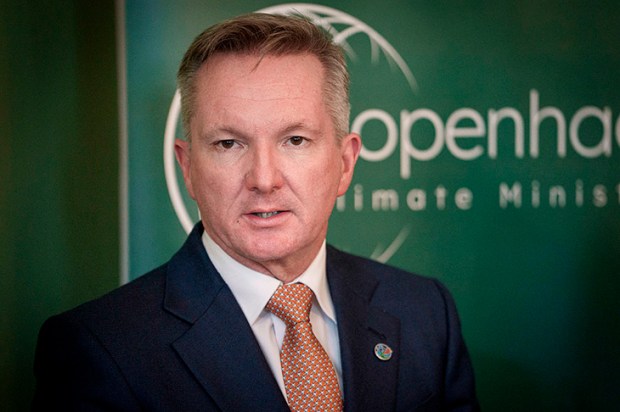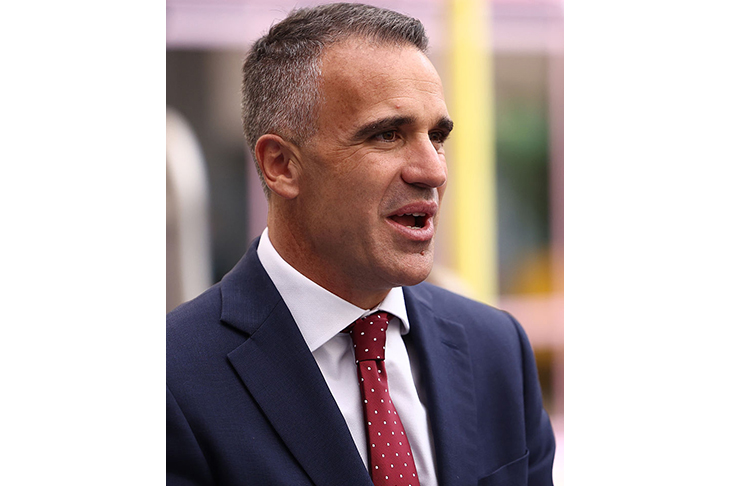
Come on girls and boys, admit it – he’s a good looker. Tall, athletic, softly spoken; I’m talking about the Labor Premier of South Australia, Peter Malinauskas. Let’s call him Mali because everyone else does.
First elected to the top job in 2022, he replaced the completely forgettable Liberal, Peter Marshall. Marshall was the person who shut down the state during Covid and stood by his hapless chief health officer who instructed everyone to refrain from touching a wayward football. Really?
Mind you, it wasn’t just Marshall who was pathetic. The Liberals went on to elect a drug user as their next leader; he was subsequently convicted. He spoke with such a thick Scottish accent it was hard to understand him. But with the benefit of hindsight, that was probably a blessing.
But let me get back to Mali. He has developed a reputation as the number one political leader in the country. From attracting sporting events to putting the state’s economy on a better footing than in the past, Mali is seen as the best premier the state has had since Don Dunstan – well, some people would make that point. (Personally speaking, I was always a big fan of Don’s pink safari suit.)
Now Mali has developed quite the reputation as a Teflon Ted. But Speccie readers are always suspicious of political leaders who are seen as doing no wrong. The truth is always more complicated.
To give Mali some credit, the South Australian economy has been performing well relative to the rest of the country. This is in marked contrast with the 1990s and the first decade or so of this century.
The current rate of unemployment in South Australia is 4.3 per cent; it is 4.4 per cent nationally. The rate of underemployment – people wanting to work more hours – is 6.7 per cent in South Australia, a tad higher than the national rate but nothing significant.
The rate of workforce participation in South Australia is noticeably lower than the national figure, which reflects the older age structure of the South Australian population as well as the high rate of public housing. (Those living in public housing are much less likely to participate in the labour force than others.)
Bear in mind here that public sector jobs figure prominently in the South Australian labour force, with the defence sector generating strong employment growth, in particular. There is also not much outside Adelaide in terms of employment: it is close to being a city state.
But should Mali really be treated as some sort of political rock star? One of the key issues he campaigned on during the 2022 election was ambulance ramping – patients stuck in ambulances waiting to be accepted for treatment in hospital emergency departments. Day after day, horror stories of ailing people waiting hours, sometimes expiring, appeared on the front page of the only newspaper in town.
Mali was going to fix ambulance ramping. Only he hasn’t really fixed it, because it is a genuinely wicked problem with blockages up and down the healthcare chain. He has thrown taxpayer money at the problem, but it’s not even clear that the incidence of ramping has budged much, notwithstanding some active massaging of the figures.
But like all shrewd politicians, he quickly turned to bread and circuses. He brought back some sort of V8 car race; he invited the Saudi-backed golf competition, LIV Golf, to hold tournaments in Adelaide; he organised the Australian Football League to hold a Gather Round in Adelaide each year. Let’s face it, sport and political popularity are closely related.
He has also been known to fling taxpayer dollars to induce pop stars to perform in Adelaide although he didn’t succeed with Taytay. (Yes, I know who Taytay is; I’m not a complete fuddy-duddy.)
But while entertainment is a first cousin of politics, budget management is something different. While some other states are in a class of their own when it comes to fiscal profligacy – Victoria, Tasmanian and Queensland are the standouts – South Australia is not really setting an example of sound budget practice to emulate.
To be sure, the state is managing to run some small recurrent budget surpluses. But the rate of increase in the government’s debt is a worry. In 2025-26, it is estimated that government net debt was close to $35 billion. By 2029-30, the figure is expected to be $54 billion.
There are two major projects that are trashing the liability of the state’s balance sheet: the North-South Corridor and the new Women’s and Children’s Hospital. Like large infrastructure projects around the country, the cost and timeframes of both these projects have blown out massively.
The one positive that can be said is that the Malinauskas government has no further plans for any large projects, unlike the Labor maniacs who are running the show in Victoria – think Suburban Rail Loop immediately after the $109-billion Big Build.
The laconic South Australian Treasurer, Tom Koutantonis, also refused to provide any additional cost-of-living relief – free public transport, for example – when the conflict involving Iran blew up. He noted that ‘free puppies’ might be popular, but he was not for turning.
One weak policy link in South Australia is its love affair with renewable energy, an attachment shared by both political parties. It is the state with the largest penetration of renewable energy installations, having closed – and then blown up – its relatively new coal-fired electricity plant in Port Augusta over a decade ago
The net effect has been high electricity prices and a dependence on electricity interconnectors with Victoria and some gas, features that limit the industrial development of the state.
Mali was also seduced by the green hydrogen story that, of course, also captured the imagination of B1. (We don’t hear too much about green hydrogen these days. The Australian Hydrogen Council has even changed its name to the Australian Industrial Decarbonisation Council. That’s a good laugh, right there.)
Some $500 million was to be allocated to a government-owned green hydrogen project located in Whyalla, adjacent to the steel mill. The end-product would be green steel which, by some sort of magic, would attract a premium price from customers keen to do the right thing by the climate or be forced to by green tariffs, courtesy of B1.
Unfortunately, the Whyalla steel mill blew up literally and commercially just in time, thanks to the champion grifter, Sanjeev Gupta, failing to maintain the plant. Mali quickly shifted the hundreds of millions of dollars to saving the mill, quietly dropping the green hydrogen venture. But at the time of writing, Whyalla Steel is still in administration seeking a new owner. The money is quickly evaporating.
My advice is to put away the rose-coloured glasses: Mali is one of the better ones, but he is still a politician. His Labor right/Catholic instincts are preferable to those of the socialists on the left. But he makes mistakes.
Got something to add? Join the discussion and comment below.
You might disagree with half of it, but you’ll enjoy reading all of it. Try your first month for free, then just $2 a week for the remainder of your first year.