‘The louder he talked of his honour, the faster we counted our spoons,’ was Ralph Waldo Emerson’s immortal line to express his practical scepticism of hifalutin self-aggrandisement. We should probably have some similar aphorism about high-profile left-wingers who loudly advocate for egalitarianism in education while quietly sending their own children to selective or fee-paying schools. The list is long, and includes such influential figures as Diane Abbott, David Aaronovitch, Polly Toynbee, Harriet Harman, and Corbynite éminence grise Seumas Milne. Nick Clegg and Tony Blair, meanwhile, both sent children to the London Oratory, nominally a comprehensive state school but with the kind of highly expensive catchment area that renders the label more than a little ridiculous.
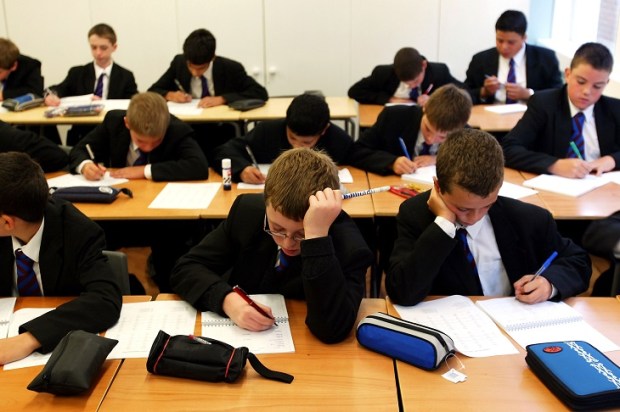
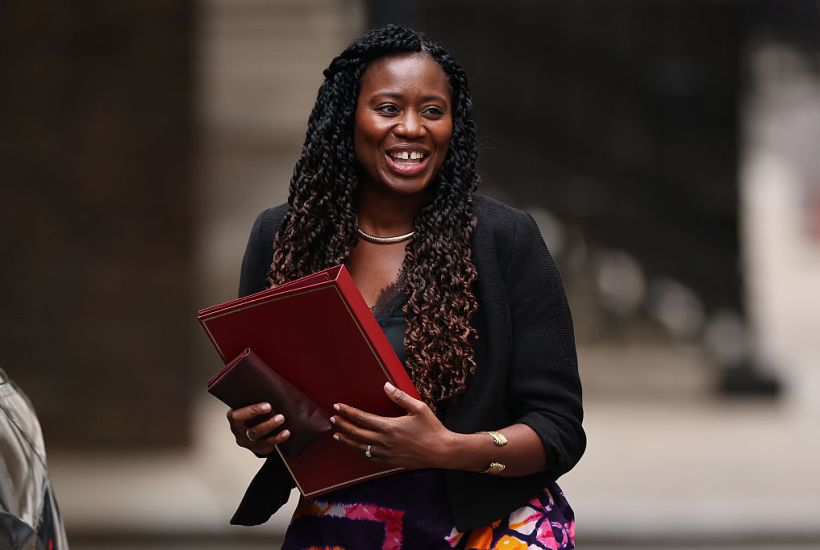
The newest member of the club is Miatta Fahnbulleh, Andy Burnham’s Secretary of State for Energy Security and Net Zero. Having supported the addition of VAT to school fees – a policy which has led directly to the closure of multiple schools and added perhaps 30,000 children to the state system – it has emerged that all three of her children are privately educated.
The standard defence offered in these situations is that parents are entitled to make the most appropriate decisions for their own families. We don’t know the circumstances, so it is not our place to judge. Children have different needs, and so forth. Now this is all true; politicians and commentators are not necessarily obliged to sacrifice their own children on the altar of their ideology. However, those who offer such mitigation rarely seem to reflect on the logical corollary of their argument: that they should not be preventing other parents from making similar choices. To put it another way, they should not be sacrificing other people’s children on the altar of their ideology, as they do when they limit access to various forms of independent education or to selective education within the state sector.
It really does matter that those who presume to rule over us, and to dictate how we educate our children, refuse to play by the rules they expect everyone else to follow
Charges of double standards around education don’t seem to get much traction in the current media landscape: Fahnbulleh is unlikely to pay any political penalty. But it is worth emphasising the injustice highlighted by this latest addition to the society of socialist hypocrites. It really does matter that those who presume to rule over us, and to dictate how we educate our children, refuse to play by the rules they expect everyone else to follow. Not least because it exposes the critical weakness of the current model, where the majority of parents must simply endure whatever the state decides to do. Those who try to chart a different course are treated with suspicion and hostility. For example, alongside the imposition of VAT on school fees, the Children’s Wellbeing and Schools Act (CWSA), which became law this year, has significantly strengthened the state’s powers to interfere with homeschooling. Local authorities are now required to keep a register of all children not in conventional school education, and it will be easier for them to issue School Attendance Orders. Doubtless there are cases where neglectful parents, or those with nefarious reasons for removing children from the school system, need to be monitored and sanctioned, but there were many tools available for this task before the CWSA. Given the censorious and totalising tendencies of contemporary Official Britain, it is not hard to see the authorities harassing perfectly normal and loving parents who are simply at odds with the establishment on matters relating to, say, gender, sexuality or patriotism.
Tensions over education are to some degree a microcosm of the wider disagreement between left and right over the relative importance of equality on the one hand, and freedom on the other. If you engage with a ferocious opponent of independent schooling or homeschooling, very often you will find that their deepest objection is to the idea that families or communities might make their own decisions about what we might call the ‘moral atmosphere’ in which their children are raised. In this view, only the state, in its impartial wisdom, can ensure that the next generation are appropriately formed in correct thinking. This is an essentially authoritarian view.
There is – or at least was – a more pluralistic left-wing tradition, which took seriously the flaws of a conformist education system controlled by the government. Maria Montessori, for instance, rooted the methods that now bear her name in a fundamentally liberal critique of the existing highly regimented institutions. Hippyish critiques of mass education during and after the Sixties were premised on the dangers of crushing individuality in the name of standardisation.
One might think that the progressive worldview of our own day, intensely preoccupied as it is with self-actualisation and the validation of the individual’s own conception of himself, would prefer an approach which lets a thousand flowers bloom, and which offers different approaches and styles and emphases for different kinds of person. The idea that every single child must be in full-time education from five to 16 or 18, warehoused in enormous, mostly state-run institutions and rigidly stratified by age, is not some eternal verity. It is a relatively recent norm, emerging from a particular set of what Marxists call material conditions. Its attraction for the modern left is that control of the schools is essential for embedding and protecting their permanent revolution of customs, morality and manners.
If you are feeling provocative, you could perhaps frame the left-right divide with a question: in your ideal world, would there be no private schools, or would there be no state schools? At the most basic level, state schools are a solution to a market failure rooted in a co-ordination problem: for most ordinary people, it is hard to accumulate the financial and social resources, and the pedagogical know-how, to band together with a sufficiently large number of other citizens to give your children a good education. There is no reason in principle why the state should have to be responsible for schooling, although in a sophisticated and technologically advanced modern economy, there are compelling arguments for some kind of state involvement.
It would be good, then, for Miatta Fahnbulleh and others to properly articulate their reasons for choosing private education, contrary to their fervent public devotion to equality. They might then begin to extend a little more understanding and tolerance to the others among us who are, for many reasons, sceptical of what the state has to offer.