Two days is a very long time in British politics. On Saturday it was being reported that Andy Burnham might block the early release of two men who killed policeman Andrew Harper. No doubt the PM was motivated in part by a petition making that demand, which now has almost 900,000 signatures. On Monday we learned that Downing Street was briefing that it ‘cannot stop’ their early releases, claiming it is ‘not possible’ to exempt just these two men from the scheme. By Tuesday morning the story had changed again – now we were being told that the PM has asked the Justice Secretary to find a way, with Angela Rayner saying that plans will be announced in September to block early releases for those who killed police officers.
This deserves a cautious welcome, although if the government creates a different, harsher category of sentence for those who kill agents of the state, it doesn’t seem they will making our justice system fairer or more equal. It is worth remembering that parliament can do whatever it wants. In 2020 emergency legislation was introduced preventing the early release of prisoners convicted of terrorism offences. It took just a fortnight to be enacted as law, and came into effect immediately. Parliament can also legislate as quickly as it wishes. Indeed, last year this very parliament was recalled in order to pass the Steel Industry (Special Measures) Bill. During 12th April the bill passed through every necessary stage, receiving Royal Assent at 6 p.m. So the Prime Minister, with his huge majority, absolutely can pass legislation to prevent the release of these men. He could also do other things such as legislate to ignore planning constraints and ensure we actually build the prisons we need.
Thus far though, like Starmer before him, Burnham seems to be unwilling to do much with the awesome power he holds. Were Britain a thriving, prosperous and safe nation, this might not matter. But the justice system is in terminal decline, probation professionals are warning that women will be killed as a result of the early release scheme and the PM seems only willing to fiddle at the margins, accepting a system in which we don’t sentence on the basis of risk to the public, rehabilitation or punishment, but instead on whether we have enough cells.
The contrast with Reform could not be greater. Yesterday Nigel Farage and Zia Yusuf announced a set of policies which would overturn the entire recent consensus on sentencing, with the aim of ‘Keeping Criminals Behind Bars’. Reform promised to end early releases for ‘serious violent crimes and rape’, so that those prisoners would serve their entire sentence behind bars. Less dangerous inmates would be eligible for release halfway through their sentences. They also promised to bring back short sentences (those shorter than 12 months) which Labour have scrapped. Much of this would merely restore the system which existed before summer 2024. But Reform intend to go further – bringing in mandatory whole-life tariffs for men who rape children.
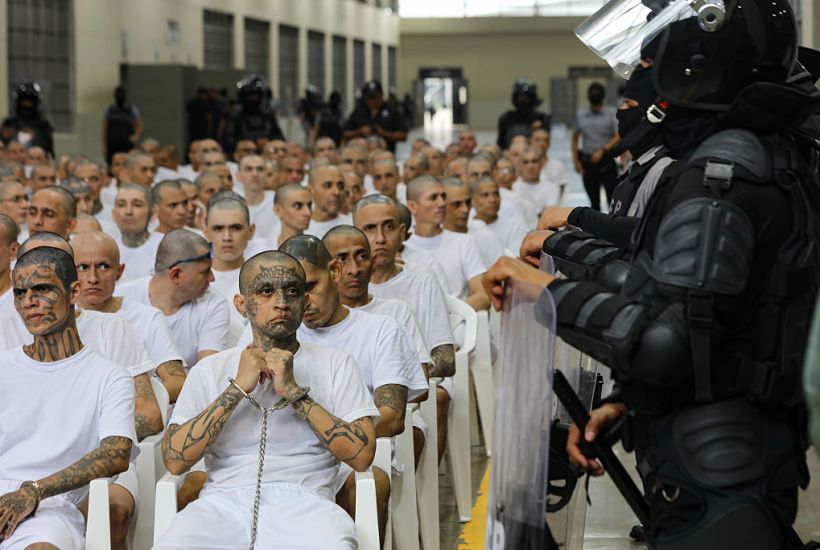
All of this is estimated to add another 18,500 to the prison population. Which we don’t have the space for. This is where Reform demonstrate their willingness to be bold – they are proposing to strike deals with countries like El Salvador and Kosovo to house foreign national prisoners there, albeit ‘ensuring prison conditions meet British standards’. They point to the example of Denmark which is currently renting prison places from Kosovo for ‘approximately €70,000 per annum’ per cell. Anticipating legal challenge, Reform say they ‘will remove all legal barriers to’ this policy, ‘by leaving the European Convention on Human Rights, derogating from or disapplying other international treaty constraints, repealing the Human Rights Act 1998 and enacting our Illegal Migration (Mass Deportation) Bill’.
Simultaneously, Reform say they will build 12,400 new prison places on Ministry of Defence land within the first 18 months of winning power. They argue that this will allow the ‘rapid construction of modular prisons’, that they ‘will change planning laws as necessary’, and use the military aid to the civil authorities framework to have the military build the prisons, removing delays caused by waiting for civilian construction contractors to be security cleared.
The policy announcement doesn’t cover every detail, something politicians such as Nick Timothy have been quick to note, and executing it successfully will require rapid removals of foreign nationals and very rapid prison building.
But to their great credit, Reform aren’t willing to accept the managed collapse Labour are offering us, where reoffending soars, recalls soar and horrific, preventable acts of violence take place. Unlike Burnham, and unlike Starmer, who believe the law is their master, Farage and Yusuf recognise that the job of governments is to change the law in order to serve the interests of the British people. They are offering a vision of a prison system in which we have enough space to jail everyone we wish to. It shows how meagre our ambitions have become as a country that this seems bold – it should be one of the core functions of any state. Let us hope Burnham is shamed into breaking his cage – not just changing the rules for high-profile cases, but actually seeking to fix the whole system.