Parents are not waiting for a white paper. They are leaving.
Queensland’s figures are plain. Registered home education rose from 3,411 children in 2019 to about 11,800 in 2025 – the steepest rise in the country. Three-quarters of those who started in the latest collection came from a school.
That is an exit.
Not all homeschoolers register. A national curriculum has had about 16 years to lift the floor. Naplan is broadly flat, and about one student in three still misses the benchmark. PISA has recorded a long decline in mathematics, reading and science. Real spending, principally by the states and to a lesser share by Canberra, has risen. The scores have not.
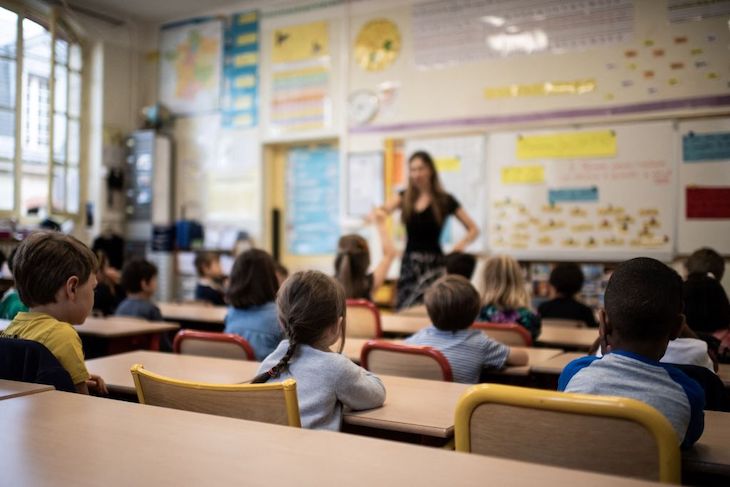
Australians are raised to believe a school is a place where a syllabus is delivered. Everything says so: the curriculum, Naplan, teacher training, the way Ministers talk. Choice then sounds like a luxury, or a threat. The American evidence says otherwise. Charter students, matched against the district schools they would otherwise have attended, gain extra days of learning – and the gains are larger for black students and students in poverty. In August, this magazine published Corey DeAngelis on Arizona, where families fought to keep a universal choice program. Australia has the same parents and a thinner menu.
The menu here is still three rungs: a State school, a Catholic or mostly high-fee independent schools, and the kitchen table. The missing rung is the affordable, parent-run independent school – Montessori, Steiner, a small forest school, or a democratic Sudbury-model campus that families establish and pay for, including with fees.
The Hon. John Howard OM AC has not changed his mind. He wrote this year:
‘I strongly support the right of parents to choose affordable educational options for their children … severe accreditation rules should never become a way of preventing you and your co-parents from doing what you have sought to do.’
That is the sentence the law has not caught up with.
When the former Queensland Labor government tried to tie home education more tightly to the Australian Curriculum, 774 of 775 published submissions on that clause opposed it. Cheryl Vardon AO’s review of the non-state accreditation framework said parental choice is fundamental. Parents were not asking to be unregulated. They were asking to be believed, and asking that the Non-State Schools Accreditation Board not sit over them as an adversary. The same goes for small independent schools.
Inside that argument is a smaller choice, and it is the one the Act still cannot see. A Sudbury-model school is not a charter, and it is not an Australian school that calls itself democratic and still teaches the syllabus in its own way. Sudbury Valley School in Massachusetts has run solely on fees since 1968. Young people decide what to pursue, on a campus, under rules they help to make. It operates democratically. There is a School Meeting, a Justice Committee, and real consequences. It is not laissez-faire. The load sits on the student. A curriculum is not forced. Failure is part of the work: try, fail, reflect, and go again. Close to three-quarters to nine-tenths of Sudbury Valley graduates go on to some further study. Employers and universities who meet them remark on speech, initiative, and the ability to work without being told the next step.
Thirty-two years ago, parents in the Maleny area of the Sunshine Coast hinterland began building such a place. The Booroobin Sudbury School opened in 1996. At first, its parent body was a co-operative, then a company limited by guarantee. There was a written democratic Constitution. It was not a brochure. Queensland’s 2001 accreditation Act, brought in under Labor after the Goss government had abolished inspectors of State schools, put external assessors onto non-state schools. Parents who paid the fees had already agreed the school would not coerce a State course. Accreditation was taken. The 2017 Act is better. That improvement began with a review set in motion in 2014 by then Minister for Education, the Hon. John-Paul Langbroek MP. It still defines a school as a place that teaches and reports a planned curriculum, or an alternative the curriculum authority already recognises. Montessori and Steiner can pass that test. Sudbury cannot. Students are successful anyway.
These schools are a cork in the ocean. A few families will choose them. They will not threaten State, Catholic or other independent schools. Most Sudbury schools overseas take no government money. A self-funded class – lawful, safe, and not on the public purse – is the cleanest way to let that choice exist. A second path can stay open for schools that do take public money and can show learning from what students actually do. Neither path asks the country to abolish the syllabus for everyone else.
None of this asks a Minister or a Board to like the model. It asks a liberal country to stop making one method of learning the price of being a school at all.
Derek Sheppard co-founded The Booroobin Sudbury School in 1996. He is an invited member of the Executive Committee of Montessori Australia and lives in Gympie.