In Blackadder the Third, Series 3, Episode 5, ‘Amy and Amiability’, Warren Clarke’s Josiah Hardwood cuts a formidable figure. The supposed prosperous northern industrialist has patented the ‘Ravelling Nancy’ – a mysterious machine that ravels cotton – and swaggers around his estate with the confidence of new money and old certainty. His daughter Amy seems the ideal match for the penniless Prince Regent. Then comes the reveal – the Hardwoods are broke. They have been living on lard butties for years. The great house is a façade, prosperity a theatrical set. One can almost imagine Hardwood in the scullery, stripped of every trapping of wealth, as he admits that he uses his underpants to dry the dishes. It is difficult to devise a better image for a certain kind of modern political biography. Grand frontage, heroic story, and a rather less impressive reality behind the kitchen door.
Modern politicians are a lot like Harwood. They like spinning fictitious biographies that equivocate just enough true information to present themselves as relatable and ‘chummy’ without descending into the murky waters of full-blown deceit. In the modern age of social media, a good backstory holds more relevance than good policy.
The old formula of a housing commission childhood, the single mother making every penny count, the father on the factory floor, the family shop kept alive through sleepless nights is a popular trope in this new genre of literature. Oh, I beg your pardon, I mean a totally truthful and not at all hyperbolic factor of political discourse. Do not get me wrong – not all these anecdotes are the antithesis of truth, devoid of clear facts. Many on both the Left and Right genuinely came from nothing but manage to accomplish great things. The problem begins when experience is edited into legend. An ordinary upbringing polished into deprivation, a family occupation transformed into status, or an anecdote acquiring more heroic details each time it is told. Political communications have long treated a candidate’s life as raw material. The obstacles become taller, the protagonist becomes braver. In some cases, family history is polished into legend and so overinflated that a claim of descent from Brutus of Britain begins to sound less like satire and more like something awaiting approval from the communications team.
Britain demonstrates the new problem well. Former Prime Minister and technocrat Keir Starmer has repeatedly spoken of his father as a toolmaker and his mother a nurse. The basic account is well established. Yet, ‘my father was a toolmaker’ became so paramount to his political presentation that the phrase itself attracted investigation and parody. The important distinction is between a fact and the emotional freight attached to it. ‘My father was a toolmaker’ can be verified. ‘Therefore, I possess a uniquely working-class political consciousness’ is an argument that speaks to the right demographic.
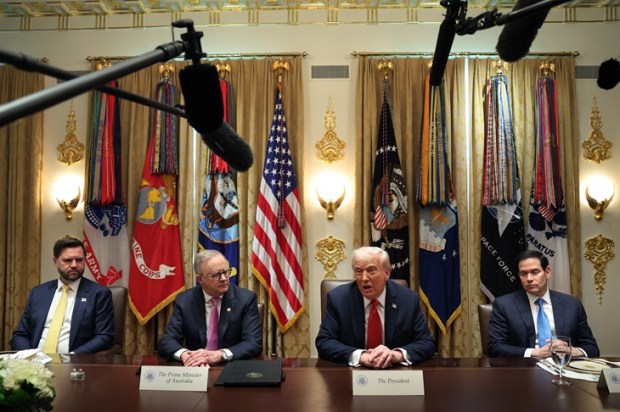
Similarly, Anthony Albanese’s story of being raised by a single mother in public housing is central to his political identity and readily documented. That does not require voters to accept his policies. It does show that scrutiny need not kill the authentic origin story. In a political market engulfed with manufactured intimacy, confirmable biography may become more valuable. Despite his lack of policy direction or any common sense, Albo does have an advantageous story that is actually true.
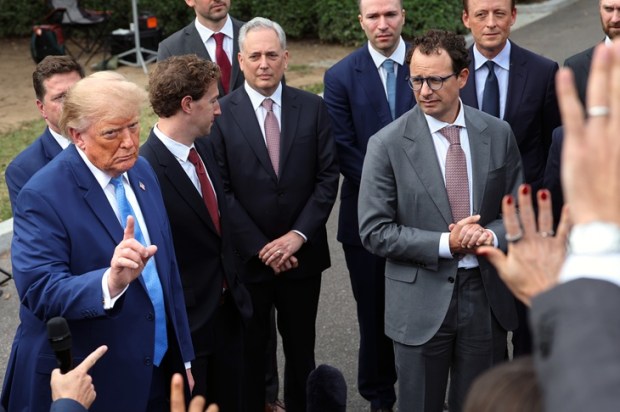
The United States supplies the spectacular cases. In the interest of bipartisan fairness, I am sure the current occupant of the White House has, at some point, told a porky pie, polished an anecdote or allowed a good story to improve the retelling. Donald Trump is hardly a politician associated with excessive autobiographical modesty. But the more readily documented examples are instructive. George Santos turned résumé inflation into an art, turning his life into a story worthy of F. Scott Fitzgerald. Hillary Clinton’s 2008 account of arriving in Bosnia under sniper fire was undone by archival footage showing a calm reception. Joe Biden has repeatedly told versions of stories in which he was arrested or detained during civil-rights activity. Fact-checkers have found that some of the dramatic arrest claims could not be supported. It’s also been alleged that he occasionally took creative licence with words and phrases made famous by the Kennedy brothers and other political orators.
What has changed is not that politicians have suddenly become less inclined to embellish, rather, their electorate now has access to an archive. Old interviews, news articles, school records, photographs, forgotten television appearances, and old ‘Twitter’ posts can be recovered in minutes. A biographical claim that once might have survived an entire political career can now be fact-checked before the politician finishes repeating it. Social media has made political mythology unusually fragile. The heroic narrative can still be constructed, but the evidence to dispute it is at our fingertips. The irony is exquisite – the very media environment that made personal biography more important has also made fabricated biography considerably harder to sustain.
Politics needs leaders whose stories can survive scrutiny. The age of the unchallenged origin myth is ending. The scullery door is open. And if the crockery really is being dried with underpants, someone, somewhere, is going to find the photograph.