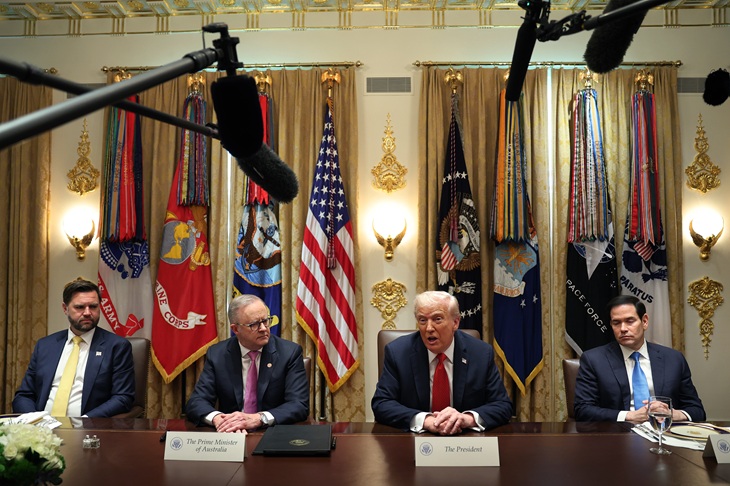
You would think that going against the United States – the most powerful country, with President Trump acting as the ‘chief of the world’ – would distance any leader from trying to censor their citizens, considering Trump has pushed free speech ever since 2015, when he first ran on strongly enforcing it.
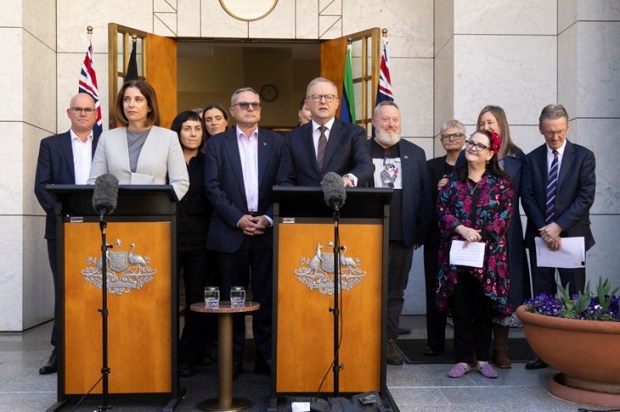
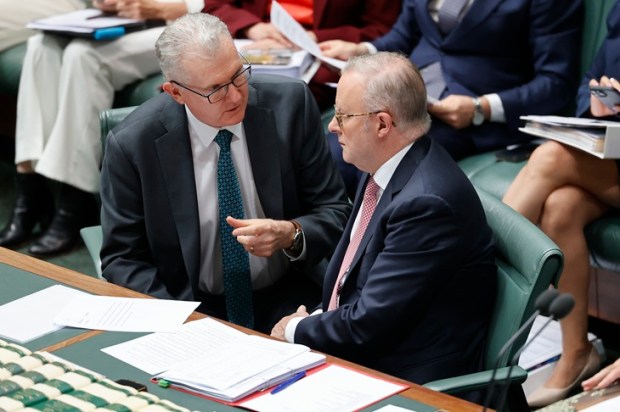
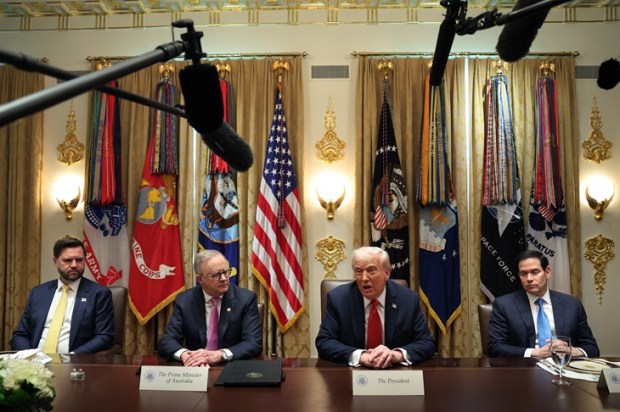
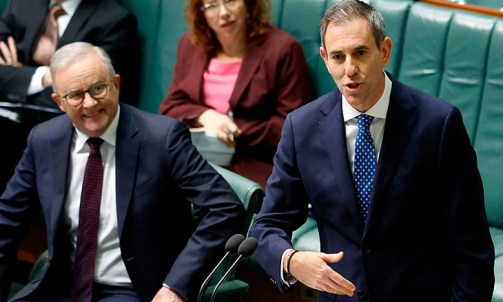
Either out of ignorance or stupidity, the Labor government doesn’t seem to learn its lesson on censorship and how it doesn’t win over our friends in the States. The Trump Administration has once again criticised the Labor government, led by Anthony Albanese and championed by Communications Minister Anika Wells, for restrictions on free speech, this time over the new Digital Duty of Care Bill – or, as it’s more commonly called, the ‘censorship bill’.
In a statement, the Trump Administration said:
‘The United States has serious concerns about the Australian government’s stated goal of mandating broad duty of care requirements that dictate how platforms manage content and users’ feeds.’
It also clarified:
‘Concerns include: 1) how the Australian government, or the communications minister, would designate what constitutes “foreseeable harm”; and 2) any resulting requirement that platforms alter their algorithmic systems to suppress expression that should be protected in order to avoid liability, or, if not an explicit requirement, any approach that would likely result in platforms defaulting to pre-emptive censorship to avoid the risk of liability.’
Sadly, this isn’t the first time the Trump Administration has called out Australia over freedom of speech – if anything, it seems to be the main point of contention between the two countries.
Multiple times throughout 2025, especially around events following Bondi’s terrorist attack, the Albanese government passed bills aimed at limiting ‘hate speech’, though critics say they mirror UK-style censorship laws. Many White House officials have come out attacking the Australian government over this.
In May 2025, the US State Department condemned Australia for requiring the platform X to remove a post by activist Chris Elston (‘Billboard Chris’), warning that ‘censorship undermines democracy, suppresses political opponents, and degrades public safety’.
House Judiciary Committee chair Jim Jordan labelled Australia’s Online Safety Act a ‘foreign censorship regime’ and formally wrote to eSafety Commissioner Julie Inman Grant, stating that her ‘expansive interpretation’ of the law and ‘claim of extraterritorial jurisdiction to censor speech outside of Australia’ directly threatens American speech.
Even Under Secretary of State Sarah Rogers wrote online: ‘A statute that imprisons you for calling to deport jihadist extremists – but provides a harbour if you are a jihadist extremist – would be deeply perverse. Let’s hope this isn’t what Australia intends.’
America’s concern for protecting Australia’s freedom of speech doesn’t stop at the digital world – it extends to Australian university campuses too. In 2025, shortly after Trump’s inauguration, the White House/OMB issued a temporary freeze on federal funding, including some overseas grants, which they claimed was about reviewing whether universities were teaching ‘DEI’ or ‘Woke gender ideology’, and whether Australian universities were encouraging free speech and open debate.
In mid-March that year, US agencies sent a 36-point questionnaire to researchers at Australian universities (and CSIRO) who had received US government grants, asking them to justify their funding and to explain whether their institutions were fostering – and, importantly, supporting – free speech. Following that review, some projects remained paused, while others, including at least one at ANU, were terminated, ultimately because they failed to meet what the Trump Administration was trying to enforce.
This, though, isn’t an entirely inaccurate picture: many Australian university students feel they can’t express their political opinions. A Government Student Experience Survey (Menzies Research Centre analysis, 2024) found 28.3 per cent of domestic undergraduates didn’t feel free to express their views on campus – rising to 44 per cent in ‘society and culture’ disciplines like politics, law, and the humanities. A separate Institute of Public Affairs survey of 500 students found 41 per cent felt sometimes unable to express their opinions at university.
This data isn’t shocking to me. As a conservative university student myself, I’ve seen firsthand students scared to voice their views for fear of a bad mark or backlash from peers and lecturers – and I’ve experienced it myself.
So, to see the Trump Administration once again calling out the Australian government over freedom of speech – an issue held dear to Trump’s heart – doesn’t bode well for the relationship between the two countries. The Labor government’s policies around limiting ‘hate speech’ or ‘serious harm’ risk fostering a government that erodes personal freedom of speech, given that, as Anika Wells put it, what counts as harmful or hate speech will be ‘made by me on the expert technical advice of the eSafety Commissioner’.
In line with this, White House economic spokesperson Kush Desai said:
‘President Trump has unequivocally warned trading partners against imposing digital services taxes, fines, and other forms of extortion on America’s leading technology sector. The Administration remains committed to raising these issues with our trading partners.’
So, at best, the Albanese government will have to drop the ‘censorship’ bill; at worst, Australia may find itself on the list of countries facing high tariffs, or even damaged diplomatic relations – neither of which is needed at a time like this.
William Nye is a Brisbane-based Australian student and op-ed columnist covering global/domestic politics, culture, economics and international affairs, with a strong focus on US politics. His work has appeared in The Spectator Australia and the Washington Examiner.