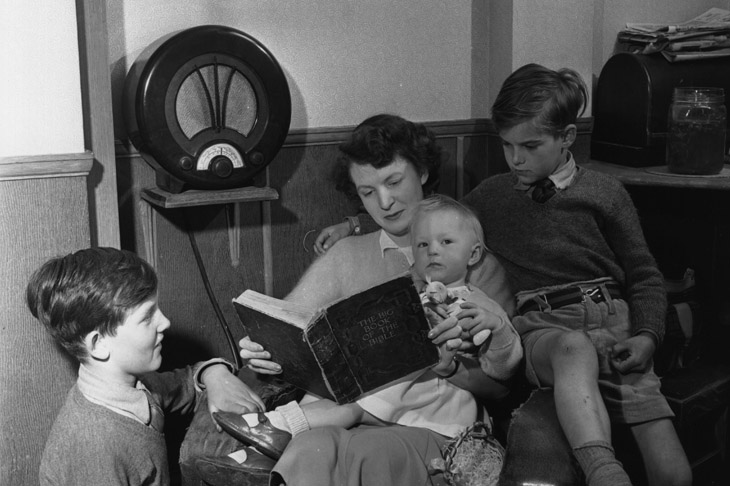
Recently, 60 Minutes ran a segment on tradwives: the women who have stepped away from the ordinary demands of a career to spend time in the home while their husband works.
From the conservative Americans who view gender roles as biblically ordained to the families who simply find it to be the best arrangement, tradwives exist on a spectrum ranging from gender essentialist evangelists to families tired of the rat race. Much of this is a social media phenomenon, with women showcasing their elaborate meals and tidy homes with children mysteriously out of view.
Regardless of where they sit on the tradwife spectrum, the women interviewed reported receiving much disdain for their way of life.
Alena Kate Pettit, founder of The Darling Academy, expressed that feminists were the most critical of her, raising the question of female choice. Meanwhile, an academic in London also critiqued the trend, saying it cannot be a feminist choice when gender equality still hasn’t been achieved in the workforce. While those who would agree with such a statement are right to be concerned, tradwives also represent rebellion from a form of sexism: the devaluing of the private sphere.
As discussed by the academic, achieving equality in public life is important. Greater economic freedom can reduce the risk of gender-based violence, and many women struggle to re-enter the workforce after having children. Yet the widespread tendency to focus solely on economic measures reflects a feminism that often neglects the private sphere. Instead of seeking to financially support families that wish to engage in unpaid care work, public policy often champions universal childcare, mirroring a culture that prioritises capital over care work. Not only does this deny the economic value of care work, it also sends a clear message to parents: that their value lies not in looking after children, but in being good employees. Despite existing under the guise of promoting equality, a world in which families are forced to pick between being with their children and putting food on the table is not empowering for anyone.
Tradwives capitalise on this culture. For the women who subscribe to the idea that empowerment should be measured solely in economic terms, Nara Smith awaits. Dressed for a fashion show and cooking from scratch in a pristine kitchen, this Utah tradwife with over 12.4 million TikTok followers, it is arguable that there is an element of generating traction through feelings of annoyance. For the burnt-out mums who pine for a traditional golden age that never existed, her content is instead aspirational. Polished tradwives such as Hannah Neeleman, the woman behind Ballerina Farm, paint the private sphere as akin to a place of worship, their homes forever beautiful and ready for the camera. From the pliés in her large dance studio to the endless pies she makes with children that mysteriously never scream, her life seems picture-perfect. Yet in response to such content, she is often framed as oppressed, and many ask how she could possibly give attention to all nine children. Living without an income as a woman is, of course, a dangerous position to be in. Yet the extent of the collective outrage is not proportional to such fears, pointing instead to an undervaluing of the private sphere.
The private sphere doesn’t need to be gendered – yet in the current world, women are overrepresented in it. While American parents spend an equal amount of time working, women spend more time on unpaid labour, while men spend such time in the workplace. A similar division has been shown in Australia, with the Australian Bureau of Statistics reporting that while the average man spends one hour less per day on unpaid work than women do, they complete one hour more of paid work. Women are also higher in the personality trait of orderliness than men, and spend more time on household chores even when living alone, pointing to different standards of cleanliness.
With the internet abounding with discussions of ‘the second shift’ and ‘weaponised incompetence’, it is clear many are dissatisfied with the status quo. Yet a view that the private sphere is unimportant will hardly persuade men to complete more housework, and women deserve to have status attached to the work that allows the household to function. Even for the tradwives who proclaim the importance of the home, their status and large following don’t come from their child-rearing abilities. Instead, it’s from their ability to look beautiful despite it all, reflecting cultural priorities when it comes to women.
In a world that often ignores the importance of the home, tradwives represent a pendulum swing in a direction that can range from innocent to restrictive. Yet if we are to truly rid ourselves of the misogyny we claim to fear, we must ask ourselves why household tasks – which still exist as female-coded in the collective imagination – are considered to be low status. In an ironic twist, perhaps the debate around tradwives can allow us to imagine a more hopeful future – a world where parents have more options and both paid and unpaid work are equally valued.