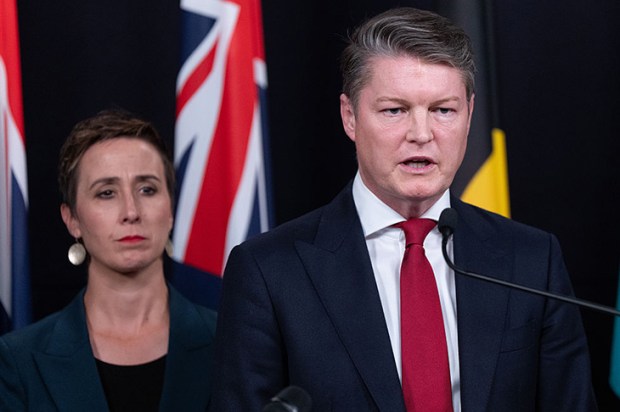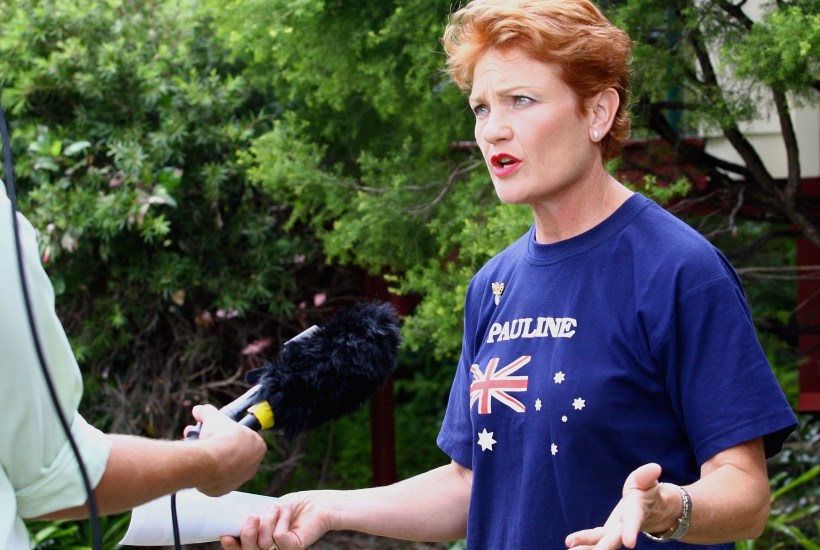
Senator Pauline Hanson’s historic National Press Club address was unpolished and direct, quickly becoming a defining moment in not only Hanson’s 30-year political career. To many, it was also perhaps as the most seminal political moment in 2026. Why? All thanks to a single word: monoculturalism.
‘We cannot be a multicultural society. We are a multiracial society, but we must be monocultural. Australians must live under the one cultural umbrella.’
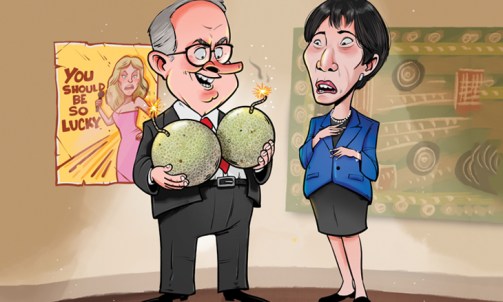
This is the full quote that rattled the commentariat, particularly on the left but interestingly even on the right. Predictably, the defensive reaction came swift and fervently, as if an integral column of the Australian politico-media-corporate consensus had been locked onto by a heat-seeking missile.
‘Think of all the different cuisines we’d miss out on…’ was common a favourite riposte, as if One Nation would shut down every Chinese Takeaway.
Others chose to lazily – or insidiously – conflate the object of Hanson’s message, at times misconstruing it entirely as a shallow diatribe against migrants. To those politicians, journalists, and commentators, Hanson wanted to erase the contribution of migrants who came to these fair shores to work hard and contribute.
You can guess the rest just as you guessed the above. It all went a bit like this:
‘Australia was built by migrants.’
‘Without migrants we wouldn’t have Soccer or the Socceroos.’
‘If you cannot stand up and defend multiculturalism then you should not be the leader of a mainstream political party.’
‘What she offers is division and anger, not answers.’
And on and on it went. It was the same language we hear all across the Western world whenever state-sanctioned multiculturalism comes under critique.
One of Hanson’s responses to the criticism was to contrarily state that the Socceroos were the exact metaphor that summarised her position best: a lot of different player backgrounds, one team, playing one game, united in its game plan. That is the Australia she envisions.
The trouble was, nobody – even at the highest levels of government and media – seemed to have a clue about what culture actually is and how it differentiates from race. Consequently, everybody had a different idea of what the term monoculture means, and so chaos ensued.
Interestingly, on social media, the public balance of understanding leaned far more towards the true essence of what Hanson was trying to say. So, let’s looks at what’s been going on and why people interpret words differently and then wield them to suit their own agendas.
Terminological ineptitude
Put generously, the problem is the terminology we use itself. It’s very difficult to approach and define problems in 21st Century Australia, using the vocabulary we were bequeathed from much simpler times.
To understand the origin of the etymological inferiority we’re dealing with we must confront why it is that certain words are used in the first place.
Surprising for some readers, will be the fact that the very term ‘multiculturalism’ was picked back in the day to describe the ‘opening up’ of Australia’s migration system, as it was less threatening than ‘multiracialism’ to the very homogenous societies across the Western world.
Officially described by dictionaries to nowadays mean something along the lines of ‘multiple cultures accepted, promoted, and present within a single polity or jurisdiction’, it had a certain logic about it: many cultures coming together to work harmoniously with each other, inside a stable polity. To understand why this then-radical concept had to be delicately engineered and sold to the public, let’s look at the makeup of Australia at the time of its adoption.
For example, in 1966 (60 years ago) the official census recorded 98.7 per cent of Australia was of European descent. Of that figure, roughly 90 per cent was of Anglo-Celtic (British and Irish) ancestry. So it was a country that was made up of a populace that was 99 per cent from countries that are considered a part of Western Civilisation and also Christian, with social, political, and religious diversity from those polities. When Menzies declared we’re ‘British to the bootstraps’ it was not a mere outburst of personal enthusiasm. Interestingly, the UK’s ethnic makeup at the time was very similar.
Why is this of note? Because that’s how and why mainstream Australian culture developed the way it did. That’s largely how a coherent, stable, and functional polity arose here – with one language, one style of government, one legal tradition – but also encompassing our competitive styles of economics, our notion of the ‘individual’, and the Christian ethos that permeates our psyche.
It’s noticeable further in our agriculture, medicine, building techniques, right the way down to the very sports we play (and invented), and our proclivity and prowess for certain types of music and art. It’s why we’re considered a ‘Western’ nation despite our location in the southern seas and proximity to Asia (the East).
For many, this is a self-evident fact and a source of great pride and unity. For a noisy and persistent minority – and a growing chorus in the corporate world and halls of far-left academia alike – it’s somehow an object of contention and shame. And it has been for arguably 60 years.
No matter how ideologically polarised your perspective may be, anyone with self-respect (let alone respect for historical reality) would have to conclude that despite a few bands of cameleers, Pacific Islander agricultural workers, Chinese goldrushers, and of course our Aboriginal peoples’ broad, ever-present existence, Australia was and is a product of Britain and Western Civilisation. This is due to the people who came here having come almost exclusively from Europe, and particularly the British Isles. This is not a ‘racist’ assertion. It is a fact.
Therefore, the logical conclusion, is that Australia is a world-renowned successful and fully-functional nation with the highest standards across all measurements of living and technology, thanks to this reality. Meaning we were a great nation before multiculturalism was even a concept, let alone proposed and advanced as a socio-political concept for the nation, in the late 20th Century.
To utter these things nowadays is nigh on heresy. But again, that doesn’t make them false.
In the case there’s still any ambiguity of assertion: Australia was well and truly built before the idea of multiculturalism was foisted upon the nation.
Which is why it is a falsehood when we hear it said that multiculturalism is what ‘makes this country great’. Multiculturalism may indeed be an attribute of Australia in 2026, but it does not change the reality of the past whether you consider it good or bad thing. In fact, it would be far better to say ‘multiracialism’ is a successful part of modern Australia – that would be applicable and a truer reflection perhaps of what people mean to say.
What was Hanson really saying?
If we look – just for a moment – at the best possible intentions of Ms Hanson, rather than the worst, surely we could hear the fact she accepts we are now a multiracial country?
That’s come a long way from in 1996 when she uttered those infamous words, ‘Australia is in danger of being flooded by Asians.’
On the contrary, to her detractors I don’t think through advocating multi-racial, monoculturalism that she’s trying to demonise every person who’s come here since the second world war. She’s admitting at last that it’s not all about colour. It’s actually not about race, it’s about culture.
This means she’s not saying ‘forget your ancestry’ or downplaying migrant contributions to abandon family ties or discard the little cultural quirks that contribute to us all being individuals.
I see her trying to articulate succinctly and laconically, that for Australia to remain a functional, united and happy country we need to all agree to a certain set of values beyond beige slogans like ‘diversity is our strength’. And isn’t it all a bit suspect, when that kind of language is used by the political left and corporate sycophants, the world over. Just how can it be every Western nation’s strength and defining characteristic?
Nations may need people as one method for solving economic problems, but they don’t need people who wish to create a smaller version of the country they left – or else why leave in the first place? If there’s something wrong in their home country, why not stay and try and fix it?
For all the bleeding hearts out there – whose humanitarian positions I empathise with – while Australia could always use more doctors and nurses, wouldn’t the third world benefit from them more? That’s a tough little thought experiment. Credible policy-makers would agree that we need more than just an over-abundance of readily-available cuisines to carry us through the challenges of the 21st Century.
If it’s still not resonating: for all our diehard unionists, who loath the big businessman’s appetite for cheaper labour in the face of raging inflation, do you deny that across the world wherever there’s been high levels of migration that wage compression occurs in its wake? What happens to productivity when you have endless cheap labour to depend on rather than investing in R&D?
This is not the article to get bogged down in economics and now we must finish with the real crux of it all.
Can our leaders actually define culture?
To everyone reading this, no matter your ancestors or your race, class, gender, sexuality, religion, or occupation, consider this notion:
Culture is how you think. And how you think determines your identity.
This is why any successful nation needs an overriding, chief executive culture – the set of values, beliefs, customs, and peculiarities built up over time. The cultural umbrella that is a visible and invisible thread between us all. Serendipitously, that’s sort of the recipe for nationhood right there.
Usually this happens by design or by nature, not by chance. It’s why there’s something now called the ‘Anglosphere’. It’s why there’s an EU. It’s why Japan is Japanese, Mongolia Mongolian. It’s why Russia has drawn on its Orthodox pre-1919 history to build a national defining thread in the absence of communism.
Even in Canada – where some would say the francophone, French Québécois seek to retain their distinctiveness, the British and French shared a civilisational and religious foundation from which to find workable compromise to differences. Interestingly, the same argument could also assert their own nationhood.
Another crucial cognitive anchor point that must be mentioned if we’re to get a real handle on all of this, is of course what actually creates a culture? And more hazardously, are some cultures more valuable or useful, than others?
It’s hard to accept that all cultures are equal, outside the eye of the beholder. All individuals, on the other hand, no matter their race or ethnic origin, are equal, thanks to the doctrine of the equality of souls (we are all made in the image of God). And right there is a defining argument for the former assertion: the very notion and conception of modern human rights are a Christian invention, birthed from Western Civilisation and culture. It wasn’t secular concepts of ‘shared humanity’ – they came much later, from minds already nourished and scaffolded by Christian thinking.
I would put it to you that at its foundation, most cultures – as opposed to subcultures – are birthed from religious or spiritual habits and beliefs, interwoven with norms and modes of living shared between kin-groups. Hence the preface often being ‘ethnographic’.
Put simply, culture comes from expanded family ties across a defined geographical area with an underpinning metaphysical belief system that provides meaning to the existence of that ethnic group.
That’s why we can refer to ‘alien’ cultures. That’s why we can have a united multi-racial nation only under an agreed national pretence. As its almost oxymoronic to assume otherwise – and there’s real world examples of dysfunctional, poor and dangerous nations for that very reason.
If I could put it more succinctly, I would. You’re welcome to have a go! This is why it’s so tricky when dealing with these subjects in a day and age where the media wants short, sharp answers they can put on a digital article headline.
For the term and concept of ‘civilisation’ in the modern context – as opposed to the archaeological context of which I’m sure we’re all familiar – it’s when these cultures (or culture) exhibit sufficient distinctiveness and attributes which yield different historical and socio-economic results than others. It’s this difference – not what’s in common – that creates the diversity across the world in terms of how people learned to think and therefore how they learned to live.
Perhaps I could better explain it as civilisation is the ‘family tree’ of related cultures. It’s why Sino civilisation and Japanese civilisation and Islamic civilisation are different to Western Civilisation, and different to each other.
What does a mature debate on this topic look like?
To those in power across this great southern land, I would ask: Why can’t we be a country that’s made up of many races and peoples from far-flung lands that all pay allegiance to this country’s core culture: its real history, its flag, anthem, ethos, and national mythology? Why can’t we say that while post second world war immigrants have made a contribution, the nation was stood here before that, proud, strong, functional, and cohesive. And happy.
The elephant in the room is of course that those things are the reason people want to come here. People don’t move to Canada for its modern-day multiculturalism. Like Australia, Canada has always been a great country, since well before the term multiculturalism was invented in the 1950s. They were – and in some places remain – ‘high-trust’ societies where it was normal to keep your door unlocked. Trust comes from an anticipation of how someone will act, respond, conduct themself.
People don’t move to Colorado, Cardiff, or even Christchurch or Copenhagen for its multiculturalism. If you think they do, you are kidding yourself. As the fruits of prosperity were developed in those places long before the arrival, en masse, of different cultures.
Indeed, Australia – in the world’s eyes, if not our own intelligentsia’s – as early as the 1950s had developed its own distinct culture and national psyche. It had its own accent(s), its own foundational myth (Anzac), its own nomenclature, its own national sport, distinctive styles of clothing all the way to a pan-societal creeds of ‘a fair go’ and a mistrust of the state and authority, all while still affectionate to the monarchy. It had evolved a further cultural branch onto its British foundation on the tree of Western Civilisation.
In a world made up of countries increasingly shedding their historical characters to resemble identikit economic zones – mere suburbs of global commerce all spouting the same beige, secular, corporate ‘new religions’ – why undersell our nationhood?
People are tired of seeing life through a purely economical lens. It’s all we hear on the news, while in our hearts it’s a different story.
People want to live in a nation, not a market.
Absurdly, the quest for multiculturalism is visibly diminishing global diversity. In a digital and supersonic age where the tyranny of distance is defeated forever, distinctiveness grows in value.
Yet we across the West – and all of this stuff is only happening in the West – are nonchalant to our adversaries laughing at our shortsightedness as we throw away the past for a fantasy future.
Let’s buck the trend. Let’s be proud of this nation. It didn’t happen by accident. The genesis of its political, legal, spiritual, agricultural, industrial, environmental, and artistic attributes is very clear.
This is not division. This is reality. This is valuable. This is fair. This is smart. And people want it.