In March 2026, in a town on the Yorke Peninsula two hours’ drive heading northwest of Adelaide, the Liberal Party of Australia learned something it has not yet found the words to contain. One Nation outpolled it in a state election for only the second time in Australian history – but importantly the first time outside Queensland and the first time with Liberals standing as the sole centre-right vehicle.
Many Western democracies are going through the same political realignment. The diploma divide – the sorting of electorates by education, specialisation, and institutional disposition – is replacing wealth and income as the primary cleavage. Australia arrived later. However, it will resolve faster – with preferential voting as the accelerant rather than stabiliser. The structural earthquake here will be shorter, sharper, and – if the data hold – largely complete in the span of the next two to three elections.
We are going through a structural displacement cycle. But it is not the first time. Party political displacements have occurred at particular junctures in previous centuries, most notably in Britain between 1886 and 1945, which saw Britain change its two parties from Conservative vs Liberal to Conservative-Unionist vs Labour. The changes were meaningful – even for the survivor.
This earlier British transformation is perhaps the closest historical analogue to what Australia is now experiencing. It shares structural features that matter: a Westminster system with strong party machinery; a leading party with an increasingly moral-progressive frame, but whose base has both elite and non-elite fractions; and events that have repeatedly and publicly forced the establishment to declare on cleavages running through it.
In other words, the combined trajectory of Australian parties in the current environment has specific historical templates with a predictable destination: the traditional axis dies; parties either adapt to the replacement axis or become non-players. Anchoring to a part of the old landscape doesn’t save the house; it pulls it apart.
I have spent the last year, drawing on 30 years in the management of research and analysis, building an instrument designed to read these movements with more precision than time and habits usually permit. It is called SynthPol: a synthetic voter simulation engine that constructs up to 20,000 demographically realistic Australian voter agents from census and electoral data, anchored in real-world surveys and tested against federal elections.
Out-of-sample backtests of national first-preference shares against the 2022 and 2025 federal results – tested without inputting target results, to avoid in-sample fitting – average within 1.8 percentage points. That is accuracy comparable to conventional polling, though SynthPol is an AI simulation, and should not be read as a real poll or survey. What it offers is a structural analysis of the political landscape: a discipline that asks not what voters say this week, but which forces are reshaping the electorate when it comes to vote by 2028.
SynthPol’s architecture replaces the left-right spectrum with a four-axis ‘plus’ structural model, runs over six federal cycles and 150 electorates at SA2 granularity, and outputs almost seventy falsifiable, Australia-specific provocations. I think the five below will define Australian politics for the next decade. Each one on its own inverts a conventional wisdom – but together they tell a single story.
I. Trump Saved the Republican Party
The standard narrative across the Western commentariat – left and right – is that Donald Trump degraded the Republican Party. He trashed its norms, alienated its professionals, and turned it into a personality cult. This is the story told over glasses of wine in Toorak and over flat whites in Balmain.
The structural story is the opposite.
Almost every centre-right party in the Western world today is facing the same centrifugal force: the diploma divide is tearing its coalition apart. The professional wing – the university-educated, socially progressive, economically liberal urban voter – is departing in one direction. The non-graduate wing – culturally conservative, economically interventionist, institutionally hostile – is leaving in the other. The leaders have failed to hold both simultaneously because the interests have now become too disparate.
Consider what has happened to almost every centre-right party. The French Republicans collapsed from 20 per cent of the presidential first-round vote in 2017 – and a quarter of the vote a decade earlier – to 5 per cent in 2022. The Conservatives in Britain were gutted by Reform and reduced to their worst result since 1832. The Coalition in Australia is losing voters simultaneously to teal independents on its left and One Nation on its right. This symmetric decomposition would – if sustained – be near unprecedented in Westminster politics.
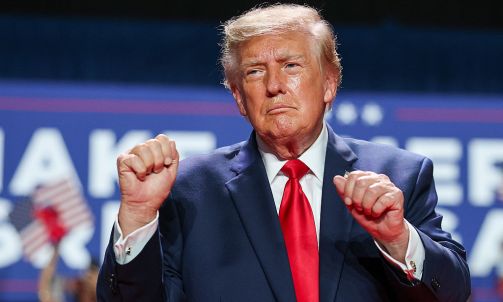
The only traditional, majority right party to survive has been the Republicans in the US. The reason is obvious: Trump’s arrival. His structural function was not to ‘ruin’ the Republican Party but to resolve the tension destroying every comparable party elsewhere. He captured the party machinery via the presidential primary system, fused the populist insurgency into the major party, and expelled the professional wing rather than allow the non-graduate wing to split itself off.
But here is an important point: Trump could only do this because the American process created a narrow route round the institutional gatekeepers. He didn’t persuade the Republican machine – he bypassed it, going directly to voters in a system which permitted exactly that. Westminster systems do not have open primaries. The preselection process is the institutional gate. And this matters because of a pattern so consistent across 140 years that it deserves a name.
Call it the ‘administrative immune response syndrome’ or AIRS. In every case where a long-established party has produced a leader oriented toward an emerging and disruptive coalition not part of the establishment, the party machine has destroyed that leader, sooner or later, and replaced them with someone who reflects the institution’s self-image.
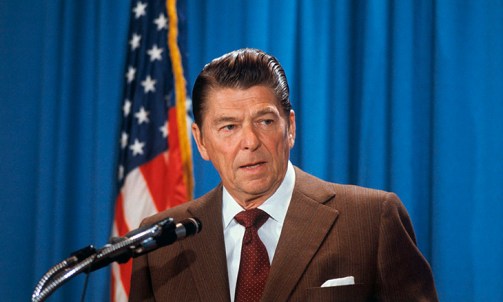
Gladstone’s faction engineered Chamberlain’s departure from the Liberals in 1886. The Conservative parliamentary party removed Thatcher in 1990 and Johnson in 2022. The Australian Liberal parliamentary party removed Abbott in 2015. In every case, the institutional response succeeded tactically – the institution got exactly what it wanted: the uncomfortable leader was removed. But it failed strategically.
Gladstone’s Liberals collapsed in a generation. The post-Thatcher Conservatives spent 30 years trying to manage their decline before the post-Johnson Conservatives were ultimately annihilated at the 2024 election. And it was Farage that made even Johnson’s brief moment possible. The post-Abbott Liberals are decomposing before our eyes.
There is a particular cruelty in this pattern that has endured over a century. The astounding Russian political scientist, Moisei Ostrogorski, observed in 1902 that party machines develop interests of their own and select for their own reproduction – like the 1995 film, Species. The machine that Chamberlain himself invented – the Birmingham caucus, the extra-parliamentary organisation that became the prototype of every modern party – was the machine that expelled him.
It is ironic that the founder was the first casualty of his own creation. The same dynamic recurs: the leader who best understands the emerging electorate is precisely the person the machine cannot tolerate, because the qualities making him or her effective outside the party – directness, conviction, disruptive energy – are the qualities threatening the machine’s internal equilibrium.
Yet – here is the irony. Almost no party instance across the Anglosphere since the start of politics has succeeded long-term by expelling the rebel or coopting the outlier. Put simply, the rebuild never happens – it isn’t wanted. And in the few instances where an insurgent has, by serendipity or persistence, successfully captured a party, they have not managed to propagate institutional success.
Sometimes it works – but only at first. The institution almost always fights back and the propagation ultimately fails.
Trump is the sole possible counterfactual. He succeeded in capturing the party because the primary system exists – and this has given him a particular strength that earlier hopefuls have not enjoyed. However, the question remains for 2026 and 2028 – and for the long-term: will the Republican party and its leadership continue his legacy, or will Trumpism join the Thatcher-Abbott class, and Trump see all his work undone?
II. The Voice Referendum Was the Irish Question
On October 14, 2023, Australians voted ‘No’ to the Voice to Parliament by a margin of 60 to 40. The commentary that followed was predictable. The ‘Yes’ side called it a failure of communication. The ‘No’ side called it common sense. Almost nobody identified what it structurally was.
It was the Irish Question.
Gladstone’s Irish Home Rule Bill of 1886 asked the British polity to constitutionally recognise a separate political identity within the union. The Voice referendum asked the Australian polity to constitutionally recognise an Indigenous advisory body able to make representations to Parliament and the executive. The structural parallel was not metaphorical. It was architectural.
Both proposals divided the polity along the education divide. Schooled, institutionally trusting, cosmopolitan voters supported the reform. Less-tutored, institutionally sceptical, culturally conservative voters opposed it. In both cases, almost every major institution lined up for the proposal – or was ambivalent about its rejection – while people overall voted the other way.
There were some differences. Gladstone used it to wedge his own party; Albanese used it to wedge the opposition. And the party leadership of the Liberals did come out – at last – against the proposal. In doing so, they did not immediately fail the challenge to the same extent that their counterparts in British history did: whether their progressive namesake, the Liberals, in 1886 or their political counterpart, the Tories, in 2016. However, the call was slow and large sections of the party were free to vote according to their conscience.
As a result, the impact of the referendum was not to so much to settle the proposal itself, but to send a cultural signal about the political system and who the parties represented. The electorate, once sensitised, looked for confirmation of this signal, which just compounded over time.
Political use of referenda in this fashion is not new, nor the outcome. Brexit is a powerful, recent example. And here is the structural point that needs to be made more forcefully – Gladstone’s Home Rule did not resolve the Irish question anymore than Cameron’s Brexit question. All it did was radicalise the sides.
The debate over Home Rule culminated in the 1916 Rising and opening the path to Sinn Féin’s 1918 refusal of absorption. Brexit is still working through its conclusion. The Voice referendum did not resolve Indigenous recognition. It accelerated the culture war, in this case hardening the diploma divide into a permanent sorting mechanism.
SynthPol’s signature for the Voice referendum commits to a 25-point gap between university and non-university voters on the question – the largest diploma gap in any of the engine’s question profiles. Electorates with high university rates voted ‘Yes’; electorates with low rates voted ‘No’. The structurally important point: the choice was binary and irreversible – once Liberal voters were split publicly along that axis, a trajectory was initiated.
The referendum’s political function, then, was not to settle a question but to sort voters – and, within the sorted electorate, to test the parties. The biggest challenge fell on the Liberals, as Albanese had predicted, where the diploma divide ran deepest.
The event surfaced deep rifts through the Liberals, and the issue worked to solidify the self-identity of the non-diploma voter as apart from both establishment parties – whether the Liberals or Labor. The voter was not someone to be simply claimed; he or she was someone who would look for a vehicle if the establishment did not provide it.
The British Tories assumed no Conservative voter would ever choose Reform. Turnbull assumed Liberal voters would follow him left rather than walk away. And the American Democrats behaved as though the working class was theirs by inherited logic – therefore crazy if it went elsewhere.
In each case, the establishment confused loyalty to a party label with loyalty to a set of interests the party had once represented. When the party moved, it assumed the voter would follow. The structural reading has been almost always the opposite – the voter has looked for a vehicle that still represents their interests, and finds one.
Home Rule destroyed Britain’s progressive wing by forcing industrial and working-class voters in its electorate to choose either Gladstone’s moral-constitutional frame or their own material-cultural interests. The Voice forced the non-diploma voter to consider the naturalness of their alignment with the Liberal Party – and many concluded the alignment was not natural at all.
The Liberals’ four-month delay in declaring their position – while the Nationals had committed in November 2022 and put their most effective communicator forward – confirmed the suspicion. The most committed voices for ‘No’ came from within the Nationals, not from the Liberal leadership.
Among the hundreds of political questions, events, and patterns in SynthPol’s library, the Voice produces the largest combined gap on four of the engine’s key dimensions. It has one of the sharpest multidimensional divisions of any development profiled. The questioning it triggered then helped drive what followed.
Australia now, like Britain 140 years ago and again more recently, has remained sorted. The Voice compressed what might have taken two election cycles of gradual disentangling into a single constitutional moment. Home Rule took several decades to reduce the Liberal Party. Brexit took a decade. The Voice might have done the equivalent in a single afternoon.
III. One Nation Is Sinn Féin
This is the proposition that will make readers most uncomfortable – and it is the one with the strongest structural evidence behind it.
In March 2026, South Australia held a state election. Labor won 34 seats. The Liberals won five. One Nation won four seats and 22.1 per cent of the primary vote – outpolling the Liberal Party in a state election for only the second time in Australian history.
The DemosAU multi-level regression and post-stratification study – 8,400 respondents, the largest political MRP in Australian history – projects if federal voting intention holds, One Nation will win between 46 and 55 seats at a federal election, forming the official Opposition. The Coalition would win between 9 and 17.
The conventional Australian political mind cannot process these numbers because it has no framework to contain them. The establishment’s mental model is Hanson 1998: a spike, a collapse, a return to normal. One Nation was supposed to be a protest movement that flared, then faded.
Of course, extrapolations – that nemesis of real-world forecasting – always drive emotions: from wild excitement to deep despair. It is what Goldman Sachs does so well. And the capable analyst is there to offer the security blanket: a graphic or anecdotal framework which settles the nerves – a means to understand and to plan a response. There is nothing wrong with this situation – but everything depends on the robustness of the claim and the predictions it allows.
With that caveat, the structural framework for One Nation’s breakthrough suggests a particular analogy: Sinn Féin. Not ideologically. The parallel is structural and in two ways – it reflects the lifecycle trajectory of an insurgent movement that gathers momentum, and it reveals a religious component missing in the UK.
The substrate in politics matters. SynthPol’s reading of the underlying SA2 census data shows mainline-Protestant heritage running at 28 per cent across the surrounding region in South Australia, peaking at over 30 per cent in the Barossa. This is the demographic that, in every other Australian state, the Nationals would be able to carry. South Australia’s 1932 Liberal-Country fusion removed that vehicle ninety-four years ago.
The substrate has been quietly sitting inside the Liberal vote ever since. In 2026, when the Liberal vehicle failed, the substrate found One Nation directly. There was no Country Party to absorb it.
I have identified three types of ceiling that insurgent parties face. The first is identity-bounded: hard, permanent, and small. The Teals and the Greens have this ceiling. Their brand is their limit. They cannot expand beyond university-educated, inner-urban, socially progressive voters without destroying the identity that makes them attractive. Their maximum is maybe 20 to 25 seats – enough for the crossbench, never enough for government. The Irish Parliamentary Party had the same structural profile in the 1880s, as did the Australian Democrats in the 1990s, as did the Scottish National Party, which they discovered after 2015. Identity-bounded parties can dominate a niche. They cannot outgrow it.
Unless the parties pivot, in the way that business start-ups frequently do, they will likely end sharing a common fate: absorbed by a major party that co-opts their values, or slowly displaced when a broader coalition arrives.
The second type of ceiling is geography-bounded: tied to a region. Katter’s Australian Party has this ceiling. So, in its different way, does the SNP. The territory has walls.
The third type, one that should concern every party in Australia, is status-bounded and diffuse. The addressable market is defined not by self-identity, not by geography, but by status or social position. It is the non-graduate, the tradesman, the self-employed contractor, the outer-urban family priced out of the inner ring, the regional voter who has watched institutional trust drain out of every authority that used to speak for him or her. The constituency is not a niche – it is now the largest single voting bloc in Australia that no establishment party currently treats as its primary constituency.
One Nation’s ceiling is status-bounded and diffuse. So is Sinn Féin’s in Ireland – once it made the transition from militant fringe to the party of the economically displaced. So is Reform UK’s in Britain. These are once-fringe parties whose potential constituency is larger than the party they are seeking to displace because the group they represent is now bigger than the established electorate that the incumbent, devotedly centrist, party, has decided to prioritise.
The Sinn Féin trajectory is precise: from radical flank, to protest vehicle, to serious contender, to leading player – over roughly two decades. The SA 2026 result is structurally equivalent to Sinn Féin’s 2020 Irish election breakthrough, when it won the popular (first preference) vote for the first time. In both cases, the insurgent outpolled the traditional party of the right in a state-wide result. In both cases, the commentariat treated it as an anomaly rather than a phase transition.
Sinn Féin is now the second-largest party in the Irish Dáil – and the largest party in the Northern Ireland Assembly. The breakthrough holds even though Fianna Fáil and Fine Gael cooperated to lock Sinn Féin out of government in a manoeuvre that has recurred elsewhere.
The preference system makes the Australian mechanism unique. Under first-past-the-post, Reform UK faces a binary cliff: either replace the Conservatives entirely or watch its votes be wasted. Under preferential voting, One Nation could expand gradually, accumulating first preferences while its voters’ second preferences still flowed to the Coalition – until the moment they didn’t. The current ON-to-Coalition preference flow is roughly 68 to 70 per cent. It is falling.
However, One Nation faces a strategic choice with a clear historical precedent – and a clear cautionary tale.
Chamberlain, having been manoeuvred out of the Liberal Party, did not know what to do with his independence. He had an effective diagnosis for the time: the compound demand we would now call ‘protect our borders, protect our culture, protect our workers’. He had the most gifted campaigning mind of his generation. He had built the first truly modern party machine with his own hands. But he hedged.
He allied with the Conservatives rather than building his own vehicle. He believed that he might one day lead them – there was talk after Salisbury retired, and again after the 1906 decimation – but these were pipe dreams. He was never of the Conservative establishment, and they never intended to hand him the keys. He began, then, like Farage but his decision to coordinate with the Tories rather than build an independent vehicle set up something unusual.
Chamberlain became the only major figure in modern Westminster history to sustain his paradigm fight from inside an establishment coalition he had not captured. The personal cost was enormous; the effect on the political landscape was real and the vehicle he joined still buried him. His was the harder road and it still led to the same destination. He and his family simply ended up providing the demographic ballast for a regime whose instincts were quite opposite to his own.
The Liberal Unionists – the organisation Chamberlain led out of Gladstone’s party – were formally merged into the Conservative Party in 1912. Within a generation, they were not relevant as a distinct political force. The resulting party still technically carries the Unionist name: the Conservative and Unionist Party. When was the last time we noted a Unionist? Theresa May’s adviser, Nick Timothy, was the closest.
If One Nation follows the same path – negotiating preference deals or accepting some junior partnership, trading independence for proximity to power – the same outcome is structurally inevitable. Farage agreed not to campaign against the Tories in their key seats during the 2019 election and gave Johnson his landslide win. The return to Farage was invisible.
One Nation faces a critical strategic question in all this. The Chamberlain temptation as May 2028 approaches will take three specific forms: preference deals with the Coalition in marginal regional House seats, a Senate confidence-and-supply arrangement, and – most dangerously – some offered Deputy PM-ship or equivalent portfolio in exchange for formal alignment. Each of these may appear like a partial win on the night they are announced; each is a stage of the absorption cycle that ends with the Unionist brand on a letterhead. Farage’s story gives a more recent lesson.
The decision to be made is therefore not whether to ally with the Coalition, rather whether to become the Coalition – to simply replace it. The Chamberlain path leads to absorption and irrelevance. The Sinn Féin path leads to a seat at the table, as the Labour path did earlier in Britain setting up scope for Labour’s landslide win against Churchill in 1945. The SA 2026 data hint that One Nation is on the Sinn Féin path – though the preference flow opens up an intriguing counterfactual. One Nation’s temptation to do a deal will intensify as preference negotiations begin for the next federal election.
IV. The Nationals Have a Sliding-Door Moment
The Nationals are in the process of making one of the most consequential strategic decisions in their more than century-long history – and the party seems to be letting the conclusion happen by default. They could be the next MAGA movement or the next Liberal Unionists. The issue is not about respectability or position within the Coalition; it is about whether anything is left to put into a Coalition at all.
The Nationals should study history with particular care. They have their own constituency – regional, non-graduate, culturally conservative, religious aligned – but they are allied with Liberals rather than building an independent vehicle. They have spent a century giving the Coalition demographic ballast while the Liberals set the strategic direction.
They are on a path and face a choice: follow Farage or follow Chamberlain. There is a harsh lesson in comparing the trajectories of these two individuals. Any future ‘merger’ between the Liberal and National parties – and the LNP in Queensland is the precedent – will follow the corporate logic of every such fusion: the partner with the institutional machinery provides the management, and the partner with the regional assets provides the territory.
In time, the machinery partner inserts its own people into the territory partner’s seats, under the combined brand, until the original identity has been quietly replaced. Where are the Unionists today? They are the name on a letterhead and nothing more. The Nationals, in any amalgamation with the Liberals, may end up acquiring a title and surrendering an identity.
And if the political landscape is changing in a dialectic fashion, rendering differences between establishment parties less relevant to voters than their similarities, the aggressive players cannibalise the weaker ones in a desperate bid for survival – even if the logic that two weak parties make a strong one is a bit like the logic that two wrongs make a right.
In fact, Nationals do have a solid strategic option: follow Farage – strike out alone. But it demands courage. Leveraging the most recent outcomes here and overseas, SynthPol’s structural read of the 2025 data identifies over twenty federal seats attracted to One Nation where the Nationals have a better chance of winning than the Liberals – only the coalition agreement prevents them. In these electorates, overlap between potential voters for Hanson and for a traditional style National Party are high. Barnaby Joyce’s move suggests as much.
The National Party, as one of the longest-serving political organisations in the country, has the benefit of incumbency. It also has the benefit of a name that most precisely fits the emerging voter demographic. The Liberal Party has a complicated name, reflecting an ideology that no longer aligns well with the electorate it needs to win. Meanwhile, One Nation – whose name enjoys a solid historical pedigree – sounds more like a multicultural welcome and, ironically, a certain openness to immigration.
Moreover, the National Party is already well-positioned to leverage distinctive elements of the Australian electorate that mix hints of the MAGA movement in America and the Reform movement in Britain. One Nation must somehow hold these together in a way that maybe the Nationals, in their traditional form, don’t.
In any case the point is that a clear and powerful option exists for the Nationals which may, should fortune smile, lead it to become the leader in a changed coalition. History offers a strong view of what happens down the other path. Even so, the self-defence mechanism of the institution will likely, as Ostrogorski predicted, block this path – and Joyce’s defection is less evidence of a ship that is necessarily sinking than of an institution determined to keep its self-image protected.
V. Australia’s Liberals Can Be the UK’s Liberal-Democrats or Germany’s SPD
If One Nation is Sinn Féin or UK’s early Labour party and the Nationals face a fateful choice between the Farage or Liberal-Unionist path, then the Liberal Party is Asquith’s Liberals – and its destination may be the same.
The Liberal Party in Britain was one of two great parties of government for the better part of a century – comparable, in some ways, to the US Democrats. The leaders of this progressive wing in British politics – such as Gladstone, Asquith, and Lloyd George – were titans who dominated their world. By 1924, the Liberals were the third party. By 1945, they had twelve seats and were spent. They endured the next eighty years as the Liberal Democrats, occasionally relevant, but permanently excluded from power. Ironically, the appointment of Clegg as Deputy-PM under Cameron simply highlighted the party as a historically spent force.
The mechanism is relatively familiar. Gladstone engineered Chamberlain’s departure – the Hawarden Kite was a calculated provocation of a man whose volatile nature was well understood. What Gladstone achieved was expulsion of the Liberal Party’s interventionist, working-class, industrialist wing. What remained was a party of elite educated society, progressive on social questions, liberal on economics. The Labour Party, founded in 1900, absorbed the working-class voters – who had briefly become, through Chamberlain’s endeavours, the Liberals’ electoral ballast. The Liberal rump, too small to govern sustainably, never fully recovered.
This makes Gladstone the structural counterpoint to Trump. Both executed institutional manoeuvres to resolve an internal tension. Gladstone expelled the insurgent energy while Trump injected it. Only one of these strategies may end up having a chance of securing long-term party survival – and it isn’t Gladstone’s.
The Australian Liberal Party is now undergoing the same structural decomposition, but on a compressed timeline. The end-state will be a less obvious role in the country’s governance. However, there are two possible scenarios along this path. Under first-past-the-post the British Liberals transitioned from governing party to permanent third party within twenty years.
Under Australian preferential voting, the Liberal Party’s realistic forward path might be more like Germany’s SPD under repeated grand coalitions: declining by five to nine primary-vote points in each grand-coalition cycle, never quite collapsing, never quite recovering, becoming a party whose continued existence is structurally necessary to the system but whose paradigm-carrying role has ended.
The Teals have removed the professional-class left flank. One Nation is removing the non-graduate right flank – something that the Nationals could do as well if they wanted. What remains is a rump constituency: economically liberal, socially centrist, institutionally attached, declining as a share of the population in every election cycle.
SynthPol’s electoral dynamics data track decomposition with forensic precision. Combined major-party first-preference vote has fallen from around 80 per cent in 2010 to just over 60 per cent in 2025. The latest national polling puts it closer to 50 per cent. The effective number of parties has risen from 2.63 in 2010 to 3.43 in 2025, accelerating in every cycle. The centrifugal shift – the rate at which voters move away from major parties toward the periphery – has been negative in every election since 2013. Every cycle without exception.
The one cycle that briefly reversed some of the destructive trends – 2010 to 2013 – remains the only centripetal result in the entire seventeen-year data series. The Liberals had found the answer. Then, the administrative immune response syndrome kicked into gear, and they took it away from themselves – even though the response, the ejection of an electorate appealing change agent – has never once produced longer-term success in modern politics.
Every subsequent cycle in Australia has driven centrifugal movement. The structural cost of the 2015 leadership change is still compounding a decade later.
The timeline comparison is sobering. The British Liberals took roughly 20 years to complete the transition from governing party to permanent third party. Australia’s preferential voting system compresses political transitions. If the structural forces hold, and the South Australian result is a leading indicator, not an outlier – and the distinction is not entirely clear yet – then the Liberal Party faces a risk it becomes a permanent minor party in two to four election cycles. Even more provocatively, it is not so impossible that the party ends up in some form of governing partnership with Labor.
It is the kind of arrangement Germany’s CDU and SPD have entered repeatedly since 2005, France’s establishment factions have congealed into around Macron since 2017, and Japan’s LDP negotiated with the JSP in 1994. The pattern is consistent: when a cross-flank successor reaches sufficient credibility that both establishment parties begin orienting against it, not each other, the establishment-coalition dynamic begins. We already saw early hints when Taylor’s first major policy speech as leader was essentially to join Labor in rhetorically orienting against One Nation as the reference pole.
The coalescing of major parties typically goes through several clear stages, and we have already entered the first stage. The dynamic usually accelerates the successor’s growth rather than containing it – because it confirms to voters that the majors are interchangeable, which is the founding premise of the populist claim.
The System
These five propositions are not five separate arguments. In fact they are five faces of the same structural story. The counterfactual is Trump finding a path around the institutional powers – forces with a near unblemished track record of strategic failure responding to paradigm changes in the political landscape. The accelerant was the Voice – which, like Home Rule or Brexit, crystallised an emerged division into a permanent sorting mechanism.
The mechanism is probably One Nation. An insurgent leveraging social outcomes can displace a traditional party when the disruptor’s addressable market is majority-sized – though the Chamberlain temptation, to pursue change from inside an alliance, could still influence results.
The only realistic opponent One Nation faces is the National Party, but – as the defections of Barnaby Joyce in one direction and Jacinta Price in the other both hint – the party has decided not to fight.
So the prediction is that the Liberals will become the SPD or the Liberal Democrats and the Nationals the collateral damage. This a legitimate, historically visible outcome when leadership fails, expulsion succeeds, and voter displacement proceeds unchecked.
Together, the five propositions describe a displacement cycle with a shared structural logic – one that Western democracies seem to be moving through, but that Australia, with its compulsory preferential voting, may now transit faster and more legibly than any other country in the Westminster mould to achieve a new status quo.
Of course, this is not the whole story or the only possibility. A structural analysis identifies other scenarios. The same forces dismantling the right are building a demand profile any professionalised centre-cosmopolitan vehicle with a twenty-year horizon and national-level governance ambition could address.
The German Greens spent three decades converting from a 1970s activist movement into the party of Germany’s industrial-transition vice-chancellor. The Australian structural conditions for a comparable trajectory exist. Whether any political actor in Australia sees the opening and takes it is an open question. Nothing says the next decade’s politics has to move in the same direction. The observation is more that the current vehicles seem unable or unwilling to absorb the political demands being generated, and something new will eventually fill the space.
The programme behind these claims – the analytical machinery and numbers – specifies the conditions under which the prognosis is wrong. There are almost 30, of which I list four below. Each is precise:
- The displacement cycle reverses if the major parties’ combined primary vote recovers above seventy per cent at the 2028 election. If there is a return to the 1990s pattern, the argument is wrong.
- The Coalition crisis is overstated if its combined primary vote recovers above forty per cent. If Australia witnesses the Liberals return to the Abbott and early-Howard levels, the argument is wrong.
- The Sinn Féin trajectory is misdiagnosed if One Nation’s support proves to be protest rather than programmatic. If it spikes and fades within two electoral cycles of the SA 2026 breakthrough, as the original Hanson party did between 1998 and 2004, the argument is wrong.
- The SPD or Liberal-Democrat analogy fails if a Trump-equivalent leader emerges within the Coalition and is permitted to operate. This is the least likely of the four; bypassing the institutional gate has, to date, no Westminster precedent. It is the development I would most welcome if the argument were wrong.
The reader is invited to mark the calendar: 2028.
In fact, I would like to be wrong about all of this. The structural decomposition of a major party of government is a democratic loss, not a triumph for anyone. Yet the data are moving only in one direction, and have been moving in that direction for more than a decade. The move has accelerated in the most recent cycle. Pretending that it won’t happen is one strategy guaranteed to raise its probability.
Samuel Thawley is a scholar of the Chamberlain family and the author of a forthcoming book, “An Australian Reckoning: The Political Realignments That Matter For Everyone”. SynthPol, the analytical engine lying behind the book, is one of Australia’s first comprehensive synthetic voter simulations, designed to lift the quality of analysis and discussion in politics.