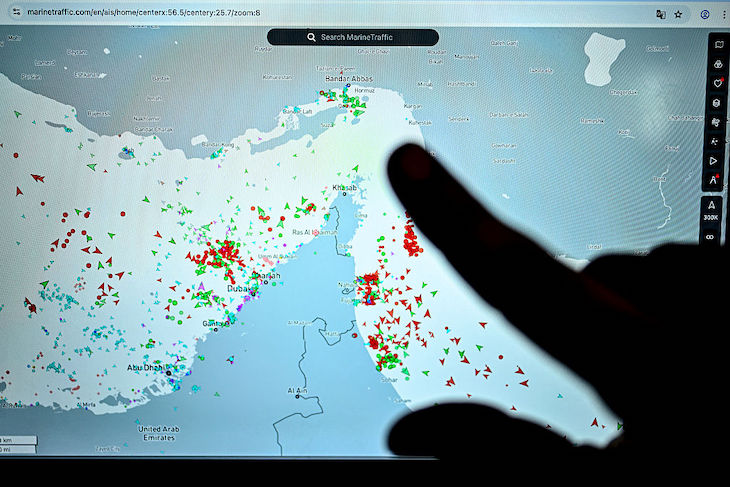
The United States’ decision to impose a naval blockade is a legally contentious move under International Law. The measure follows weeks of military confrontation involving Iran and its regional adversaries, alongside the collapse of diplomatic efforts to stabilise the situation. Rather than a total closure of the Strait of Hormuz, the blockade is described as an attempt to restrict Iranian oil exports and maritime access while allowing neutral shipping to continue transit.
The blockade is designed to exert economic pressure on Iran by limiting its ability to export energy resources through one of the most critical chokepoints in global trade. However, its legal status is far from settled. A central issue raised is whether such a blockade constitutes an act of war. Under traditional doctrines of naval warfare, blockades are generally treated as uses of force, and therefore fall within the scope of the legal framework governing armed conflict. If a ceasefire or de-escalation arrangement was previously in place, the imposition of a blockade may be interpreted as terminating that arrangement and resuming hostilities. This seems to be the modus operandi for Trump now, although it is difficult to measure the man who thinks he is a Pope.
The United States to justifies its actions by reference to the doctrine of self-defence, grounded in Article 51 of the United Nations Charter. From this perspective, the blockade is framed as a defensive and proportionate response to perceived threats posed by Iran to regional stability and maritime security. The US position suggests that the measure is limited in scope and directed specifically at Iranian shipping, thereby attempting to avoid a broader interference with the rights of third states under the law of the sea. This is particularly relevant given the legal status of the Strait of Hormuz as an international strait, where all vessels enjoy a right of transit passage.
Nevertheless, there is significant scepticism among legal experts. Questions arise as to whether the conditions for lawful self-defence are met, particularly the requirements of necessity and proportionality. A blockade aimed at exerting sustained economic pressure may be difficult to characterise as a necessary response to an imminent or ongoing armed attack. Even a targeted blockade risks incidental interference with neutral shipping, conflicting with established principles of maritime law. The absence of explicit authorisation from the United Nations Security Council further complicates the legal basis of the operation, leaving its justification dependent almost entirely on contested claims of self-defence. We are in murky legal waters.
The legality of the blockade can be assessed through the dual framework of jus ad bellum and jus in bello. Under Jus ad bellum, the threshold question is whether the United States is entitled to resort to force at all. ‘Jus ad bellum’ means the law on when a state may lawfully use force. It asks: Was going to war legal? There is no justification for the US actions in the Middle East according to International Law. Of course, this begs a larger question of the efficacy of International Law in general. Does it have any grounding in reality, or is it obsolete? You can bring a horse to the Straits of Hormuz, but you can’t make it drink. We are at a ‘fin de siècle’ moment in International Relations; the supposed era of ‘liberal democracy’ crashing against the economic rise of the oriental east, with alternate ideas of ‘democracy’.
United Nations General Assembly Resolution 3314 explicitly identifies the blockade of a state’s ports or coasts by another state’s armed forces as an act of aggression. In the absence of a valid claim to self-defence under Article 51 or authorisation from the Security Council, such a blockade would therefore constitute an unlawful use of force. If the underlying resort to force is illegal, any measures taken in furtherance of that action, including a naval blockade, inherit that illegality.
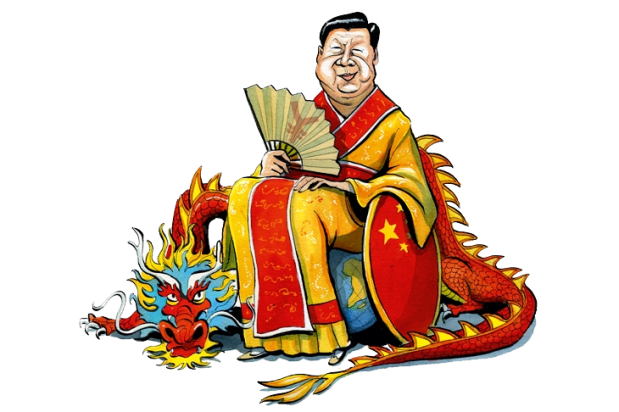
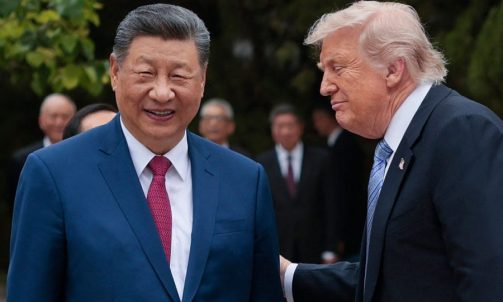
The second layer, Jus in bello, governs how force is used once a conflict exists. Instruments such as the ‘San Remo Manual on International Law Applicable to Armed Conflicts at Sea’ provide detailed rules on the implementation of blockades, including requirements of notification, effectiveness, proportionality, and the protection of civilians. However, compliance with these operational rules does not cure a prior violation of jus ad bellum. A blockade that is technically well-executed may still be unlawful if it forms part of an aggressive war. There may be civilian maritime casualties, China may intervene. Trump, believing in the ‘Divine Right of Kings’ may not respect any Latin maxims. The situation is a tinderbox at sea.
Where a blockade is conducted in the context of aggression, further legal consequences arise. Individual leaders responsible for the decision may incur liability for the crime of aggression before the ‘International Criminal Court’, provided jurisdictional requirements are met. At the state level, the aggressor bears responsibility for internationally wrongful acts and is under an obligation to make full reparation for damage caused. This may include economic losses, destruction of property, and broader disruption to international trade. It is as if Trump hasn’t thought it all through.
Finally, the position of neutral states becomes legally complex. In principle, third states are not obliged to recognise or comply with a blockade that stems from an unlawful use of force. Nevertheless, in practice, many states may choose to respect such measures to avoid escalation or risks to their vessels. This gap between legal entitlement and political realpolitik reflects a recurring tension within international law, particularly in high-stakes geopolitical contexts such as the Strait of Hormuz. However, International Law is increasingly in deep, uncharted waters.
John Austin said that International Laws ‘are enforced by moral sanctions’. Austin placed international law in this category, because in this argument real law required a sovereign command backed by sanction. The collapse of any form of consensus in geopolitics stems from a fundamental shift in the perspective of the ‘Orient’. Perhaps Carl Schmitt summed it up best when he said that International Law was an ‘especially useful ideological instrument of imperialist expansion’. It embodied, particularly after the first world war, a good v evil synopsis. Moral superiority became the basis of law and trade. Genuine International Law up to that point was based on the concept of ‘jus publicum Europaeum’ (European Public Law Order).
It means the European public law order that, in his view, structured International Law roughly from the early modern period until it broke down in the twentieth century. He argued that this old European order was based on a system of sovereign territorial states and mutual recognition between those states. War being treated as a conflict between equal political entities, not as a moral crusade between good and evil. Liberalism has carried on the crusade. For Schmitt, that old system had a grim kind of stability. It did not make war humane in any modern sense, but it contained war by giving it a legal-political framework. Now International norms are in dire straits and Hormuz becomes the setting for Shakespeare’s ‘Tempest’ – the clashing point is upon us and everything is changed:
‘Full fathom five thy father lies …
Nothing of him that doth fade,
But doth suffer a sea-change
Into something rich and strange.’
Brian Patrick Bolger. He has taught International Law and Political Philosophy at Universities in Europe. His articles have appeared in leading magazines and journals worldwide in the US, the UK, Italy, Canada, etc . His new book- ‘Nowhere Fast: Democracy and Identity in the Twenty First Century’ is published now by Ethics International Press. He is an adviser to several Think Tanks and Corporates on Geopolitical Issues.