If you walk through the city today, you’ll come across four or five dedicated anti-fossil fuel protesters.
They are frequent noise polluters and part of a diverse collective of questionable adornments to our streets, falling somewhere between the people who shout random obscenities at passersby and those who use loudspeakers to attract religious converts.
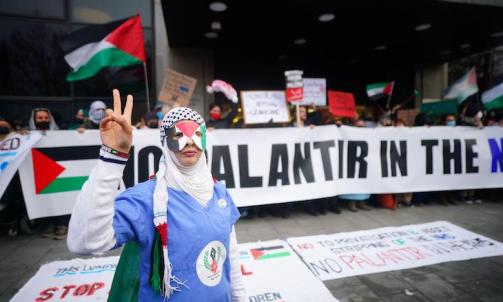
One older woman smashes her hand against a tambourine with an impressive lack of rhythm. Another has scrawled some kind of unfathomably ignorant message over the ground in chalk. A much older man sits off to the side, handing out cards that no one takes. Finally, a young man wearing a Palestinian keffiyeh completes the bizarre blend of far-left radical progressive anti-oil environmentalism with Middle Eastern, Islamic solidarity for a terror-led state governed by an ideology that despises the values of the progressive left and would have something to say about the older woman standing on the street without a headscarf or a husband. The only place these individuals can coexist is on the streets of the tolerant West.
There was a time, at the height of the climate change panic – when people were throwing paint in art galleries, defiling Stonehenge, and gluing their naked bodies to office buildings – that a few people might nod in the direction of these protesters.
Now, they are a nuisance. Not even a menace. Just something an increasingly over-taxed, fed-up, and exhausted city has to navigate on the way to the office.
Australia has lost its appetite for activism.
Want to stop fossil fuels? Don’t wear shoes, glasses, and clothes made from oil. The hypocrisy that was once ignored now appears vulgar, even to disinterested people trying to get away from them. If you want to protest, fine, but stop beating that tambourine to death. No one is being converted by the dying shakes of a cheap musical instrument.
Noise is not an argument. Obstruction is not a coherent ideology.
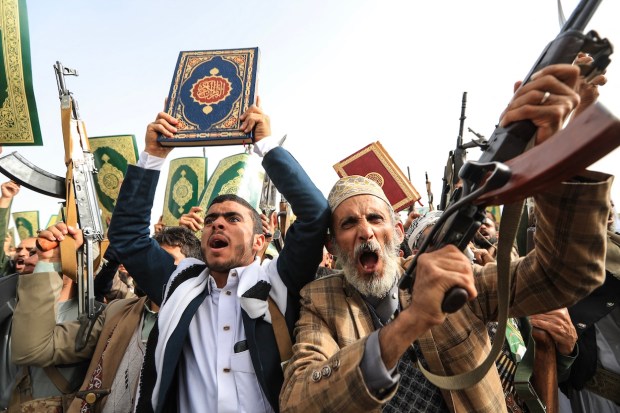
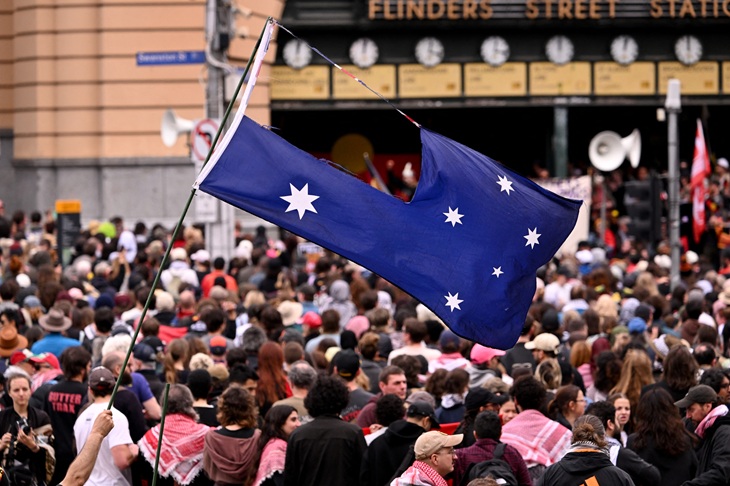
This group is a minor inconvenience compared to the massive pro-Palestine demonstrations that took Australia’s major cities hostage for months on end. Protests that contained disturbing rhetoric and which the Jewish community found threatening and other Australians complained disrupted their businesses and made them concerned for their safety.
From the River to the Sea… Globalise the Intifada!
These are not passive statements, nor do they have anything to do with Australian issues, especially when many people coaxed to recite them have no idea what they mean.
And yes, the presence of the (now dead) Ayatollah’s portrait, flags belonging to banned terror groups, and Death! Death! To the IDF! printed on shirts along with the Hamas red triangle all add to the argument that these sorts of protests are treading the line. What line? Who knows. But there is a line there somewhere.
What the climate change movement started, the pro-Palestine groups have continued – the perceived misuse of Australia’s protest laws to wield disruption as a political weapon.
The climate activists, particularly overseas, made this clear in their doctrine of civil disobedience. The purpose of their protests was not to raise awareness but to make such a nuisance of themselves that the government would have to bend to their demands. This kind of civilisation-wrecking behaviour has long been the mantra of Marxists who preach system-change. Their goal is to dismantle the capitalist democracy and replace it with a collectivist (environmental?) utopia and so what’s the harm in a few million people being unable to get to work? Why not obstruct a freeway? Climb onto a train? Dangle off a bridge? Destroy private property? Risk a priceless work of art?
For a much shorter time, but for the same reason, Black Lives Matter caused millions of dollars of damage in America and Europe, not to mention the cultural damage they caused to buildings and statues.
This is not, at all, within the spirit of protesting that Australia envisioned when it first wrote its laws.
To the best of our knowledge, taking a wrecking ball to the nation is a new phenomenon.
Instead, the idea of remaining civilised and considerate while expressing a right to freedom of speech and political communication did not have to be policed excessively because the people involved in the older protests did not wish to damage the nation or its people.
The line between protest and abusing protest laws may not be easy to define, but you know it when you see it.
It is easy to see a difference between freedom protesters being sprayed in the face with pepper spray for standing peacefully or choked to the ground versus BLM thugs decapitating statues of Captain Cook, defacing public property, and causing permanent cultural vandalism to public spaces while police are either absent or observing.
Why did police stand around and watch Israeli flags being burned by those waving Palestinian flags or chanting threats against another religious group in front of the Opera House?
Would they have done so if the threats were against the LGBT community?
You can march through Sydney with The colony will fall! painted on a sign that demands race taxes … but you could get in trouble for saying biology is final when it comes to gender.
Why are people fined for accidentally spending an extra five minutes in a parking zone while environmentalists obstruct highways for hours with no legal consequences?
And why was nothing done, over ten years ago, when a group of ISIS supporters marched through the centre of Sydney holding ISIS flags and signs that said they would Behead the infidels!!! I was there. I was terrified. They threatened our lives. Police allowed them to walk away…
There is significant tension brewing between a huge community of largely professional left-wing activists whose part-time role involves deliberately disrupting the lives of ordinary Australians, and those who obey the law and keep to themselves and yet live in fear of a door-knock from the thought police for a post they made on X.
Something has gone wrong.
The left use our protest laws for disruption and, in some people’s opinion, to spread disturbing speech, intolerance, and environmental extremism that threatens Australia’s energy security.
And while the government watches that group with little more than a shrug, they go out of their way to over-police social media for political rhetoric that hurts the feelings of politicians or threatens the survival of contentious policy.
There must be some balance.
If you ask Australians what they want, we’re willing to bet they’d prefer greater protections to stop the streets of our cities being taken hostage and instead greater freedom online for people to express their opinions where they don’t disrupt people’s lives.
NSW Premier Chris Minns might have had the wrong detail in his protest laws, which have since been overturned, but the feeling that something has to change is definitely true.