It’s no secret that Australia’s housing market is out of control. It’s a topic that ignites passions across the country, across generations and across the political divide. Even government agencies, loathe to take any responsibility for the mess we’re in, acknowledge that locations like Sydney risk becoming cities ‘with no grandchildren’. So how did we get into such a colossal mess? Ultimately, fixing Australia’s broken housing system comes down to addressing three key drivers.
How Australia Taxes ‘Work’ More Than ‘Wealth’
Aussies are a rational bunch. By piling into property as if it were a Bunnings sausage sizzle, they’re merely responding to the incentives the government has put before them. The Aussie battler is smart enough to realise they’ll never get rich working a normal 9-to-5 when income from labour is taxed excessively relative to gains from real estate.
Gains on real estate generally receive a capital gains tax discount of 50 per cent if held longer than 12 months. On top of this, real estate investors receive generous tax deductions such as interest payments, depreciation and maintenance.
Now imagine if you got a 50 per cent discount on your tax bill for staying in a job longer than 12 months, plus the ability to deduct ‘maintenance’ such as health check-ups. For many Australians, the current tax incentives just don’t add up. Why work an extra hour to pay more tax compared to investing in real estate, and pay increasingly more tax the more you work through progressive taxation?
This tax distortion is only getting worse through the bracket creep we’ve experienced in recent years. Noting Australia’s dwindling productivity growth over the last two decades, one way to make Australians more productive again is to encourage them to benefit from the fruits of their labour instead of incentivising them to treat property like a national sport.
How Central Banks Supercharged the Housing Crisis
The elephant in the room in Australia’s housing crisis is the role of central banks. This is true not just in Australia, but across the entire developed world. After the 2008 financial crisis, central banks cut rates down to zero (and in some cases like Switzerland and Denmark below zero) in a bid to support the economy and move inflation back up to target.
Along the way, they inflated their role far beyond that of lender-of-last resort and started buying mortgage bonds, corporate bonds and even stocks, flooding the global economy with surplus capital in search of a home. A large part of that has poured into real estate, sparking a frenzy in house prices across Asia, Europe and the US.
The mechanism is simple: if mortgage rates drop by half, the average Aussie punter can now borrow and pay nearly 40-60 per cent more for a property – and this is exactly what’s happened. The RBA’s own research confirms this. An RBA report states that ‘low interest rates explain much of the rapid growth in housing prices’. This makes RBA’s recent assertions that it did not play a role in fuelling Australia’s housing crisis, frankly, bollocks.
To justify their actions, central banks latched on to the misguided notion of a ‘wealth effect’: the idea that rising asset prices make people feel richer and spend more. The problem is, it’s mainly the wealthy who own assets, and they tend to retain their wealth in assets rather than spend it. This policy-guided fallacy has spurred tremendous inequality across classes and generations and created the housing crisis we now call home.
We have to ask ourselves then, is the RBA’s monopoly on setting the cash rate working? In almost all developed market economies it is generally accepted that society benefits when government monopolies are dismantled or at a minimum subject to market forces, such as with airlines. But when it comes to the government’s monopoly on the money supply, somehow we’re content to allow an unelected committee ‘guess’ what the appropriate interest rate might be instead of letting market forces set interest rates? It is high time the insulated boffins at Martin Place were exposed to some competition and permitting market mechanisms to set interest rates.
Planning the Cities of the Future
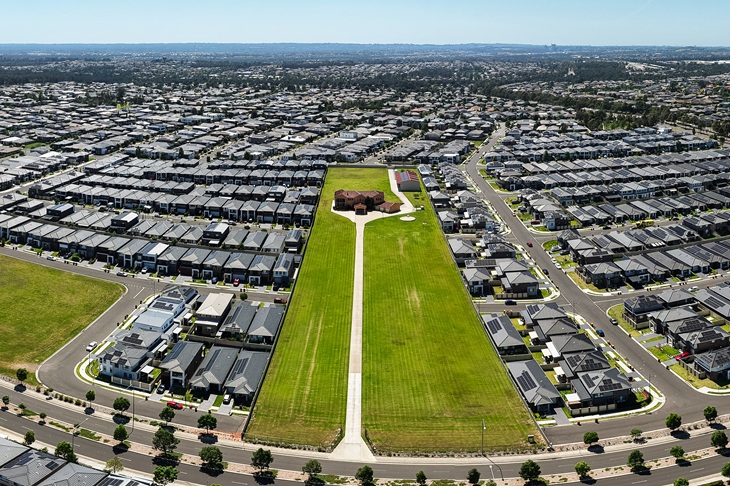
It’s no secret that councils in Australia’s major cities are beholden to wealthy baby boomers clinging to their quarter-acre blocks and protesting any development that dares rise above two storeys. It’s unfortunate, but if we’re to accommodate the extraordinary immigration intake the government itself is driving, the only real solution is greater population density around key transport hubs. The Sydney of the 20th Century, with its large blocks and family houses, will not look like the Sydney of the 21st Century, which is more likely to resemble London.
To house those arriving from abroad who want to call Australia home, government planning restrictions – but not building standards – need to ease. On this front, there are a few bright spots leading the way that Australia can learn from, such as Houston in Texas and Auckland in New Zealand. It’s time for government to stop standing in the way and to start getting serious about allowing developers to build higher density housing to accommodate Australia’s burgeoning population.
Setting the System Straight
For all the finger-pointing at greedy developers or foreign buyers, Australia’s housing mess comes back to one culprit: government. The housing crisis didn’t just happen – it’s built into our tax code, with successive governments increasingly taxing labour and subsidising property speculation. The result is a nation that rewards leverage over labour.
The cheap leverage afforded by the RBA has only intensified this. Isolated and unaccountable, central banks have pushed beyond their traditional mandates and feverishly engaged in grand-scale policy experiments based on misguided theories. This threatens the cohesive fabric of Australia’s egalitarian foundation by fuelling the sort of enormous asset price inflation that creates the sort of class and intergenerational inequality Australia is currently experiencing.
Layered on top of all this are planning rules that restrict housing supply even as population growth accelerates. Councils and state governments have failed to deliver density around transport and employment hubs, while federal settings continue to stoke demand. The cumulative effect is a housing system warped by tax, monetary, and planning policy – a crisis of governance, not of markets.
Toby Carrodus is an independent investor who runs a scholarship program for students from low socio-economic backgrounds. For more information, see here.
The above is opinion only, and not intended as financial advice.