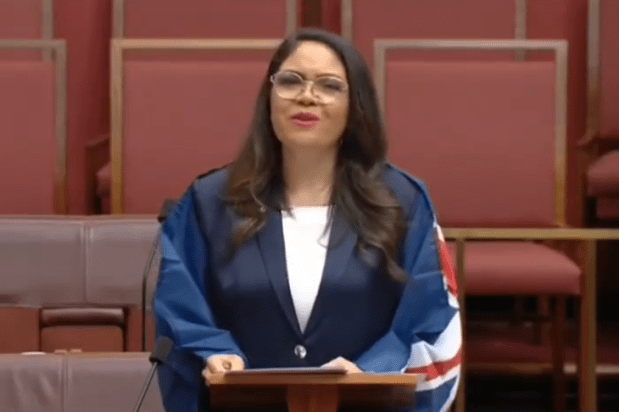
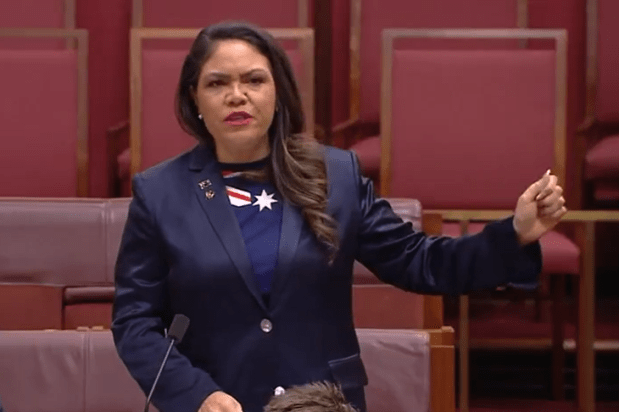
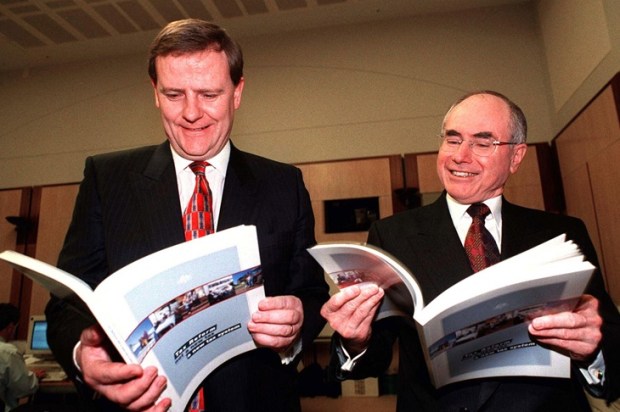
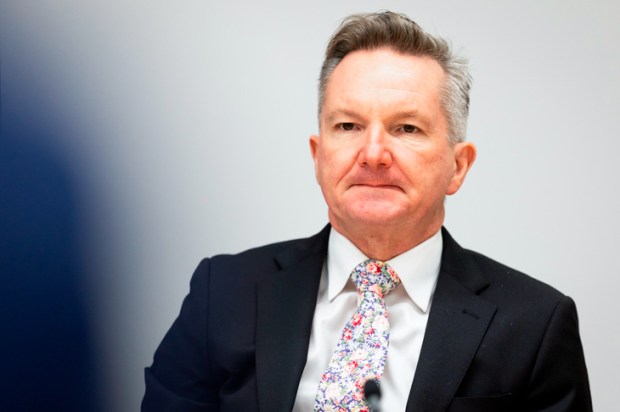
Senator Jacinta Nampijinpa Price has responded to Paul Kelly’s recent article in The Australian where he asserts that Australia has moved to the left.
The conversation begins with Kelly, who writes:
‘The crisis transcends the Coalition parties – this is an intellectual, cultural, and political crisis of the centre-right in Australia, 20 years in the making, with the nation since 2020 moving decisively to the left; witness Labor’s wins at the 2022 and 2025 elections and, more important, the collapse of a consistent, conviction Coalition policy stance.’
In response to Kelly, it could be argued that any shift to the left has been manufactured and coerced by an aggressive propaganda campaign enforced upon the schooling system and echoed in the corporate world.
We call this bombardment… Whether through Woke Ally stickers on shop windows, pronouns in email signatures, rainbow-painted sidewalks, forced Welcome to Country ceremonies, intimidating protests, or endless doomsday messaging – people have been bullied to the left as a dog might bark a cat into the corner. This means they are held captive in an artificial cultural shift. That can be undone once the guard dog is chased away.
Conservative politics has been sidelined, astonishingly under the watch of timid Coalition governments, to the point where young Australians never come across a point of view that contradicts the left-wing agenda. That’s not normal. That’s dangerous.
Secondly, the collapse of consistent conviction is not the fault of voters, it is the influence of the so-called moderates who were never interested in conservative ideology but rather wished to occupy safe rich seats and use public office as a stepping-stone to future lucrative employment. Those safe seats are now in danger thanks to their endorsement of left-wing policies, particularly mass migration.
If the right had kept hold of power, those moderate seats would be safe and everyone knows it.
Further, it is said that Liberals are ‘increasingly divorced from centres of cultural and opinion-forming power in Australia’. No kidding. Conservative students are harassed by their peers and punished academically for refusing to toe the line. The absence of conservatives should be cause for an investigation into the behaviour of these institutions.
It is interesting that Kelly asks, if Donald Trump and Nigel Farage can muster conservative support, why can’t the Liberals?
The answer probably has something to do with the moderates and the press freaking out about ‘importing MAGA!!!’
When it comes to the popular right, Kelly said in July 2024:
‘Populism thrives on grievance but is devoid of genuine solutions. It always needs a leader who is charismatic, or a celebrity, or a rabble-rouser. Take your pick from Donald Trump, Marine Le Pen, and Nigel Farage.’
Today, Nigel Farage is on track to be the next UK Prime Minister, Macron’s leadership seems to be held to ransom by Le Pen’s influence, and Donald Trump should have been awarded the Nobel Peace Prize.
These are more than random charismatic performers. They are succeeding where the intellectual class failed.
‘History shows Trump is a threat to conservative politics. As the Coalition redefines its stance after the 2022 election loss, Dutton’s task will be to mobilise disillusionment with the Albanese government but contain populist madness … the Coalition has surrendered to impractical extremism and populist preening with policies that defy credibility.’
To quote the young, ‘Yeah, nah…’
Dutton should have ignored such commentary and leaned into the populist revival which is, surprisingly, popular. The idea that we are now worshipping ‘unpopularity’ speaks to the broken relationship between Canberra and the people.
Declining primary votes for Labor (and the Coalition) have been re-branded as virtuous to explain-away the populist revolt of One Nation and, to some extent, the Greens. Public opinion is being shunned as extreme, dangerous, and misinformed across government institutions.
Populism is democracy seeking its revenge on the factional class of born-to-rule party elites.
Kelly also wrote in March of 2025:
‘Beyond trade, Australia faces an impending conflict with the Trump Administration in the alliance between Donald Trump and Big Tech – conceivably the most malevolent coalition in the annals of Western democracy – that will determine whether our sovereign rights can be crushed.’
To put this in context, Donald Trump and this Big Tech partnership is about protecting freedom of speech for censorship against government overreach, with Australia being called out alongside the UK as extreme cases of Orwellian control. Conservative voters have been cheering Elon Musk to victory and revelling in the loss of the eSafety Commission, which is a role most want to see abolished or at the very least, severely constrained.
In other words, conservatives want Donald Trump to influence domestic politics when it comes to protecting free speech.
Using ‘governments upholding their sovereign rights’ interchangeably with the Under 16 age ban that requires all users to verify their ID is, in my view, a bit rich.
‘When the Trump-Big Tech coalition threatens Australia, this will transcend a policy dispute; it will penetrate to principles that define our social and democratic values.’
Like, uh, free speech and privacy?
Besides, every time someone uses the word penetrate I read it in Klaus Schwab’s accent.
Remember when WEF Founder Klaus Schwab openly bragged about "penetrating" at least half of Justin Trudeau's cabinet?
Not foreign interference at all though….. pic.twitter.com/EWhvI9ORQd
— Kris Eriksen (@KEriksenV2) September 13, 2025
Returning to Jacinta Price’s particular criticism of Paul Kelly’s observation about the political landscape.
‘I agree with Kelly that the Liberal Party is in an existential crisis and “political parties must renew or die”. But I respectfully disagree with some of his diagnoses. I don’t believe Australia has moved “decisively to the left”.’
Cautioning that 94 seats leaves out the critical detail about Labor’s low primary vote of 34 per cent, she says, ‘Australia is not left, centrist, or right. It’s simply a country where everyday Australians want the best for their families, their communities, and their nation.’
Price correctly goes on to observe that the previous election was a Coalition defeat rather than a Labor victory.
Paul Kelly’s column in The Australian earlier this week deserves a response.
Australia hasn’t “moved left”. Ordinary Aussies just want strong families, safe communities, and a prosperous nation. The last election wasn’t Labor’s big win, it was our failure to stand firm. Every… pic.twitter.com/y2XZBmM2jR
— Jacinta Nampijinpa (@JNampijinpa) October 10, 2025
On Kelly’s point about centres of cultural and opinion-forming power, Price notes that, on the contrary, ‘Too many Liberals have become captive to identity politics and are worried about appeasing narrow and sectional interests. Imagine what would have happened if a few of us hadn’t led the charge against the democracy-damaging Voice [to Parliament].’
She goes on to say:
‘If the Liberals are to win the hearts and minds of Australians again, we must reject identity politics and pandering to sectional interests, and instead elevate the debate by refocusing on what unites us: family, community, and nation.’
And critically, this is the reason I included the quotes about populism. Price then says:
‘Andrew Hastie and I have been characterised as populist or populist conservatives. We are said to have radical agendas. Often those on the left characterise any victory on their side as the democratic will of the people. Too often when there is a win on the right, as there was in the US, or a swing to the right, as we are seeing with Reform UK in Britain, the left characterises it as populist in a pejorative sense. The truth is that any leader who wins the majority vote of the people is a populist – be it Barack Obama, Donald Trump, Bob Hawke, or John Howard.’
Jacinta Price asks what, exactly, is radical about ‘wanting cheap and reliable energy’ and ‘sustainable levels of migration’ and ‘Australia to re-industrialise’?
Price is a true Liberal, and she believes the party can be salvaged.
‘…provided we engage in the battle of ideas and don’t simply sail with the prevailing winds, especially when one can see those winds steering us into a storm.’
The problem facing Price, Antic, Canavan, and Hastie are the moderates trying to scuttle the Liberal Party ship before it leaves the ‘safety’ of the docks. What they don’t realise is that those docks have been set on fire and the flames are licking awfully close at the sails. From this perspective, the storm of ideas and wild seas of cultural unrest seem to be the sensible option.
No one wants to end up a wreck right next to shore. Not only do you lose, you lose without honour.
Flat White is written by Alexandra Marshall. If you would like to support her work, shout her a coffee over at donor-box.