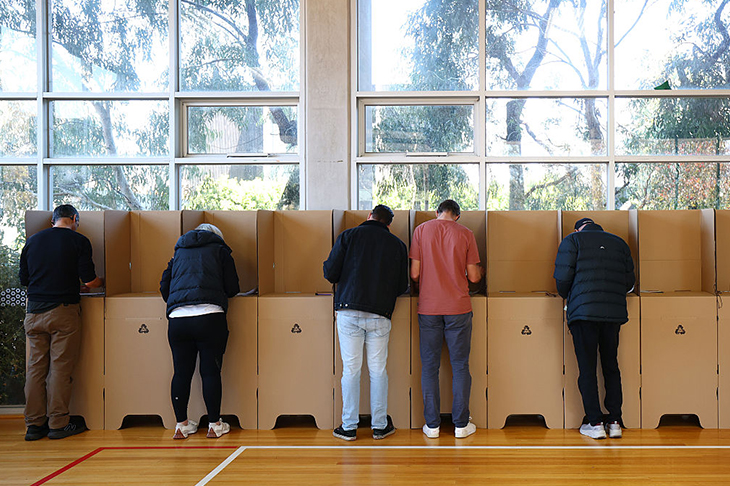
Greetings from an increasingly chilly Narrandera – One Nation central in the heart of the Farrer electorate where One Nation candidate David Farley lives and grew up.
If the Coalition loses Farrer this weekend, it will be described by the usual suspects in apocalyptic terms: a revolt in the heartland, a collapse in the bush, a harbinger of a broader Australian political realignment. However, happily, from the coal face of pre-polling in Narrandera, I can attest to solid signs of life for the Coalition – even in rural Australia.
While there is a very serious revolt, I am yet to be convinced that One Nation represents the slow death of the Nationals or the Liberals, or indeed the Coalition.
Like all regional electorates, Farrer is a place, not a mood. And these kinds of places – particularly vast, regional ones – have memories, internal tensions, candidate impacts and long political shadows that do not translate neatly into national narratives no matter how political insiders attempt to package them.
Farrer is an unusual seat for a vast regional electorate. It stretches across roughly 125,000 square kilometres, taking in irrigated food bowl, small villages and towns, and the border city of Albury. The Nationals retain a very solid presence across the rural parts of the seat, however Albury itself has, in recent years, developed a Teal-adjacent quasi-Victorian sensibility – professional, public service heavy, but also aspirational. Despite Sussan Ley being smashed by the Climate 200 supported Teal in Albury at the last election, as the popularity of the local state liberal member Justin Clancy attests, it’s still a town that will vote Liberal. Above all, like most electorates geographically far from the corridors of power, Farrer hates Labor.
None of this about Farrer is new. What is unusual – but unsurprising – is how it is interacting with recent history.
Sussan Ley took the seat from the Nationals a quarter of a century ago and held it for 25 years – no small feat. But over time, and particularly in more recent years, the alignment between Ley and the hard-core rural parts of the electorate became fractured. As good conservatives they kept voting for her, but in rural areas positions that might read as ‘compassionate’ or identity oriented in inner-urban Australia play differently. Cultural cues that appeal to inner-city voters always raise eyebrows in the bush.
For all this time the Liberal party in Farrer has relied on unprecedented goodwill from its Coalition partner. At every election since 2004, Nationals volunteers have valiantly and good-naturedly manned around 40 per cent of the booths across the electorate. It is not lost on these Nationals volunteers that they helped to ensure a Liberal held the seat for a quarter of a century.
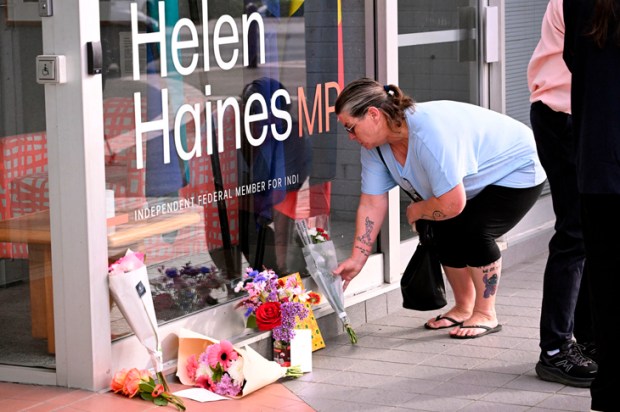
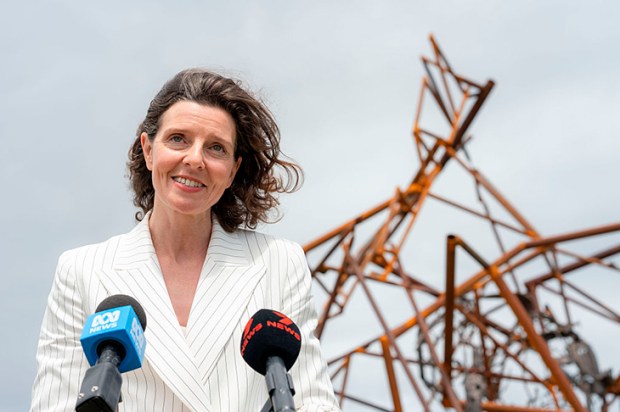
Layer onto that recent leadership instability in both Coalition parties, an unprecedented two splits in the Coalition in less than a year, and Coalition voters in Farrer feel as angry and let down as they ever will. And rightly so. Worse, after 25 years of the privilege of representing the people of Farrer, Ley has disappeared without trace in a huff of suffragette white. It has not gone down well.
Enter One Nation. The story does not need recitation. Prior to the Bondi massacre, One Nation was already surging. After Bondi there’s another surge. A free speech debacle in a hastily recalled parliament and more Coalition leadership and unity instability follows. The Coalition was in free fall.
The anti-establishment sentiment will not go away any time soon but this by-election is likely to be the high-water mark for One Nation in this part of the world and similar parts – not because the anger will completely dissipate, but because it reflects a particular combination of events that will not be replicated.
If this were just a story about anger in the bush, we would expect the neighbouring electorate of Parkes – where I grew up – to be more vulnerable. It is much larger again than Farrer – sprawling across more than 400,000 square kilometres – and sustains the same pressures. In Parkes there is frustration with the Coalition. Fair enough. But alongside that sits something country people care about more: a settled satisfaction for the work of the former and current Nationals representatives. I’ll bet my bottom dollar that One Nation won’t win Parkes, or Farrer’s other neighbour Riverina, in 2028 – even though their demographics lend more readily to One Nation.
In country electorates, voters tend to know their member – or know someone who does. They observe them over time. They form judgments not simply about policy but about whether a person turns up, whether they speak plainly, whether they can be trusted to carry local concerns to Canberra.
The bush is not becoming indiscriminately populist. If anything, it is more exacting – more demanding of its representatives.
Reading too much into this would therefore be a mistake.
None of this diminishes the effort of the Liberal candidate, Raissa Butkowski. Butkowski has run a campaign that would succeed in any other time: cheerful under pressure, resilient in the face of an immensely difficult task, and a person of clear integrity. Brad Robertson, the Nationals candidate, is a standout on these character traits too. These are the personal attributes on which political parties rebuild.
For all the noise, there are signs that the fundamentals are reasserting. In the Coalition, there is an overdue recognition that parties of government cannot be all things to everyone. The Coalition partnership is settled. The internal discipline that once saw Liberal and National parties operate as a genuine coalition – rather than as loosely aligned competitors – is being restored. The era of three-cornered contests that splinter the primary vote and churn resources is likely to give way to clear-eyed pragmatism directed to which party can win the regional seat.
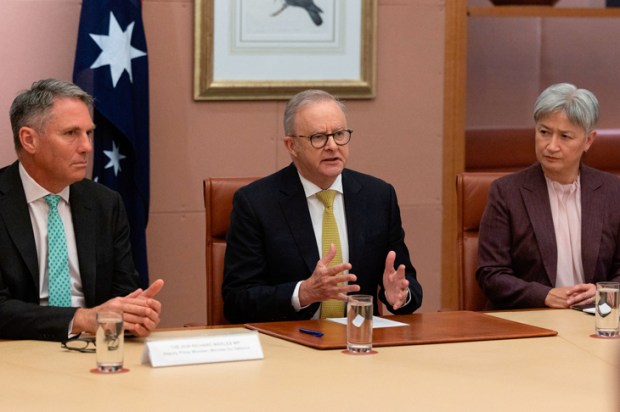
The Coalition’s problem in Farrer is real but it is not the beginning of the end. It is the beginning of a tighter, more purposeful, more unified – and far, far more serious – alternative government to a Labor government that is destroying the economic and social fabric of the nation.
Whatever the result on Saturday, One Nation won’t replace the Coalition in the bush – but the Coalition is on notice big-time that whenever and wherever it looks divided, inattentive, or where it has taken its supporters for granted, One Nation is poised to strike.
Got something to add? Join the discussion and comment below.
You might disagree with half of it, but you’ll enjoy reading all of it. Try your first month for free, then just $2 a week for the remainder of your first year.