I don’t know how many budget lock-ups I have attended. I know the answer would be depressing, so I don’t bother to count up. Mind you, it is a fraction of the attendance record of Bob Gottliebsen. He is quite a bit older than me, but I’m sure he will forever hold the record.
At this time of the year, I always rifle through the bottom drawer of the cupboard looking for my orange jumpsuit. If I am going to be locked up like a prisoner – admittedly only for five or six hours – I think I should dress like a prisoner.
Yes, I know what you are thinking: Judith, orange really isn’t your colour. But, hey, the sartorial standards at the lock-up are nothing to write home about. It’s not like The Devil Wears Prada.
The lock-up lost a lot of its je ne sais quoi when it was moved from the bowels of Parliament House in Canberra. The staff from all the media outlets would pile into the one space, albeit divided into separate rooms. Gosh, we had to rub shoulders with journalists from the ABC, SBS and the Guardian. I use the term journalist loosely.
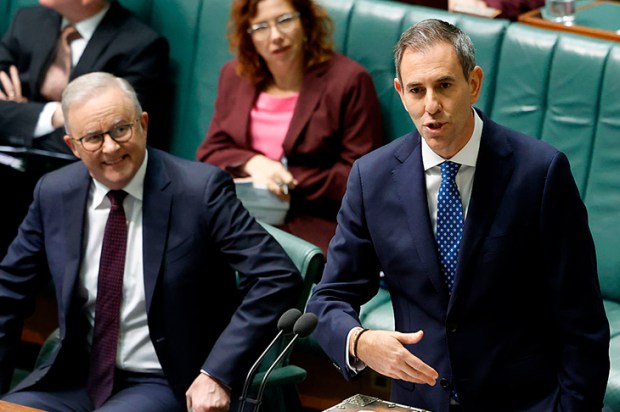
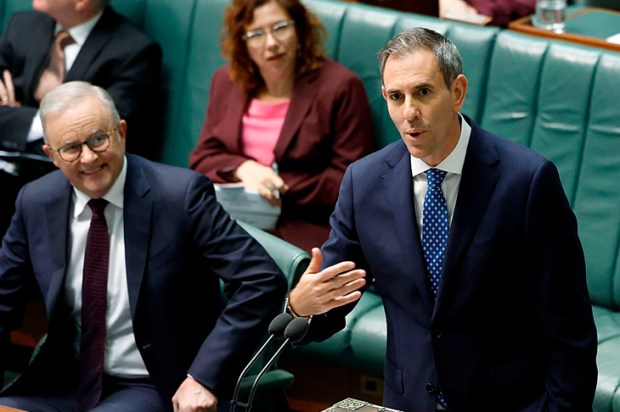
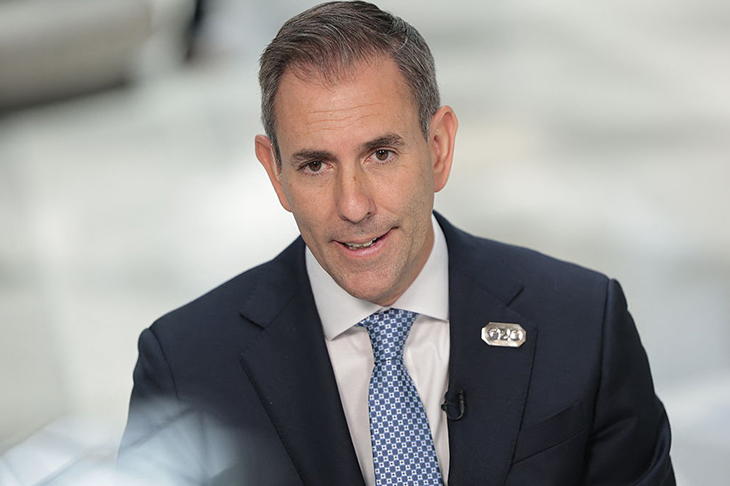
One highlight to the day was the visit from the treasurer accompanied by the Treasury secretary, followed by the finance minister. They would answer questions, but it was unwise to expect sensible or useful replies. It was entirely performative.
The whole day reminded me of the days I did my exams, both school and university, at the Exhibition Buildings in Melbourne. The space was cavernous and you hardly knew anyone. You might have been doing an Economics 201 paper, but the bod across the aisle could have been doing Organic Chemistry 301. It was the complete potpourri.
When it comes to the budget lock-ups post-Covid, they are now more conveniently held in different cities and organised by the media outlets themselves. In my case, I wonder whether a bit of crowdfunding goes on, targeted at the Australian Dental Association. There are multiple bowls of filling-extracting sweets placed beside each laptop. A few hours in and you are really yearning for a gin and tonic, but a handful of Minties is a consolation prize.
I always delay my entry to the lock-up for a few hours after the official start time. I don’t want to peak too early and, besides, I know my way around the Budget Papers after all these years. They don’t really change much apart from the numbers and the increasingly flowery language.
And here’s a hint: I go straight to the Appendix of Budget Paper 1 entitled Historical Australian Government Data. The most important figures are there to see in a manageable number of tables – receipts, payments, underlying cash balance, headline cash balance, gross government debt, net government debt, net interest payments, etc. It’s pretty much all the key budget data points you need to access and there are historical tables to boot.
And here’s another hint: forget underlying cash balance, which is generally just referred to as the budget deficit. The key parameter now is headline cash balance which includes all off-budget spending and revenue as well the budget stuff.
Jimbo will be emphasising the underlying figure because it’s considerably lower than the headline figure. But take it from me, as an old, grumpy but experienced economist, the figure that now really counts is the headline figure because there has been an explosion of off-budget spending to fund boondoggles such as Future Made in Australia.
By the way, this program should really be called Used to be Made in Australia because most of the allocated hundreds of millions of dollars are simply propping up large industrial plants that are being driven out of business by high energy prices courtesy of B1, Climate Change and Energy Minister, Chris Bowen.
It is surely the irony of ironies that huge subsidies are heading out the door to save these plants – think smelters and refineries – but they are also being hit with a carbon tax under the name of the Safeguards Mechanism because of their failure to reduce emissions according to the timetable set by B1.
Getting back to my annual incarceration, after a short period of time perusing the magic appendix, I quickly begin to draft my column. I take a few internal calls from head office seeking my opinion, but then I’m back to work.
For the fun of it, I may pose a few curly questions to the Treasury officials who are required to attend these lock-ups. They generally look terrified when I approach. They typically refer my queries up the line and someone in Canberra may or may not get back to me.
The only figures you can really rely on in the Budget Papers are the historical ones and the ones for the coming financial year, although in this latter case, a pinch of salt is also required. The other figures are essentially made up, particularly those related to GDP growth and revenue.
The assumptions drive the figures, and these assumptions are in turn driven by the need to see the budget in ‘better nick’ – to cadge a phrase loved by Jimbo – over the medium term, at least.
I would put money – hey, there might be an option to do so in these new poly betting markets – on deficits (using the preferred underlying version) and government debt as a percentage of GDP falling in the next decade.
You might ask: when do I read the speech that the treasurer delivers to the House of Representatives at 7.30 pm? I used to read the speech quite quickly after entering the lock-up. But they are so badly written, so self-congratulatory, so execrable that I have given that up. I might have a glance during the hours of my imprisonment, but that’s about it.
Having dashed off my column, I have quite a lot of spare time to read my novel – I always bring one into the basement where our lock-up occurs. (I am currently reading Francis Spufford’s Golden Hill, very strange.)
There are few bods I chat with and the teenagers from the online division sometimes ask me questions that make no sense. Most of the media coverage is simply outlining the showbag of goodies offered up by Jimbo and changes to tax arrangements. Because most of the journalists don’t understand how the tax system works in the first place, their descriptions of the changes are incomprehensible.
I am generally one of the first to flee, having collected my mobile phone that I have handed to one of the Treasury officials who looks about the same age as my oldest grandchild – 13, that is. I’ve always thought seizing phones was a complete joke. There would be no point calling anyone because the government has leaked all the important bits to the media well before the actual day.
There may come a time when a sensible government does away with the lock-up – it’s unheard of overseas – but it will probably be after I have attended my last one.
Sigh.
Got something to add? Join the discussion and comment below.
You might disagree with half of it, but you’ll enjoy reading all of it. Try your first month for free, then just $2 a week for the remainder of your first year.