Russia’s military reputation in Africa was built in Kidal, Northern Mali. Late last month, it was buried in the same spot. The Russian flag that Wagner hoisted over Kidal in 2023 was up for less than 30 months when on 26 April an Azawad Liberation Front (FLA) fighter from the separatist rebel group allied with al-Qaeda’s Malian affiliate fashioned the tricolour into a turban decoration. This was the last thing Russian troops saw as they withdrew hastily from their base, one that until 24 hours prior had been held up as the model of Russian security force assistance in Africa.
The image of Bedouin rebels carrying Kalashnikovs while escorting Russian mercenaries out of their own base captures the significance of what happened across Mali late last month. In the largest coordinated offensive since 2012, al-Qaeda affiliate JNIM – a radical Islamist group seeking to topple the military junta and impose sharia law across the Sahel – launched simultaneous strikes on Malian military positions alongside their unlikely partners, the FLA.
This alliance of jihadists and secular Tuareg nationalists demonstrated that mutual hatred of Bamako’s oppressive rule proved stronger than ideological difference. They struck across Mali from the southern capital to the far north. Meanwhile, ‘Islamic State in the Sahel’ exploited the chaos to mount offensives and establish checkpoints of its own.
The Wagner group’s effectiveness rested on incentives that Africa Corps, by design, does not have
Mali’s defence minister, General Sadio Camara, was killed in a suicide bombing at his own home in the capital. The President, Assimi Goïta, was evacuated and silent for days. Russian and Malian forces in the north were surrounded and forced to negotiate their withdrawal to avoid being overrun. A full regime collapse in Bamako was narrowly prevented only by Russian mercenaries neutralising rebel forces as they closed in on the steps of the presidential palace. The city remains under siege.
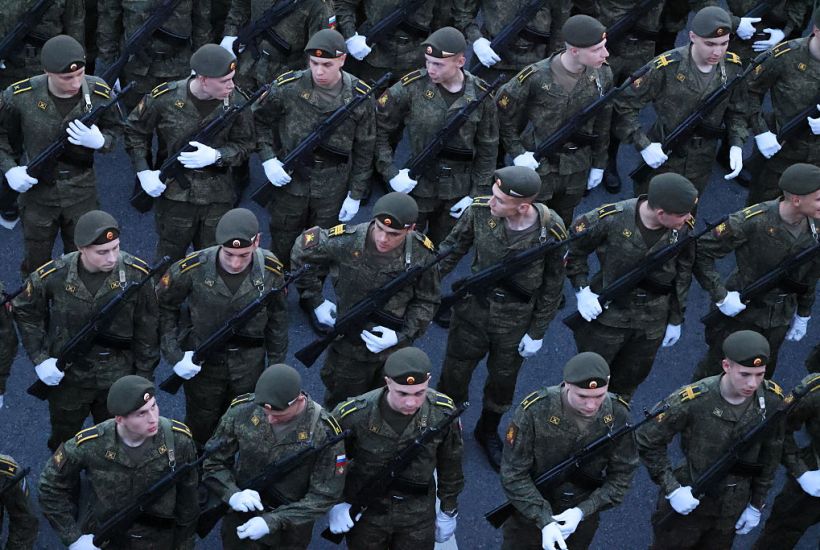
The Russian Africa Corps, the successor to the mercenary Wagner private military company (PMC), is just half its size. It is fully integrated into the Russian Ministry of Defence (MoD) – a direct consequence of Wagner leader Yevgeny Prigozhin’s mutiny in 2023. The Corps’ inability to detect, let alone prevent or defeat, last month’s unprecedented security crisis is testament to the hollowing out of the force that followed Wagner’s demise.
Moscow, alarmed that, by 2023, Wagner had become a threat to the same MoD that created it just a decade earlier, attempted an impossible balancing act: preserving the military advantages of an independent, manoeuvrable, semi-privately financed force while bringing it under direct state control and stripping out the autonomy that had made Wagner so effective. This solved the political problem Prigozhin had presented while decimating the Kremlin’s most powerful military instrument in the process.
The Wagner group’s effectiveness rested on incentives that Africa Corps, by design, does not have. Prigozhin and his commanders needed consistent battlefield victories to justify their contract, sustain their financial model, and maintain leverage over the Kremlin. Wagner was entrepreneurial in nature; it fought and won to survive as a combat entity.
After Prigozhin’s death and the group’s absorption into the Ministry of Defence, those incentives vanished. Africa Corps became a training-and-advisory mission whose primary purpose was to preserve Russian geopolitical access and resource extraction, not to win wars. The operational tempo reflected this: battles involving Russian fighters in Mali fell from over 500 in 2024 to around 400 last year, as Ukraine continued to drain the pool of capable personnel. What remains today is a force that could not hold Kidal, Moscow’s lauded trophy, against a single day of concentrated pressure three years later.
The consequences extend well beyond Mali. France was expelled from the country, as well as from Burkina Faso and Niger, between 2022 and 2023. Military juntas seized power in successive coups before ordering French troops and ambassadors out, framing their departures as acts of anti-colonial assertions of sovereignty and replacing them with Russian security assistance. Russia presented the Wagner group to the military dictators of the Sahel as a highly effective counterinsurgency force that did not entail the political costs of ongoing ‘colonial’ ties to Paris.
April’s events suggest that a recalculation is now underway. The juntas who were sold Wagner PMC are receiving the Russian Africa Corps, and the latter is proving to be a significant and unexpected downgrade. Moscow has bequeathed its Sahelian partners a force that has failed to carry on Wagner’s operational effectiveness while fully inheriting its appetite for atrocity. The Africa Corps has been committing mass violence against rural populations with no adherence to the laws of armed conflict and no consequences for perpetrators.
This has poisoned the well in precisely the communities whose support determines the outcome of the war in Mali, in a classic case of strategic counterinsurgency failure. Populations that were at best indifferent to the contest between Islamists and the government have been pushed towards JNIM, which has, with considerable sophistication, moderated its public demands. For one, it has deferred to local leaders on the application of sharia law rather than imposing it uniformly. Malian communities now face an impossible choice: accommodation with a caliphate that has learned, for now, to govern lightly, or continued exposure to Russian-backed government forces that have proved more indiscriminate in their violence than the jihadists themselves.
For Goïta, the situation is existential in the most direct sense. His defence minister is dead. His intelligence chief, Modibo Koné, if alive, is badly wounded. The city that represented his partnership with Russia’s most visible success has become its most embarrassing failure. The legitimacy of Mali’s junta rested on a single promise to its citizens after decades of civil conflict: security. That promise is broken. Even in 2012, a year of similar JNIM attacks and a military coup, Bamako remained the safe rear – a world away from last month’s killing of the defence minister at his own home. Russia helped Goïta survive an internal mutiny within the junta last year. It is difficult to see him surviving a second now.
Putin will find the situation alarming for different reasons. Mali was the Sahelian model – proof of concept that Russia could replace Western security architecture in fragile states, extract resources in return, and do so cheaply enough to sustain across multiple theatres while fighting a land war in Europe. That model has now failed its most public test, made even more visible by the theatre of the taking of Kidal in 2023. The juntas in Burkina Faso and Niger are watching closely, alongside governments in Madagascar, the Central African Republic, and a dozen other states where Africa Corps has been marketed as a reliable solution.
The question is no longer whether Africa Corps can hold Mali together – the answer to that is a resounding ‘no’. It is how Russia will answer the question it has sought urgently to avoid: will Moscow recommit to its security structures across the region with the scale and seriousness the situation demands or will it watch its Sahelian clients collapse in sequence?
Given the ongoing war in Ukraine and Russia’s institutional terror of empowering another Wagner group, the choice was probably made before last month’s attacks. The trajectory points in one direction: a disastrous Russian withdrawal from Africa not unlike ours from Kabul.