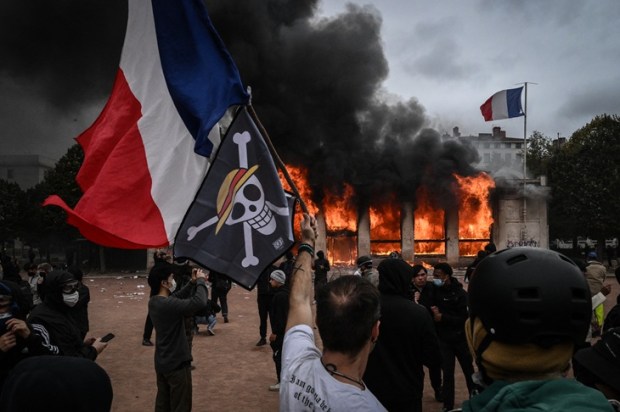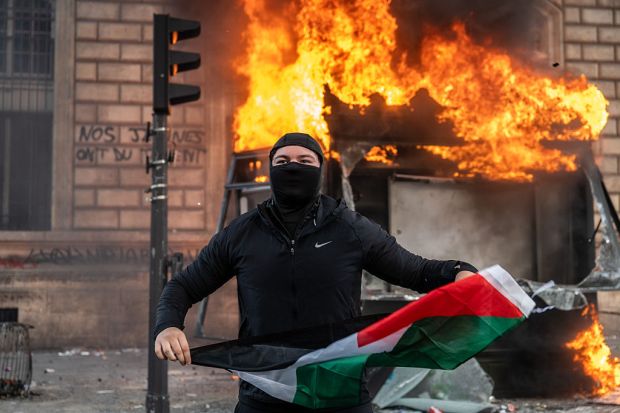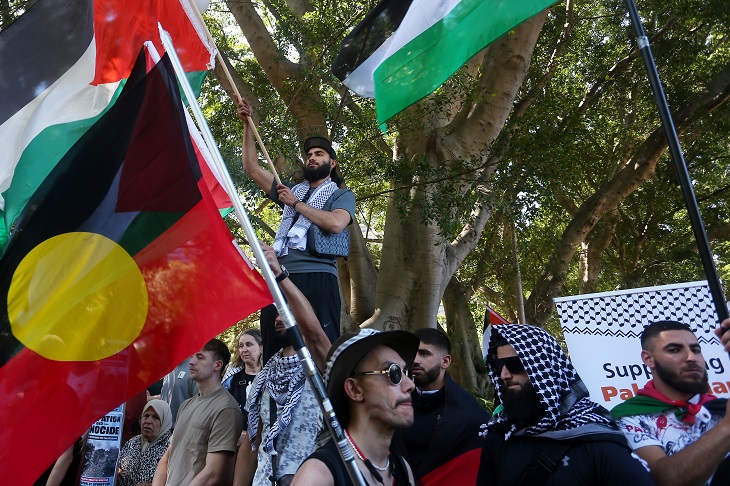
One unintended consequence of the distant conflict in Gaza and Lebanon has been a sharper examination in Australia of the question of freedom of speech. This issue has been highlighted again by the Victorian government’s announcement that it proposes to follow the federal government’s ban on the display of terrorist flags such as those of Hamas and Hezbollah.
The starting point in any discussion on this subject is to note that incitement to violence against individuals or groups in the community is a criminal offence under the common law and always has been, whether or not the incitement is based upon some racial, religious, or national characteristic. In addition, there has been for some years a provision in the Commonwealth Criminal Code that makes it an offence to urge the use of force or violence towards another person or group on the basis of race, religion, nationality, or national or ethnic origin.
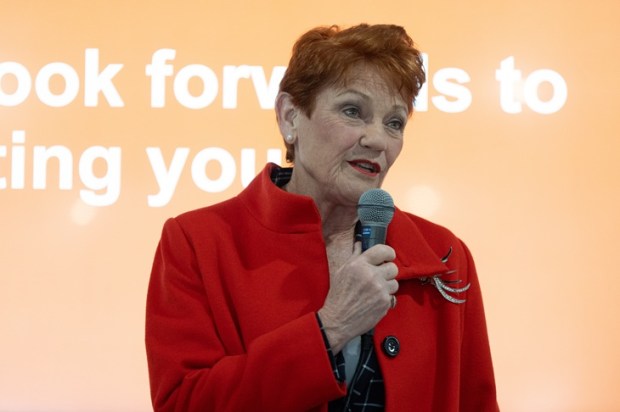
But legislation that goes beyond incitement to violence runs the risk of restricting the publication of political opinions. This is, for example, the vice of section 18C of the federal Racial Discrimination Act that makes it unlawful to, amongst other things, offend or insult groups in the community on the basis of race, colour, or national or ethnic origin. The notion of offensive or insulting statements obviously falls a long way short of incitement to violence. The problem with this provision was demonstrated by the recent Federal Court decision that One Nation Senator Pauline Hanson had contravened the section with comments directed at Greens Senator Mehreen Faruqui which were made in response to Faruqui’s commentary on the death of Queen Elizabeth II. This case provides a very good example of why section 18C should never have been enacted.
This is not to deny that the expression of some political opinions may be highly distasteful to particular groups in the community or even to the community as a whole. Consider, for example, the views that Russia should be entitled to annex all of Ukraine or that China should be entitled to annex Taiwan, in both cases by the use of military force. These opinions would be rejected by almost all members of Australian society and particularly by those of Ukrainian or Taiwanese extraction. Nevertheless, they represent an opinion about conflicts on the global stage and it could hardly be suggested that they should be unlawful.
Now consider the display of Hamas or Hezbollah flags at a march or vigil. Presumably, this reflects the opinion that the state of Israel has no right to exist and should in fact cease to exist. Delicacy seems to prevent the holders of this opinion from canvassing the fate of the current inhabitants of the state of Israel. It is, however, a political opinion, albeit one that is deeply offensive not only to most members of the Jewish community but to many others as well.
But should the display of these symbols be a criminal offence? What separates the flags of Hamas and Hezbollah from most other symbols is that those two bodies are designated terrorist organisations under federal legislation. By reason of a provision of the Commonwealth Criminal Code enacted last year their display is an offence if the person in question knows that it is the symbol of a designated terrorist organisation and a reasonable person would consider that the display either:
- Involves the dissemination of ideas based on racial superiority or racial hatred.
- Could incite another person or group to offend, insult, humiliate, or intimidate a person or group because of their race.
- Involves advocacy of hatred of a group on the basis race, religion, or nationality or constitutes incitement to offend, insult, humiliate, intimidate, or use force or violence against a group on the basis of race.