Across Australia, families are making increasingly difficult financial decisions as the cost of everyday living continues to place pressure on household budgets.
For some, this means reconsidering holidays, entertainment and other discretionary expenses. For others, the sacrifices extend into areas with potentially longer-lasting consequences, including the educational opportunities available to their children. Private tutoring, specialist learning assistance and extracurricular programs that once formed part of a family’s routine are increasingly competing with mortgages, rent, groceries, insurance and electricity.
While these decisions are made out of financial necessity, their consequences may extend well beyond the immediate household budget.
For Australians already experiencing financial hardship, such sacrifices are hardly new. Lower-income families have long faced difficult decisions between meeting essential living expenses and providing additional educational opportunities. Many have never possessed the financial freedom to consider private tutoring or academic extension programs in the first place.
However, rising living costs threaten to deepen these existing disadvantages while extending similar financial constraints into households that previously enjoyed greater flexibility.
The concern is not simply that Australia’s middle class is experiencing increased financial pressure, but that educational inequality may become further entrenched among disadvantaged families while spreading more broadly through the income spectrum.
This raises important questions about the economic circumstances confronting Australian families and the commitments made by the federal government.
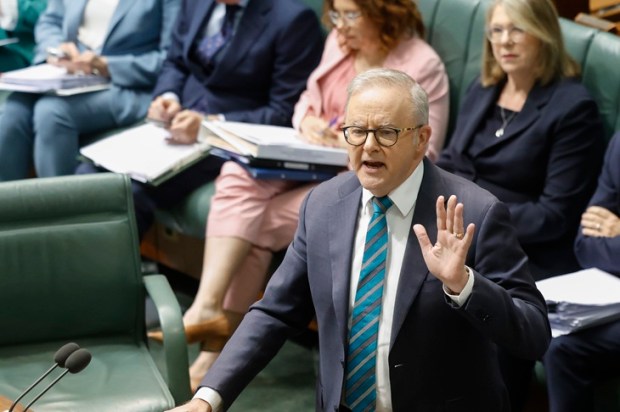
Speaking at the Queensland Labor State Conference on August 30, Prime Minister Anthony Albanese declared that Australia was in good economic shape after more than four years of Labor government. Pointing to economic growth, employment and budget outcomes that compared favourably with other advanced economies, he assured delegates that the country was on the right track. His address also emphasised economic justice and the importance of ensuring future generations enjoyed opportunities comparable to those of their parents.
The Prime Minister’s assessment reflects one perspective on Australia’s economic performance, but national economic indicators do not necessarily capture the financial experiences of individual households.
An economy may perform comparatively well internationally while families within it experience declining purchasing power and increasing difficulty maintaining their previous standard of living. This distinction is particularly relevant when considering the opportunities parents can provide their children. A favourable international comparison offers limited reassurance to a family deciding whether it can continue paying for the additional educational assistance its child previously received.
At Labor’s April 2025 election campaign launch, Albanese explicitly connected his economic agenda to Australians’ employment, wages and children’s education, promising to make people better off over the following three years. While that commitment has not yet reached the end of its stated period, the economic conditions confronting households provide a legitimate basis for examining the government’s progress.
Australian Bureau of Statistics figures show annual inflation reached 4 per cent in August 2026, with housing prices increasing 5.7 per cent and education prices rising 4.7 per cent over the same period. Annual wage growth was 3.2 per cent in the June quarter, below the 3.8 per cent inflation recorded for that period. The Reserve Bank’s decision in September to increase the cash rate to 4.60 per cent added further pressure for mortgage holders already managing competing financial responsibilities.
Although these figures do not establish that every Australian household is worse off, they illustrate the difficulty many families face in maintaining their purchasing power.
The impact is particularly serious for lower-income households, where essential expenses already consume a substantial proportion of available income. When housing, food, utilities and transport absorb much of the family budget, educational participation can become another source of financial strain. For these families, the concern may not be whether a child can continue private tutoring, but whether the household can afford reliable internet access, appropriate school equipment, uniforms and other resources necessary for ordinary classroom participation.
Research from The Smith Family illustrates the extent of these challenges. Its 2025-26 Pulse Survey found that 85.3 per cent of surveyed parents and carers whose children received support through the organisation were worried about affording everything required for the school year. More than half anticipated their children could miss out on essential digital devices, while 43.9 per cent were concerned about their children’s ability to participate in activities outside school. Although the survey reflects the experiences of financially disadvantaged families rather than the broader Australian population, it demonstrates how household finances can restrict educational participation well before the question of additional tutoring arises.
The sacrifices associated with education are also extending into other areas of family life. Futurity Investment Group’s 2026 Cost of Education report, based on research involving approximately 2,500 Australian parents, found that 71 per cent had made compromises to help manage education expenses. Among respondents, 37 per cent reported choosing cheaper food options, while 22 per cent had reduced expenditure on clubs or activities. These findings highlight the relationship between household finances and educational participation, with some parents attempting to preserve opportunities for their children by making sacrifices elsewhere in their budgets. For families already struggling to meet everyday expenses, the additional financial demands associated with education can make an existing disadvantage considerably harder to overcome.
Yet the pressures are not confined to households experiencing established financial hardship. Working and middle-income families who previously afforded additional educational assistance are also reconsidering their spending. These households may remain employed, meet their mortgage or rental obligations and maintain an outward appearance of financial stability, but financial security sufficient to meet essential expenses is not necessarily sufficient to preserve every opportunity previously available to their children. Mathematics tutoring, literacy intervention, academic extension programs and extracurricular activities can become increasingly difficult to justify when household expenses continue to rise.
A May 2026 survey commissioned by Compare Club found that 56.6 per cent of 1,000 surveyed Australian parents had reduced spending on their children’s activities because of financial pressures. Among those making reductions, 41.9 per cent reported cutting expenditure on music, dance or tutoring. The survey does not establish how many families specifically cancelled tutoring, nor does it identify the proportion of middle-income households affected. Nevertheless, it provides further evidence that children’s developmental opportunities are becoming part of the financial compromises Australian families are making.
The implications deserve serious attention because Australia’s educational divide is already substantial.
Research published by Victoria University’s Mitchell Institute in May 2026, examining 17 years of Naplan data, identified significant differences in achievement between students from advantaged and disadvantaged backgrounds. An August update incorporating the latest Naplan results found that the Year 9 reading achievement gap between students whose parents had completed university and those whose parents had not completed school increased from the equivalent of six years of learning in 2023 to six years and eight months in 2026. In numeracy, the estimated gap increased from six years and eight months to seven years and nine months.
These estimates represent differences in academic achievement rather than literal years of missed schooling, but they demonstrate the considerable influence of family circumstances on educational outcomes. The findings do not establish that rising living costs or cancelled tutoring arrangements caused these gaps to increase. Australia’s educational inequalities have developed over decades, across successive governments and changing economic conditions. However, the existence of substantial achievement gaps makes the potential loss of educational support particularly concerning. Families already facing disadvantage may encounter additional barriers, while middle-income households risk losing access to assistance they previously considered affordable. Wealthier families, meanwhile, generally remain better positioned to preserve those opportunities despite increasing costs.
The relationship between household finances and education becomes particularly important when considering Australia’s economic management. Reserve Bank Governor Michele Bullock has repeatedly explained the challenges of reducing inflation when demand within the economy exceeds its productive capacity. During a May press conference, Bullock discussed how government expenditure, including assistance that enables households to increase consumption, contributes to overall economic demand. Such spending can complicate efforts to restrain demand when the economy is already operating against supply constraints.
By September, the Reserve Bank’s assessment indicated that household consumption growth had slowed to a below-trend pace during the first half of 2026, yet inflationary pressures remained sufficient for the Bank to increase interest rates again. Its decision reflected several contributing factors, including domestic capacity constraints, stronger-than-expected investment and international energy pressures. When questioned about government expenditure, Bullock confirmed that both public and private demand contributed to overall economic conditions, without identifying government spending as the sole or decisive cause of the increase.
This distinction is important. Australia’s inflation problem cannot reasonably be attributed exclusively to federal government spending, particularly when international energy markets, private investment and domestic productivity constraints also influence economic conditions. Nevertheless, the interaction between fiscal and monetary policy warrants scrutiny. When the Reserve Bank is attempting to restrain demand through higher interest rates, government expenditure remains an important part of the economic equation. The consequences of those policy settings are ultimately experienced by households, including those forced to reduce spending on activities that support their children’s learning and development.
Unlike some forms of discretionary expenditure, the loss of educational assistance may have consequences extending beyond the current economic cycle. Additional learning support can provide students with opportunities to consolidate foundational skills, address persistent difficulties and build confidence in subjects where they are struggling. University of Sydney research published in 2025 estimated that at least one in seven Australian students receives private tutoring, while also raising concerns about fairness and quality within the sector. Private tuition is neither necessary for every student nor a guarantee of stronger academic performance, but targeted assistance can provide an additional avenue of support when children require more time or specialised instruction.
The latest PISA results, released in September, recorded another decline in Australian mathematics and reading performance. Although these long-term trends cannot be attributed to recent cost-of-living pressures, they reinforce the importance of ensuring students have access to effective learning support at a time when Australia’s educational system continues to confront challenges in foundational achievement.
None of this suggests that private tutoring should become essential to receiving an adequate education. Strong classroom teaching, effective intervention and properly supported schools must remain the foundations of academic success, with additional assistance complementing those foundations rather than compensating for their absence. Labor can reasonably point to its Better and Fairer Schools Agreement, which commits additional funding and reforms intended to improve educational outcomes. Those investments are significant, but increased school expenditure does not eliminate the financial barriers experienced by families outside the classroom. Nor should increased funding be treated as evidence of improved educational opportunity without examining whether that investment translates into meaningful outcomes for students.
This is where Labor’s economic promises and educational commitments intersect. A government can provide tax relief, increase school funding and introduce targeted assistance while families simultaneously face financial circumstances that reduce their capacity to support their children’s development. Both realities can exist, and each deserves consideration when assessing whether government policy is delivering the improvements in prosperity and opportunity that Australians were promised. The challenge is not merely ensuring that families can meet their immediate financial obligations, but understanding whether economic conditions are making educational opportunities increasingly dependent on household wealth.
For lower-income families, the priority remains ensuring that financial hardship does not prevent children from accessing the resources and support necessary to participate fully in education. For middle-income households, the concern is the potential disappearance of additional opportunities that previously remained within financial reach. Across the broader income spectrum, the risk is that children with comparable academic abilities and needs may receive increasingly different levels of support because of their families’ capacity to pay.
Australia’s educational divide did not begin with the current cost-of-living crisis, and its underlying causes extend well beyond the decisions of any single government. However, the evidence of widening achievement gaps, rising household expenses and families reducing expenditure on children’s development provides reason to examine whether current economic conditions are making longstanding inequalities more difficult to overcome.
The Prime Minister’s assertion that Australia is in good economic shape may be supported by comparisons with other advanced economies, but those comparisons should not replace scrutiny of how economic conditions affect Australian families. Educational opportunity is an important part of that assessment. A government committed to fairness and intergenerational prosperity must consider not only how much is spent on education, but whether families possess the financial capacity to support their children’s learning and development.
The consequences of rising living costs are generally measured through changes in inflation, wages, interest rates, and household expenditure. Their effect on educational opportunity is less immediately visible, particularly when families gradually withdraw from programs or activities that once supported their children’s development. Yet the resulting differences may prove more enduring than the financial pressures that created them.
The cost of living is measured in the present. The cost of lost educational opportunity may not become apparent for years.