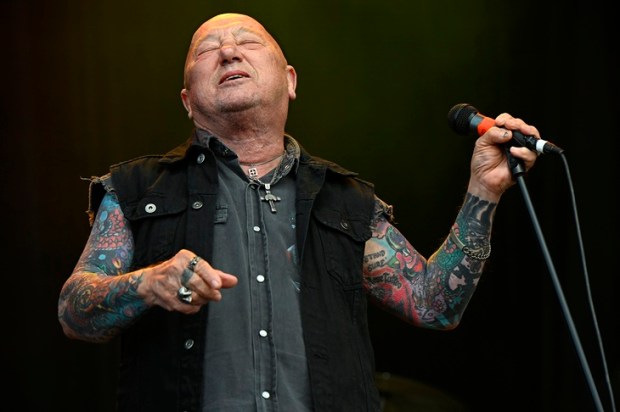
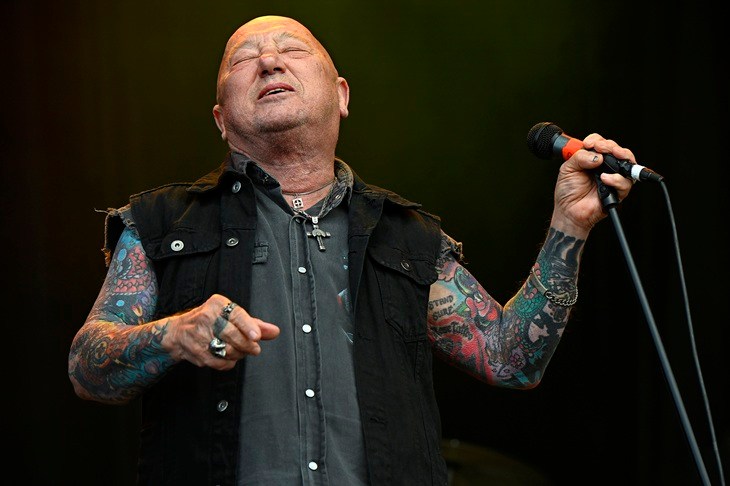
Two bands defined my youth – AC/DC and Rose Tattoo. This week we lost the lead singer of the latter. AC/DC ran like a business. Angry never did. This was reflected in the rawness of his voice and his music.
When I first saw Rose Tattoo’s album cover for Assault and Battery, I was in a friend’s house where his single mother was in the process of evicting her biker boyfriend. It was his poster. I’d had a glimpse into the hard life that Angry sang about, and by my mid-teens I was flirting with the lifestyle.
What struck me about Rose Tattoo’s music was the sound of the slide guitar. I’d seen AC/DC’s TNT on Countdown and almost every kid in my primary school was a fan. But not so many knew about Rose Tattoo.
My other primary school music, set against a backdrop of Bon Scott, was never quite loud, fast, or hard enough. I found what I was looking for in Rose Tattoo.
At the age of 11, I started listening to Assault and Battery. At the same time, I became fascinated by politics. As the records stacked up, I was conscious of the union bias and Angry’s penchant for the Eureka flag. Eureka and Ned Kelly are not lost on me as an important part of the larrikin, egalitarian Australian spirit, but I was a little too conservative to jump to the left.
In my late teens, I steered away from Rose Tattoo’s 1984 album, Southern Stars. The title track and another track from the album, ‘Death or Glory’, were a bit too revolutionary for someone who was surrounded by veteran Australian soldiers.
At the same time, I was working as a trolley boy in a major supermarket, a closed shop for the Australian Workers Union. I earnt $30 for my eight hours over Friday night and Saturday morning. My compulsory union fees were $90. I worked the first three weeks for nought. Not once did I see a union rep.
Rose Tattoo and Angry became like AC/DC to me. The classics, the olds and bolds got all the airtime in the ‘soundtrack to my life’. I ignored the rest.
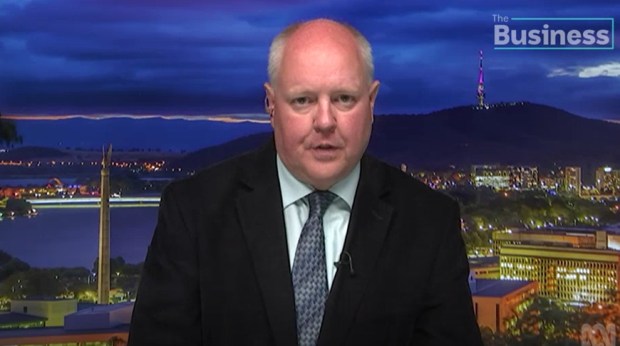
Then Fred Pawle interviewed him during the Voice referendum.
In the interview, I noticed that Angry had a bookshelf full of classic books behind him. But what struck me most was what he said.
He had many union mates. But when he formed his own opinion about the Voice, it differed from the union view. I recall him talking about how many didn’t simply agree to disagree but instead decided they weren’t friends anymore. That brought Rose Tattoo’s later music into sharp relief. I started listening to the tracks I’d skipped in the late 1980s.
I’m still an avid fan. Spotify tells me I am in the top 1 per cent of Rose Tattoo listeners.
I can now listen to ‘Southern Stars’ with a patriotic glow, and when Angry sings of the ‘ghosts of Eureka’, I can appreciate how the young leader of the rebellion, Peter Lalor, became conservative in his politics in later life.
Angry told much of his story to Fred Pawle.
In addition to the music, I was also surprised to learn more about when Angry sings ‘technical school it was a waste of time making robots for some factory line…’ in ‘Scarred for Life’. He was not so much walking away – ‘I got my first tattoo when I was sixteen, the rebel had lost his teenage queen’. It was much more intellectual.
Angry Anderson recalled how he was meant to become a fitter and turner at tech school, but he admitted that he ‘loved English and reading books instead’.
He said he always took ‘two good books’ on tour. He kept returning to Donald Horne’s The Lucky Country and The Secret History of the World. Winnie Mandela’s story inspired a song on Beats From a Single Drum.
Rose Tattoo had an international impact. Guns N’ Roses were inspired by Rose Tattoo and covered one of Rose Tattoo’s songs, ‘Nice Boys Don’t Play Rock ’n’ Roll’. Anderson even appeared on stage to sing it with Axl Rose when Guns N’ Roses performed in Australia.
Rose Tattoo’s European tour confirmed the band’s reach. In Germany, on that farewell run, Angry suffered a cardiac arrest. He was brought home, and died in Australia on Monday 21 September, surrounded by his family. He was 79.
I feel like I have lost someone who guided me through my youth.
‘The Butcher and Fast Eddy’ taught me that a wild man could still have a code. ‘Sydney Girls’ still makes me think of Eliza. Scarred for Life is the greatest driving song I know. I ride because of it. ‘It’s Gonna Work Itself Out’ is stoicism in a four-minute can. And ‘Southern Stars’ is the vow I can finally hear without flinching – here I was born, and here I’ll die!
Thanks for sharing your life with me, Angry. I’m glad you made it home.
Rest in Peace, Mate.
Dr Michael de Percy @FlaneurPolitiq is the Spectator Australia’s Canberra Press Gallery Correspondent. If you’d like to support his writing, please shout him a drink over at Donorbox.