On August 16, 1943, the Jews of the Bialystok Ghetto rose up against the Nazis. Eighty-three years later, we remember not only the extraordinary courage of those who fought, but the lives, families, dreams, and futures that the Nazis sought to destroy.
Among those who fought were my grandparents, Abraham (Avremel) and Rivka Shepes, Zaida and Bubba as I called them, alongside Bubba’s brother, Paltiel.
On the night of August 15, the Nazis once again surrounded the ghetto. Zaida’s home stood on the perimeter, and the ominous sound of Nazi boots echoed through the streets. At 3 am on August 16, the approximately 40,000 Jews still remaining in the ghetto were ordered to assemble by 9 am at the corner of Jurowiecka and Cieplin Streets. They were told they would be ‘relocated to better places’. Those who failed to appear would be shot on sight.
But the Nazis did not know that resistance was already being organised.
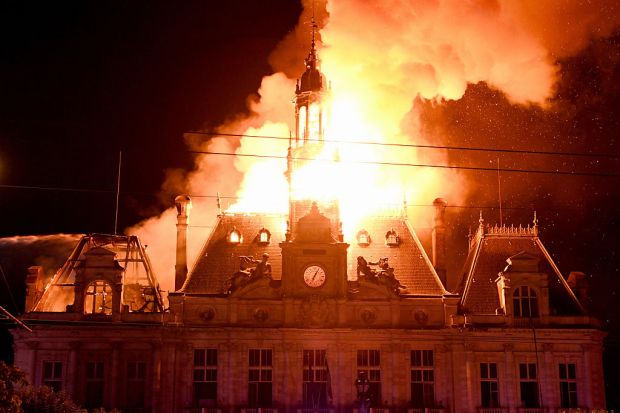
Bubba and Zaida were part of the underground resistance, together with Paltiel. They joined fellow fighters at the corner of Nowogrodzka and Cieplin Streets. Before the 9 am deadline, the resistance set fire to the factories where they worked, a signal of defiance and a declaration that the Jews of Bialystok would not simply surrender their lives without fighting back.
At precisely 9 am, the signal came.
Armed with little more than makeshift weapons, the resistance fighters attacked the ghetto walls. They knew they were vastly outnumbered and outgunned, yet they fought. Their revolt could not defeat the Nazi war machine, but their courage remains a powerful testament to human dignity in the face of unimaginable evil.
In the chaos, Bubba and Zaida managed to escape. Paltiel refused to leave.
Later, Zaida learned that Paltiel had been shot and killed that same day. Before the day was over, he was buried in the ghetto cemetery, which my father and I visited in 2019.
Today, the site forms part of Mordechai Tenenbaum Square, where a monument commemorating the heroes of the Białystok Ghetto uprising stands. Tenenbaum was one of the main organisers of the revolt.
His story did not end there. Neither did Bubba and Zaida’s.
Zaida and thousands of other Bialystok Jews were held in the Pietrasze fields, just north of the city, without food or water. Between August 17 and August 23, fourteen transports carried thousands of Jews away. Many were sent to Treblinka – the final transports to the death camp. Some, knowing what awaited them, swallowed cyanide rather than face the horrors of the camps. Men and women were separated, and from a distance Zaida caught a glimpse of his mother and sister.
The prisoners were ordered to march to the Bialystok goods train station. There, they were forced into cattle cars, packed so tightly that they stood in rows of five.
Zaida stayed close to his cousin Shepsl and a friend known as ‘the Shlosser’, a locksmith and metal fitter. They had managed to smuggle a few tools with them, hoping to create an opening in the train and escape.
What Zaida did not know was that Bubba and the rest of the family were in another carriage on that same train.
As the train began its journey, Zaida and his companions positioned their feet apart to create a little space in the suffocating overcrowding. The train travelled at tremendous speed to make escape nearly impossible. Ukrainian guards stood on top of and between the carriages, prepared to shoot anyone who attempted to jump. Empty carriages were deliberately placed at intervals so that the guards had clear lines of fire.
But Zaida, Shepsl, and the Shlosser began working with their smuggled tools and bare hands to loosen the wooden boards.
They created an opening.
Then they saw others jumping.
Bullets flew in every direction. Many were killed or gravely wounded.
Zaida hesitated when he saw his friend jump. He feared he had not survived. But Zaida also knew that if he remained on that train, he would almost certainly die in the death camp.
He had to make a choice.
Before the train reached the Bug River, a place Zaida knew well from earlier journeys with his older brother, he jumped.
That act of courage helped make possible the life that followed.
Bubba remained on the train. When they arrived at Treblinka, they were all sent to the gas chambers on arrival.
Bubba was the only one selected to survive Treblinka. From there, she was sent to Majdanek, Auschwitz-Birkenau, Bliszin, Hindenburg, and finally liberated from Bergen-Belsen on April 15, 1945.
Zaida’s escape and Bubba’s survival meant that the Nazis did not succeed in erasing their family completely.
They survived.
They built lives.
They raised families.
And they carried with them the memory of everyone who had been taken from them. They named their children after family murdered. My Hebrew name carries the memory of Zaida’s brother killed at Treblinka with his wife and four children.
Their survival became a responsibility: to remember.
Today, 83 years after the Bialystok Ghetto Revolt, we remember Paltiel and all those who were murdered. We remember Abraham (Avremel) and Rivka Shepes – my Zaida and Bubba, their families, and the thousands of Jews who resisted in whatever ways they could.
Resistance was not only taking up a weapon. It was surviving. It was protecting one another. It was refusing to surrender one’s humanity. It was escaping when escape was possible. It was carrying memory forward.
And that is perhaps one of the greatest lessons Zaida left for future generations.
In his testimony for the USC Shoah Foundation, Zaida gave a message that reaches far beyond his own lifetime: always be a proud Jew. Never let anyone make you feel like a second-class citizen.
Those words carry the weight of everything he survived.
They remind us that the answer to hatred is not shame. The answer to antisemitism is not silence. The answer to being told that you are less than someone else is to know your own dignity and stand proudly in who you are.
So, to the generations who come after us:
Always be proud to be Jewish.
Never allow anyone to make you feel like a second-class citizen.
Remember those who came before you, not only with sorrow, but with courage.
Stand up against hatred, prejudice, and dehumanisation wherever you encounter them.
And above all, carry forward Zaida’s other essential lesson:
Always be proud, and always be kind to all mankind.
The Nazis tried to erase Jewish lives, Jewish families, Jewish history, and Jewish dignity. They failed.
We are here.
We remember.
We tell the stories.
We teach our children.
We honour those who were lost by living lives worthy of those who fought so desperately for the chance to survive.
Eighty-three years later, the flames of the Bialystok Ghetto Revolt are not merely a memory of destruction. They are a reminder of courage, resilience, dignity, and the enduring responsibility of one generation to the next.
May Paltiel’s memory be a blessing.
May the memory of all those murdered be a blessing.
And may Zaida’s words continue to guide us:
Be proud. Never be a second-class citizen. Be kind to all mankind. And never forget.