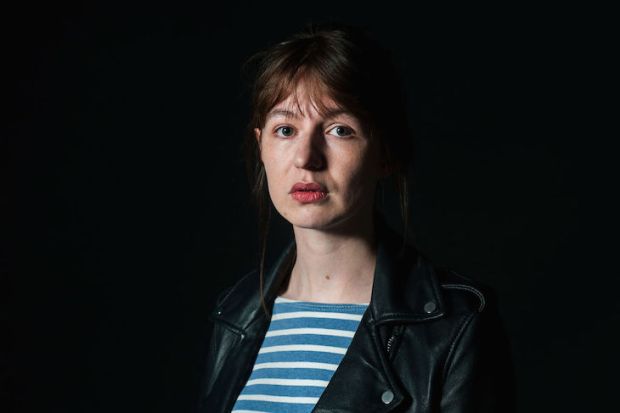
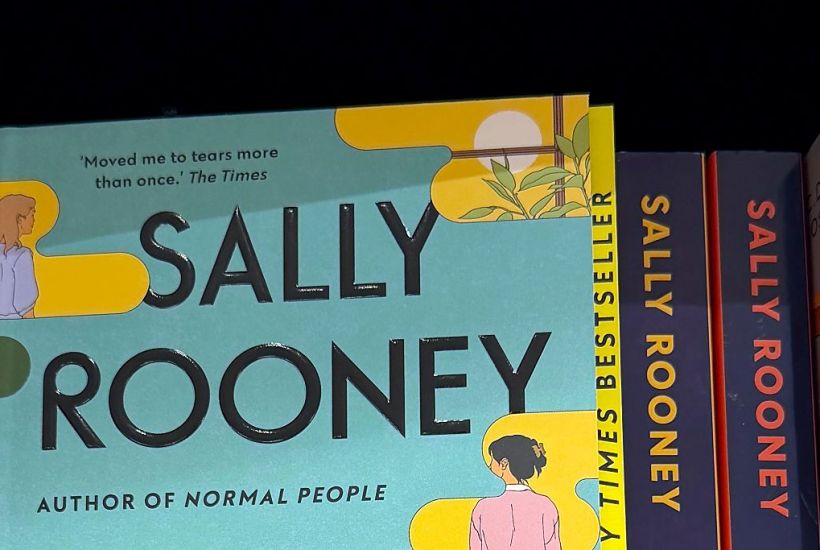
Last week I got an email from a colleague I respect on another magazine, prefaced with the assertion that it concerned ‘a matter we feel will be of importance to you as an artist, writer or journalist’ and inviting me to subscribe my name to an open letter in support of the Irish novelist Sally Rooney. The issue in question, in case there are any readers of this who missed the news story, is that Rooney’s publisher Faber has announced that with the full support of their author they are withdrawing all Rooney’s novels from publication in the UK.
Governments shouldn’t, if they can possibly avoid it, put themselves into the position of being arbiters of hermeneutics. The absurdities proliferate fractally
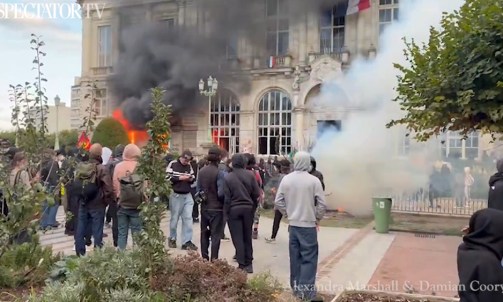
That’s a big deal. Sally Rooney sells a lot of books. At the heart of it is Rooney’s steadfast support for Palestine Action – the activist group proscribed in the UK as a terrorist organisation after, in its enthusiasm for the Palestinian cause, its supporters have committed a campaign of criminal damage and intimidation against companies and institutions they deem supportive of Israel.
I have mixed feelings about all this, and I think – though the reaction has lined up semi-predictably across the left/right (or at least pro-Israeli/pro-Palestinian) divide – most of us should. By way of a statement of interest, I’m no fan of Palestine Action, and said as much here. I’m also, in a way that my more red-blooded colleagues and readers will tend to disapprove, to say the very least uneasy about the proportionality of Israel’s behaviour in Gaza. But none of that is particularly relevant here. You can think Sally Rooney is a monstrous anti-Semite or a heroically principled speaker-of-truth-to-power, without that affecting the issues at stake.
I hesitated to sign the open letter for two reasons. One was that the form of words hadn’t yet been fixed, and it strikes me as a bit of a hostage to fortune to lend your name to a campaign proposing ‘something along these lines’. The other is that those proposed lines framed it as a free-speech and censorship issue:
Sally Rooney is a writer, not a terrorist. Her books must be available to the public. Their withdrawal from sale, on the basis of ill-conceived and outrageously draconian ‘anti-terror’ legislation, is an affront to basic principles of free speech and expression, so long taken for granted in the UK. We categorically reject censorship – whether direct or indirect – and urge the government to change course, repealing the laws which have led us to this point of repressive absurdity.
Well, there’s some repressive absurdity involved, all right. But you do have to squint a bit to see it as even ‘indirect censorship’. At the heart of the issue, as I understand it, is not the existence of Rooney’s books – which, being the work of the decent novelist she is, don’t push an unironised political party line in any case – or her right to use her celebrity to make political statements in public. It’s that she has publicly pledged to donate her profits from those books to Palestine Action. She wrote in the Irish Times:
‘I want to be clear that I intend to use these proceeds of my work, as well as my public platform generally, to go on supporting Palestine Action and direct action against genocide in whatever way I can.’
Under the law as it currently stands, Palestine Action is for better or for worse designated a terrorist outfit. So funding them would be illegal whether the profits she pledged were from the sale of novels about angsty teenagers getting it on in Dublin or the sale of feather dusters or girl-scout cookies. It’s the legal risk to her publisher Faber in passing on Rooney’s royalties that has caused the publisher to cease supplying them to UK booksellers. Whether this is a genuine legal risk in the real world, I’m not in a position to say – but I tend to doubt it. An on-paper legal risk, though, is a PR risk – or rather, a PR opportunity.
And of course it does seem simply absurd that the effect of Rooney’s public support for Palestine Action (not, we should note parenthetically, a banned group in her native Ireland) should be to deprive British readers of her novels about angsty teenagers getting it on in Dublin. Rooney and Faber have, cleverly, pushed the simultaneous intolerance and vagueness of the UK government’s position to a point at which it becomes manifest on the front tables at Waterstones.
It seems absurd, too – as Rooney pointed out very reasonably in that same Irish Times article – that anti-terror laws are so inconsistently applied. She noted that when a storm-damaged mural in Belfast supporting the Ulster Volunteer Force was restored by loyalists, the authorities took not the slightest interest despite the UVF also being a proscribed terror group, and one responsible for many hundreds of deaths. Supporters of Palestine Action, whose ‘actions’ however deplorable have yet to cost a single life, are meanwhile being bundled into paddy-wagons for wearing T-shirts.
It seems above all absurd that the British state should have reversed itself into a position where no meaningful distinction is made between ideological and material support for terrorism; which means that laws against the latter can be muddled with laws against the former, while the partisans of Palestine Action are placed in a theoretically identical category to the murderous adherents of al-Qaeda or Islamic State.
Governments shouldn’t, if they can possibly avoid it, put themselves into the position of being arbiters of hermeneutics. The absurdities proliferate fractally. In Russia, they started out arresting people for protesting the Ukraine war. When it became clear that holding up a poster with the words nyet voinye (‘no to war’) could get you arrested, activists started holding up posters saying dva slova (‘two words’). That got you arrested too. At this stage you wouldn’t fancy your chances holding up a blank sheet of paper anywhere near Red Square.
Likewise here. You might take the view that funding Palestine Action (or the UVF for that matter) crosses a line. But passing over money you owe to someone who once said they intend to use an unspecified amount of it to fund Palestine Action? Or expressing your support for someone who expresses support for Palestine Action? If Sally Rooney, as she has claimed, risks arrest travelling to the UK having said publicly (in another jurisdiction) that she supports a group banned here, can a UK citizen now face arrest for saying ‘I support Sally Rooney’? Would carrying a Normal People tote bag with an ironic smirk now, potentially, be considered an illegal gesture of support for a banned terrorist group? The police have enough to get on with just being the police. Let’s not make them the metonymy police too.
As Sally Rooney, and her publishers, and everyone else also knows, in the digital age the Streisand Effect – the more you try to suppress something, the wider will be its reach – is the activist’s friend. The problem isn’t Sally Rooney saying whatever she wants to say. The problem is a clumsy and inconsistent attempt to police the border between legitimate protest and criminal thuggery with tools designed to prevent ideological murder. This is another fine mess we’ve got ourselves into.