Every few months, Australian politics discovers its newest existential threat. Today it is Pauline Hanson and One Nation. We are told they are surging. We are told the major parties should be terrified. We are told the next election is about to become a political earthquake.
If that is genuinely the case, then one question immediately follows.
Why are Labor and the Coalition largely ignoring her?
Governments do not ignore threats they believe are real. Oppositions certainly don’t. If either side genuinely believed Pauline Hanson was on the verge of walking into The Lodge, every press conference would be about One Nation. Ministers would be dismantling her policies daily. The Coalition would be trying to reclaim every conservative vote she was supposedly stealing.
Instead, what do we see?
The occasional question from journalists. A passing mention on the nightly news. Then everyone returns to debating the government’s record.
That should tell us something.
Pauline Hanson is understandably buoyed by her rise in the polls. Who wouldn’t be? Most people would enjoy hearing every day how popular they are. We spend years telling toddlers they’re wonderful because building confidence matters. Pollsters now seem happy to perform the same service for political leaders.
The difficulty is that polling is not governing.
So, what is driving the attention?
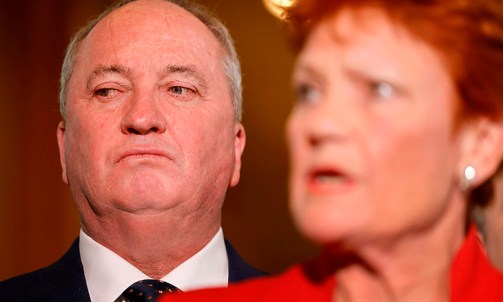
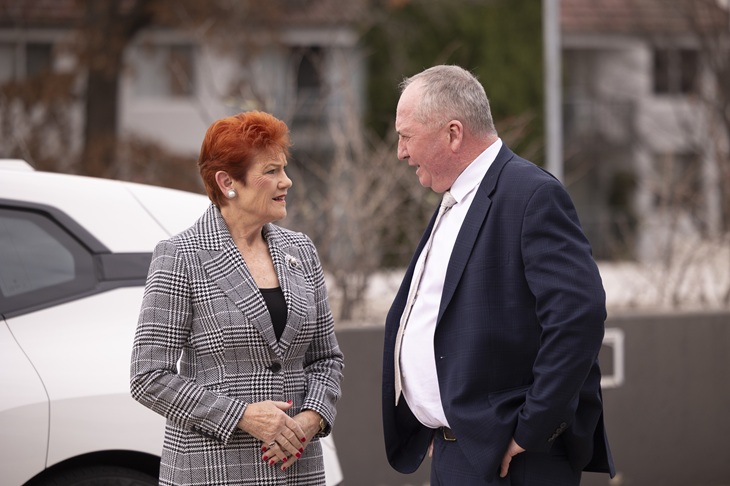
Perhaps it is One Nation’s fundraising ability. Perhaps it is Barnaby Joyce lending the party a degree of credibility. Although even that appears to be fading with time. Perhaps it is Malcolm Roberts’ willingness to speak bluntly on issues others avoid. Or perhaps it is simply that Australians enjoy giving the Establishment a fright between elections.
The truth is that nobody really knows.
Australians are not constitutional scholars. Most couldn’t explain the mechanics of minority government or preference flows. But they know what they dislike, and at present they dislike the people running the country.
That makes opposition politics remarkably easy.
You never have to explain how you’ll fix the problem if you aren’t expected to.
Barnaby Joyce’s latest line – that One Nation would have ‘more negotiating power’ – sounds persuasive until it meets arithmetic.
Negotiating power only exists if somebody needs your votes.
Labor currently governs with an outright majority in the House of Representatives. It does not negotiate legislation with One Nation because it has no reason to. Before that changed, Labor would first have to lose multiple seats and the Coalition would also need to fall well short of government. Only then would One Nation begin to hold meaningful leverage in the lower house.
Politics is mathematics before it is theatre.
And mathematics has little respect for campaign slogans.
Meanwhile the world has become considerably more dangerous.
Wars continue across multiple theatres. Cost-of-living pressures remain stubbornly high. Energy prices have climbed. Defence spending is under constant scrutiny. Public trust in institutions has deteriorated. Housing affordability continues to frustrate younger Australians, while educational outcomes leave serious questions about our future workforce.
This is not an era that encourages political experimentation.
Australia, despite all the fashionable virtue signalling, remains a fundamentally conservative nation. Conservative societies rarely throw the entire system overboard while the international environment resembles a tinderbox.
When people genuinely become anxious, they usually retreat towards experience rather than novelty.
That presents One Nation with its greatest challenge.
Beyond immigration, where is the comprehensive governing agenda?
Pauline Hanson is comfortable discussing immigration. She enjoys criticising government spending and asking whether Australians are getting real bang for their buck.
Those are legitimate political attacks.
But governing Australia requires answers on submarines, alliances, defence procurement, taxation, education, health, productivity, industrial relations, and economic growth.
These are not optional extras.
They are government.
Can anybody seriously imagine Pauline Hanson walking into the United Nations General Assembly and delivering Australia’s position on Indo-Pacific security, China, Russia, and Aukus while maintaining the same political style that has served her domestically for three decades?
Probably not.
That is not necessarily a criticism of One Nation’s ideas. Some of its policies deserve serious discussion. Many Australians clearly believe the major parties have ignored concerns around immigration, regional Australia, and national identity.
But ideas alone do not make governments.
Experience matters.
Depth matters.
Cabinet matters.
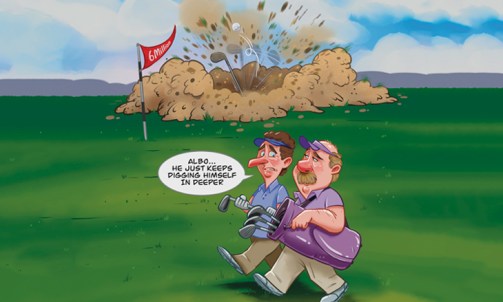
One experienced parliamentarian cannot substitute for an entire executive government. Barnaby Joyce has held some of the nation’s highest offices, but even a former Deputy Prime Minister cannot carry an inexperienced ministry on his shoulders while everyone else learns where the photocopier is.
Australia has been here before.
The Greens have repeatedly enjoyed spectacular polling only to underperform once voters entered the polling booth. Election campaigns change psychology. Supporting a minor party twelve months out is easy. Casting a vote that might determine who governs the country during an international crisis is considerably harder.
Pollsters will rightly say numbers never lie.
They’re correct.
The numbers don’t lie.
People do.
Australians routinely tell pollsters one thing before quietly doing another on election day.
We are a nation of fair-weather critics. Lose an Ashes series and the captain must resign. Win the next one and we insist we never doubted him. Politics operates much the same way.
As long as one side appears less incompetent than the other, many voters will stay with the familiar.
Especially when the world appears increasingly unstable.
None of this means One Nation is irrelevant.
Far from it.
The party performs an important function by forcing uncomfortable debates onto the national agenda and giving voice to voters who believe neither major party represents them.
But there is a significant difference between influencing governments and becoming one.
That distinction is frequently lost in the excitement of opinion polling.
Pauline Hanson would be well advised to recognise it herself.
Rather than spending valuable political capital attacking the Coalition, One Nation should focus on demonstrating that it possesses the seriousness, policy depth, and governing capability expected of a party seeking national leadership.
Until then, the current polling may prove little more than a political fairy tale.
For now, the carriage looks magnificent, the horses are galloping, and the crowd is cheering.
But election night has a habit of striking midnight.
When it does, today’s political Cinderella may once again find herself standing beside a pumpkin, while Barnaby Joyce wanders off carrying nothing more than a glass slipper and another story to tell in ‘Weatherboard and Iron: The sequel.’