Andrew Long has done something rather unusual in modern political commentary. He heard a speech, considered its arguments, and responded without accusing its author of being a fascist, a racist, or personally responsible for the collapse of Western Civilisation.
Naturally, I feel obliged to disagree with him. And since he closes by asking how I would apply my principles in practice, I’ll take that as an invitation to explain myself.
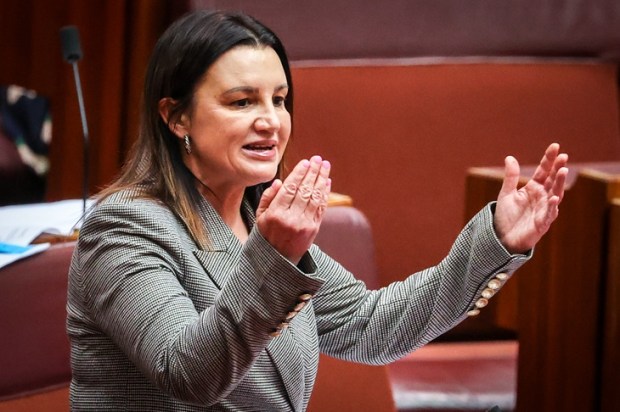
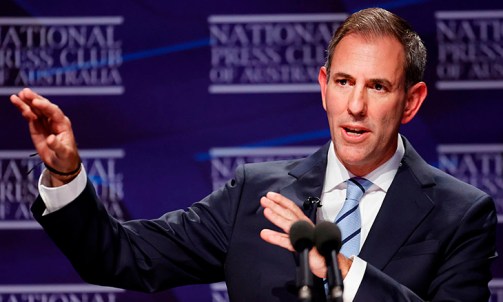
Writing in The Spectator Australia, Long takes issue with a speech I gave at the Libertarian Party’s invitation about my book, What Happened to the Lucky Country? I framed it for the audience in front of me, including a closing appeal linking libertarian principles to the Australian character. Long challenges how broadly I made that claim.
He makes several thoughtful observations, raises some legitimate objections, and arrives at a conclusion that I think confuses what Australians have historically done with what Australians have historically admired.
The distinction matters.
Long begins with the Harvester Judgment of 1907, when Justice Henry Bourne Higgins established a benchmark for fair wages based on the needs of a working family. He also points to compulsory voting, industrial regulation, and public institutions as evidence that Australia’s history was never exclusively libertarian.
He’s right. It wasn’t.
Indeed, my speech concluded with the words that Australian values are libertarian values and always have been. Taken literally, that’s too sweeping. It was rhetorical shorthand for a particular strand of our national character, not a claim that every Australian institution since Federation had been secretly designed by Friedrich Hayek.
We have always been a contradictory people. Suspicious of authority but rather fond of asking it to intervene when someone else is getting away with something. We admire the self-made battler, provided he doesn’t become sufficiently successful to make the neighbours uncomfortable.
But there’s a difference between identifying the ideals a nation celebrates and producing an inventory of its legislation.
The existence of the Harvester Judgment demonstrates that Australians have long accepted government intervention in industrial relations. It doesn’t establish where the proper boundaries of that intervention should lie today. Nor does compulsory voting settle the philosophical question of individual liberty. These are evidence of a mixed inheritance, not a verdict on which parts we should preserve or extend.
History tells us what happened. It doesn’t relieve us of the responsibility to decide what ought to happen next.
Long also reminds us that Australia’s past included racial exclusion, the dispossession of Indigenous Australians and serious restrictions on women’s independence.
Again, he’s right.
But these injustices were failures to extend the freedoms we professed to value, not compelling reasons to abandon those freedoms. A principle isn’t discredited because previous generations applied it selectively. If anything, their hypocrisy demonstrates why the principle ought to be universal.
We should neither romanticise the past nor pretend its injustices cancel everything admirable about the culture that emerged alongside them.
Long’s more interesting argument concerns the nature of freedom itself.
Drawing on Isaiah Berlin, Philip Pettit, and John Rawls, he argues that freedom cannot simply mean the absence of government interference. Public assistance might enable a disabled person to live independently, while employment protections can prevent workers from being subjected to arbitrary private power.
I agree with more of this than he might expect.
An employer can exercise arbitrary power. So can a government, a monopoly, or anyone else who controls something another person cannot reasonably do without. Markets do not magically eliminate coercion, and contracts are not necessarily fair merely because someone signed them.
Nor does personal responsibility require pretending that everyone begins life with identical opportunities. A child born into poverty faces disadvantages that cannot be explained away with a motivational speech and a firm handshake.
But acknowledging those realities doesn’t establish an unlimited mandate for institutional intervention.
There is an important difference between helping someone become independent and constructing a system in which their independence remains permanently conditional upon institutional approval.
A disability program that helps someone work, travel and participate in society may expand their practical freedom. A bureaucracy that decides which opinions are acceptable, which risks adults may take, or which lawful choices require official supervision is doing something quite different.
The distinction isn’t whether government is involved. It’s what government is empowered to do, why it is doing it, and whether its involvement leaves people with greater control over their own lives.
Long asks for a consistent test. It’s a reasonable challenge, and one worth answering.
First, an intervention should address a demonstrable harm or genuine need, rather than an official’s preference for how other people ought to live. Its powers should be proportionate, with the least coercive workable means preferred over more intrusive alternatives. Individual rights must remain protected, decisions transparent and subject to meaningful appeal, and outcomes measurable and regularly reviewed.
Most importantly, wherever feasible, the objective should be to expand choice and reduce unnecessary dependency, not make continued institutional supervision the measure of success.
That standard applies to private concentrations of power as well as public ones. Protecting a worker against arbitrary dismissal, for example, may be justified without giving the state unlimited authority to dictate every aspect of an employment relationship.
These questions involve difficult judgments. But difficulty isn’t an argument for abandoning limits.
Long is entitled to ask what evidence supports my account of changing Australian attitudes. But the speech was a summary of an argument developed in What Happened to the Lucky Country?, not an attempt to reproduce the book and its references from a lectern. There are limits to what even a politically interested audience should be made to endure.
In the book, I draw on research in psychology, sociology, and human development to explain what I describe as a ‘perfect storm’: changes in family life, parenting, social media, education, and institutional incentives that, I argue, reinforce one another. The proposition is not that protective parenting alone explains the size of government, nor that every social problem can be traced to a child being forbidden to climb a tree.
The speech can certainly be criticised on its own terms. But understanding why I hold that position requires engaging with the fuller argument and the research behind it. I would invite Long to consider the book on that basis. Disagree with the connections I draw, certainly, but a condensed account of a thesis should not be mistaken for the entirety of its supporting case.
Of course, this is a thesis, and I’m prepared to defend it. The research informs my case; the connections I draw are mine to argue for. Economic insecurity and housing pressures may also help explain changing attitudes towards protection and risk. I don’t need to deny their influence to argue that culture and psychology matter too. Where Long thinks my explanation falls short, let’s examine the evidence and the reasoning. I’m not claiming divine revelation, but there is rather more behind the argument than a thought I had on the way to the microphone.
The possibility of other causes doesn’t make cultural influences irrelevant. Nor does it invalidate the concern that institutions, once expanded, can begin shaping the expectations and behaviour of the people they were established to serve.
Long correctly observes that culture and politics influence one another. My concern is what happens when that relationship becomes unbalanced, particularly when institutions acquire the authority to determine not merely the rules under which citizens live, but the values they are expected to hold.
Political action has sometimes dismantled injustice and expanded liberty. It has also entrenched restrictions, discouraged dissent, and protected institutional interests. The task is to distinguish between the two, not declare every intervention either salvation or tyranny.
Ultimately, the Australian fair go was never a promise that government would disappear. Nor was it a promise that government would manage every difficulty on our behalf.
It was an aspiration that ordinary people should have a reasonable opportunity to make something of their lives without being bullied, exploited or unnecessarily interfered with.
That aspiration may require institutions. It certainly requires limits upon them.
Long is right that the argument about freedom is unfinished. I would go further. It should never be finished, because the moment we stop questioning the exercise of power is usually the moment someone discovers a perfectly respectable reason to exercise more of it.
The fair go was never about making government responsible for our lives.