I recently watched a clip of Warren Buffett where he recalled a joke about the comedian W.C. Fields. After inheriting a sum of money, Fields was asked what he did with it.
‘I spent half of it on whiskey,’ he replied, ‘and the rest I wasted.’
The joke survives because it captures a distinction that most people instinctively understand.
There is a difference between spending and investing. Between consuming and building. Between enjoying today and preparing for tomorrow.
Modern politics increasingly struggles to tell the difference.
Across much of the Western world, governments have become extraordinarily good at distributing wealth and remarkably uninterested in creating it. Political debate revolves around rebates, subsidies, transfer payments, tax offsets, and relief packages. Every election becomes a contest over who receives what and who pays more.
The assumption behind all of it is rarely questioned. Prosperity already exists. The only challenge is deciding how to divide it.
But wealth is not a natural resource.
It is not iron ore buried beneath the ground waiting to be extracted. It is not rain falling from the sky. Wealth is something a society continually creates through investment, enterprise, innovation and risk-taking.
Forget that, and eventually you begin consuming prosperity faster than you produce it.
Perhaps nowhere is this more obvious than in Australia’s current tax debate.
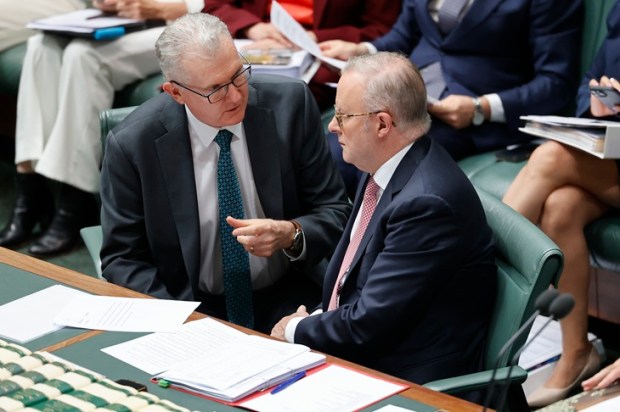
The Albanese government’s latest budget proposals have once again focused attention on investors, capital, and accumulated wealth. The language is familiar. Tax concessions are scrutinised. New revenue sources are sought. Existing arrangements are questioned in the name of fairness.
Reasonable people can disagree about the details. But a more important question is rarely asked. What behaviour are we encouraging?
Because every tax system is ultimately a statement of values. It rewards some activities and discourages others.
A society that taxes investment more heavily than consumption is quietly choosing the present over the future.
It is saying that spending is preferable to saving. That immediate gratification is preferable to delayed gratification. That consuming wealth is more desirable than creating it.
No government would ever describe its policies in those terms. Yet incentives do not care about political intentions. They respond to outcomes.
The irony is that modern politics increasingly treats wealth as though it simply appears. As though homes build themselves. As though businesses emerge without entrepreneurs. As though factories, technologies and infrastructure somehow materialise without investors willing to commit capital years before seeing a return.
We debate how to divide prosperity long before we ask how it was created. The language of public life reflects this shift.
We hear endless discussion about affordability. Very little about productivity.
We hear constant debate about redistribution. Very little about investment.
We hear politicians promise relief. Rarely do we hear them talk about building the conditions that make relief unnecessary.
This is not merely an Australian problem. Britain has drifted in the same direction. Much of Europe has travelled even further.
Even the United States increasingly finds itself arguing over redistribution while its debt climbs and its infrastructure ages.
Meanwhile, China spent decades pursuing a very different strategy.
Whatever its many flaws – and they are considerable – China treated investment as a national priority. Infrastructure, manufacturing, industrial capacity and energy production were not afterthoughts. They were central objectives.
Whether China can sustain that model is another question entirely. Demographics, debt and political centralisation may yet impose severe limits.
But the contrast remains instructive.
For decades, China behaved like a country trying to become wealthy. Much of the West increasingly behaves like a country assuming it always will be.
That assumption is dangerous.
Prosperity is not permanent. It is a cultural achievement.
It depends on millions of people making sacrifices today in pursuit of something larger tomorrow. Entrepreneurs risking capital. Families saving money. Businesses reinvesting profits. Investors backing projects that may take years to succeed.
In other words, it depends upon people believing the future is worth investing in. That was the deeper wisdom hiding inside Buffett’s joke. The money spent on whiskey was gone. The future is built by what remains.
Every civilisation eventually faces the same choice. Consume the inheritance left by previous generations. Or create an inheritance for those who follow.
The great question facing the West is whether it still remembers the difference.