Deliberate, deceptive and disastrous. And although it is among the most damaging of all the appalling injuries the Albanese Labor government has inflicted on Australia, it has been barely mentioned, let alone vigorously opposed, by either the media or the political right. Apart from the years of dire (and now proved accurate) warnings from those directly facing the consequences of looming strikes and industrial unrest, where are the expressions of concern at this political pay-off to the unions financing Labor’s election campaigns that is represented in the Albanese government’s ‘Closing Loopholes’ industrial relations ‘reforms’? This is particularly so in the re-unionising of Australia’s biggest single export earner, Pilbara’s iron ore – the rock on which Australia’s prosperity has primarily depended for decades (and a significant contributor to federal and state budgets).
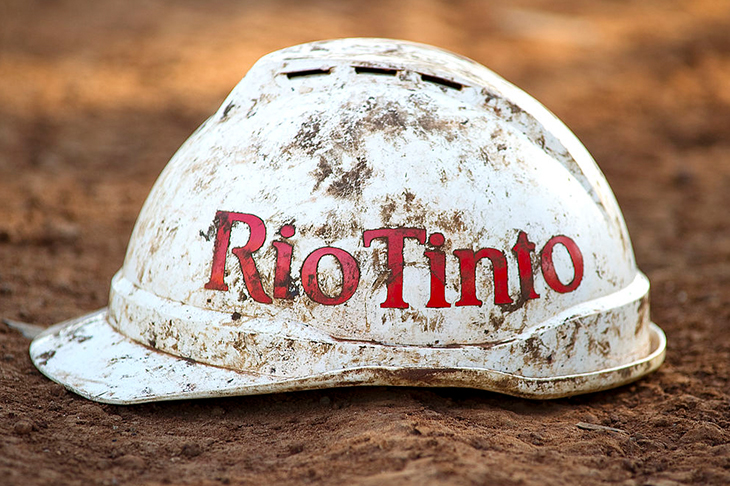
As my old journalist colleague (and one-time business partner) Bob Gottliebsen pointed out earlier this month in the Australian newspaper (hidden in the back pages instead of page one where it deserved to be splashed), confronting this thrust of union power in a nation-changing Pilbara battlefield are BHP’s new CEO Brandon Craig (with his president for Australia Geraldine Slattery) and Rio Tinto CEO Simon Trott. The Australian economy will pay the price if they fail. But the omens are not good. Horrifyingly costly industrial disruption is on the way focussed on Port Headland, BHP’s export facility that loads about $US90 million of iron ore a day.
Gottliebsen notes that secretly, prior to the 2022 election, Anthony Albanese did a deal with a number of unions, including the CFMEU, to introduce wide-ranging industrial relations legislation that would enable unions to potentially have a key role in the management of almost every enterprise in the country – the so called ‘CFMEU rules’. High on the list of union priorities was to use the legislation to regain control of the iron ore mines which had prospered in the four decades since Peko-Wallsend boss the late Charles Copeman took over the struggling iron-ore miner Robe River and ended the region’s destructive union rule .
At lunch with his widow last weekend, I was reminded of his spectacular success against entrenched union work practices in a long and controversial confrontation and strike that ended the years of disruption in a region historically associated with militant unionism and its ‘bully-boy union rorts, profit-destroying strikes, unfair Industrial Relations Commission orders and management intimidated by the unions’.
Under Copeman, Robe River doubled and then tripled production while other companies in the Pilbara remained nervous and only followed the need to reform slowly. As the Australian Mining Review noted this March when lamenting the current push to restore unionism to the Pilbara, ‘They were fearful of the unions and of negative publicity. But one by one they realised that they could not ignore the need to embrace reform in industrial relations. Rio Tinto’s Hamersley took until 1993 to embrace individual contracts under Richard Court’s state government reforms. BHP took until 1999 to realise that it too had to reform its management and move to individual agreements. Once reform was embraced, profits, productivity and production all rose markedly.’ In the absence of disruptive union power, mining boomed – and so did Australia.
Copeman’s legacy was, as a colleague said at his funeral, ‘that he carved out a space in which the companies could begin to open the dialogue between management and workers without the interference of the arbitration system and the unions’.
But the introduction of the federal government’s Closing Loopholes reforms, enacted through the 2023 and 2024 Acts, involving a significant re-orientation of Australia’s workplace relations system, provided a major opportunity for unions to restore their lost power. And this May’s draft report of the required independent review of the legislation found, despite industry submissions to the contrary, that on every point, ‘The measure is operating appropriately and effectively, and consistent with its stated intent’, particularly in the controversial measures to prevent labour hire arrangements from undercutting bargained enterprise agreement rates – a very expensive rule as BHP’s Queensland coal operations have discovered.
Two years ago, Minerals Council of Australia CEO Tania Constable warned in an op-ed in the AFR that, ‘Unions have been gifted control of Australia’s resources powerhouse, the Pilbara, via the Albanese government’s IR ‘reforms’….They are seeking pay without productivity through unfettered access to Australia’s most productive industry…. “Re-unionising the Pilbara” is not some secret agenda. It is a stated goal on the Mining and Energy Union’s website…. What was required was a change to workplace law that would make it easier for unions to get what they wanted, regardless of the wishes of workers. All the unions required was a subservient government that would create the legal loopholes to allow unions to once again impose themselves on any workplace. No previous government had been reckless enough to agree. Until the Albanese government.’
Despite combative Liberal shadow minister Michaelia Cash spending three years attacking Labor’s ‘atrocious’ industrial relations ‘reforms’ both on principle and because ‘they are complex, confusing and costly and will result in more strikes and job losses…This is all about Labor appeasing its union paymasters’, the Dutton-led 2025 Coalition election campaign announced it would not repeal this controversial legislation but would be open to assessing potential changes. This small-target strategy on industrial relations (apart from a promise to restore the building industry watchdog and deregister the CFMEU, there was no launch of a stand-alone IR policy) was in the face of business calls for political ‘courage’ to confront Labor’s ‘reforms’. And apart from Cash this January urging the Albanese government to intervene to stop union-threatened disruptions in Australian ports, I have found no media releases from any Coalition shadow on the proposed strikes at BHP’s Port Hedland. Nor has any senior member of the Albanese government condemned them, with, on the contrary, Resources Minister Madeleine King backing the right of workers to sign up for collective bargaining and union leader Adam Woodage telling the Australian that no one in the Labor party has told him to turn down the heat on BHP; his 200 confrontational fellow unionists represent a tail wagging a BHP Australian workforce dog of more than 30,000, most of them non-unionists.
This Albanese-backed reversion to the bad old days of productivity-sapping union dominance not only adds a sovereign risk disincentive for foreign investment in Australia, it is also a factor in Australia’s mining giants, BHP and Rio Tinto, preferring to invest overseas rather than here; BHP’s capital expenditure and earnings in North and South America already exceed those at home.
And as Gottliebsen points out, BHP’s plans to expand its Olympic Dam site in South Australia into what could become the world’s biggest copper, uranium and gold resource have been postponed (following BHP’s iron-ore boss’s fear that the Pilbara was all but lost to the unions already) and replaced by a major copper joint venture in Argentina where the Milei government’s incentives and support are in sharp contrast to Albanese’s disincentives and Pilbara-type union-based potential sovereign risk. It’s time for the political right to forget Howard’s WorkChoices problem and to get brave again on industrial relations.
Got something to add? Join the discussion and comment below.
You might disagree with half of it, but you’ll enjoy reading all of it. Try your first month for free, then just $2 a week for the remainder of your first year.