Defenders of the Anglican establishment often cite as one of its benefits the ‘Bishops’ Bench’ in the House of Lords. This body of 26 prelates installed by historic right in our upper chamber represents, so they say, a Christian voice at the heart of our legislature – a set up unique among modern western democracies. How true are these claims?
Shortly before he died in April of this year, my father Lord Robert Skidelsky commissioned a little research into this question. He asked his invaluable assistant, Attila Mestehazy, to run through all 693 speeches delivered by the reverend Lords between 1 January 2024 and 19 September 2025, looking out especially for words and arguments associated with Christianity. The results were dismaying, if not entirely unexpected. ‘Bible’, ‘gospel’ and ‘Christianity’ each appear in somewhat under one per cent of all bishops’ speeches. ‘Jesus’ appears in three per cent. ‘God’ shows up a bit more often, at six per cent, perhaps indicating an attempt at inter-faith solidarity. ‘Sin’ appears not at all.
It is not that the bishops are morally cold or indifferent. On the contrary, their speeches drip with social concern. Anguish over the ‘most vulnerable’ in our community, particularly ‘minoritised women’, ‘LGBT+ victims’ and those suffering ‘intersecting forms of discrimination’, is richly on display. ‘Mental health’ crops up in almost seven per cent of the bishops’ interventions, ‘wellbeing’ in eight per cent – more than ‘God’ and ‘Jesus’. The Church of England was once the Tory party at prayer. Now it is the welfare state at prayer.
A deeper dive into the 693 speeches confirms the impression of overwhelming secularity. On most issues, the bishops take a position indistinguishable from the left wing of the Labour party, albeit decked out occasionally in Christian rhetoric. A friendly attitude to immigration is commended with reference to our duty to ‘welcome the stranger’ or to revere ‘the image of God’ inherent in all humans. (Of the effects of immigration on the UK’s Christian identity there is absolutely no mention.) And even when the bishops do venture to defend specifically Christian positions and interests, they typically draw for support on purely secular arguments. For instance, religious education in schools is championed as ‘a vital component in addressing discrimination in the UK and creating a more understanding society’, while deepfakes are condemned on the ground that they ‘commodify’ and ‘reify’ women. All true, no doubt, but do we need bishops to say it?
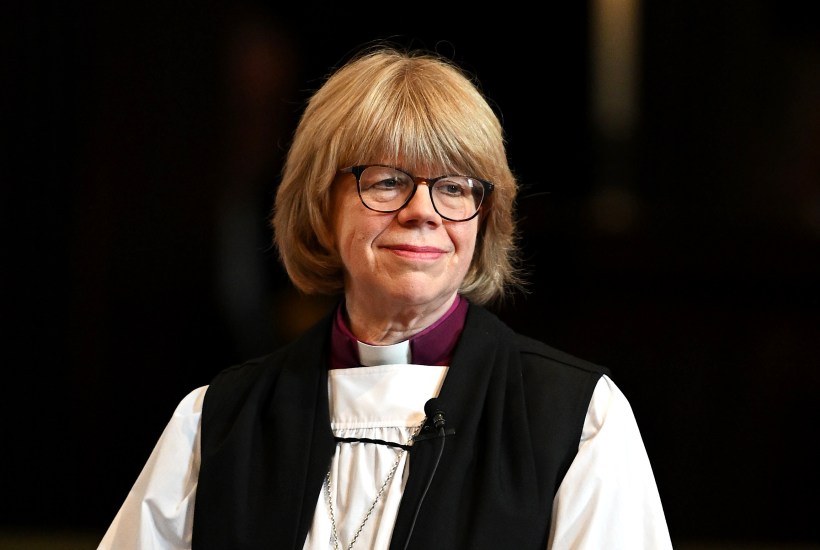
This reluctance to speak from a specifically Christian standpoint was especially evident during the drawn-out debate over ‘assisted dying’. Our current Archbishop of Canterbury was active in opposing Leadbeater’s bill, but only, it appears, because she worried it would put pressure on the ‘vulnerable’ and undermine support for hospice care. She did not mention what should have been crucial for her as a Christian, namely that the bill threatened to give state sanction to the mortal sins of suicide and murder.
One has to feel sorry for the poor bishops. They are in an impossible position. Once they spoke for the Christian common sense of the whole nation. Now they are a lobby, privileged only by accident of history over other similar lobbies. If they use Christian language, they are accused of special pleading. If they refrain from using Christian language, they are accused of hypocrisy. Either way, they stand accused.
Is the Bishops’ Bench merely useless?
Is the Bishops’ Bench merely useless, then? No, it is worse than useless, for it sets an example of submissiveness to worldly interests and concerns which reverberates throughout the Church of England. The Catholic bishops were forthright in stating what was wrong with Leadbeater’s bill: ‘The Catholic Church teaches that it is morally wrong to intentionally take the life of another person, including at their request.’ The Coptic Orthodox bishops were similarly frank: ‘The Church does not assess the value or worth of human life as contingent upon abilities, achievements or physical health but on the inherent dignity bestowed upon all as the depiction of God.’ The Anglican bishops’ inability to say anything so definite is a mark of their captivity to a basically heathen state.
The situation of our established church can be compared to that of an air balloon tied to a sinking ship. Optimists insist that the balloon’s skyward impetus will help keep the ship above water. But the opposite seems much more likely: the ship’s inexorably downward momentum will eventually sink the balloon. Isn’t it time to cut the cord?