In the heart of Paris’s Left Bank, the Café de Cluny has witnessed many tumultuous events in modern French history. During the liberation of Paris in 1944, it was surrounded by barricades. In May 1968, the café’s terrace was on the front lines of the student riots that nearly toppled the French government.
Today, the old café is closed and boarded up. For the past three years the corner location on Boulevard Saint-Michel has resembled a desolate urban ruin in a Latin Quarter once famous for its vibrant bohemian culture.
The prime Rive Gauche address may finally have a new tenant, though not everyone is happy. The location may soon sport the bright red storefront logo of the fast-food chain Five Guys. The American burger chain, which appeared on the Champs-Élysées a decade ago, has been keen to penetrate the Latin Quarter with its heavy tourist footfall in the area close to Notre Dame, the Luxembourg Gardens and the Pantheon.
Four years ago, Five Guys attempted to take over a coveted Latin Quarter address vacated by the famed bookshop Gibert Jeune. The book retailer, founded in 1886, had gone out of business and left the building vacant. For Five Guys, the location on Place Saint-Michel was perfect. But political opposition was fierce.
‘Unacceptable’, declared Florence Berthout, the conservative mayor of the fifth arrondissement which includes the Latin Quarter. An American fast-food chain selling cheeseburgers and milkshakes where once stood a legendary French bookshop was a bridge too far. Five Guys beat a hasty retreat. The Gibert Jeune bookshop remained empty, its facade covered with graffiti.
Local residents learnt recently that a new tenant will soon be moving in to Gibert’s site. The good news: it won’t be Five Guys. The bad news: it will be another fast-food brand, Manhattn’s Burgers. Despite its name, it’s owned by two Belgians inspired by New York street food. The menu features a ‘Gatsby Burger’ and ‘Brooklyn Falafel Burger’.
After years of political battles to protect the Latin Quarter from a fast-food invasion, burgers have finally triumphed over books.
The imminent arrival of Five Guys and Manhattn’s Burger in the Latin Quarter is the latest commercial encroachment transforming the Left Bank into a vast shopping zone for international tourists. Today you won’t find many bohemian cafés along the Boulevard Saint-Michel. In the era of Airbnb and Uber Eats, most of the Parisian students enrolled at the Sorbonne live elsewhere in the city. For many Parisians, the Left Bank has lost its soul.
I have been observing the transformation of the Rive Gauche since my students days in Paris in the 1980s. I lived in Saint-Germain-des-Prés where the Rue de Buci market street still boasted old-style taverns and cafés and newsagents. Today, the same street is cluttered with upmarket sandwich shops, ice cream parlours and overpriced neo-cafés including one called ‘The Smiths’. A few doors down, a ‘Deux Magots’ patisserie vaunts the brand of the legendary café around the corner that today is crowded with tourists.
In the boulevard, many of the old cafés, chemists and bookshops that I once frequented have vanished to make way for fashion boutiques which sell luxury handbags, lingerie and women’s shoes. The famous bookshop La Hune that was squeezed between the Deux Magots and Café de Flore has disappeared. It’s now a Louis Vuitton clothing boutique. Across the boulevard, an upmarket Ralph Lauren eatery sells burgers for €36 euros (£31) and ‘Ranch-style fries’ for €12 (£10).
It could be argued that the Americanisation of the Left Bank is not new. Following the second world war, Americans flocked to Paris with their bubble gum, Lucky Strike cigarettes, Coca-Cola and jazz music. That wave was followed a few decades later by McDonald’s and Burger King and KFC. The cultural shock of McDonald’s – or ‘MacDo’ as it’s called in French – provoked indignation amongst Parisian elites who dismissed American fast food as ‘malbouffe’ (roughly translated, ‘junk food’).
The difference today is that American fast-food chains and luxury fashion brands are not primarily selling their goods to Parisians. They are catering mainly to the millions of visitors to the City of Light every year. Parisians have become victims of their city’s status as the world’s number one tourist destination.
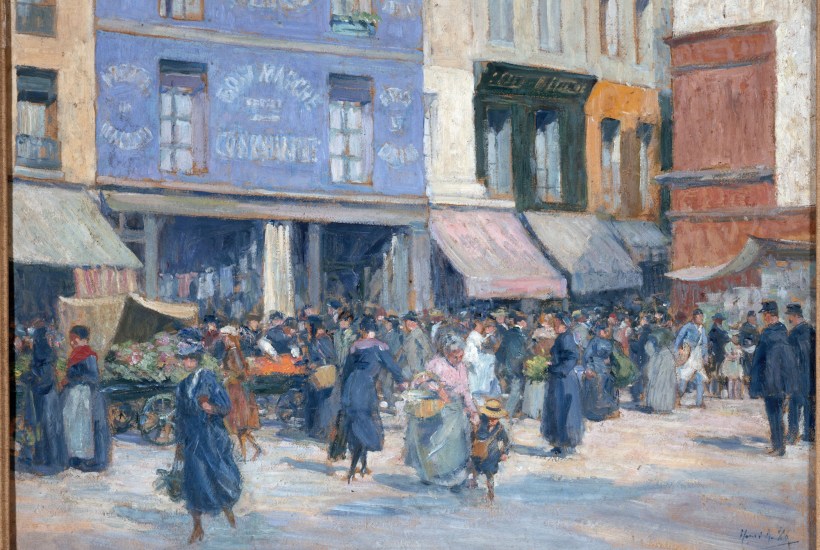
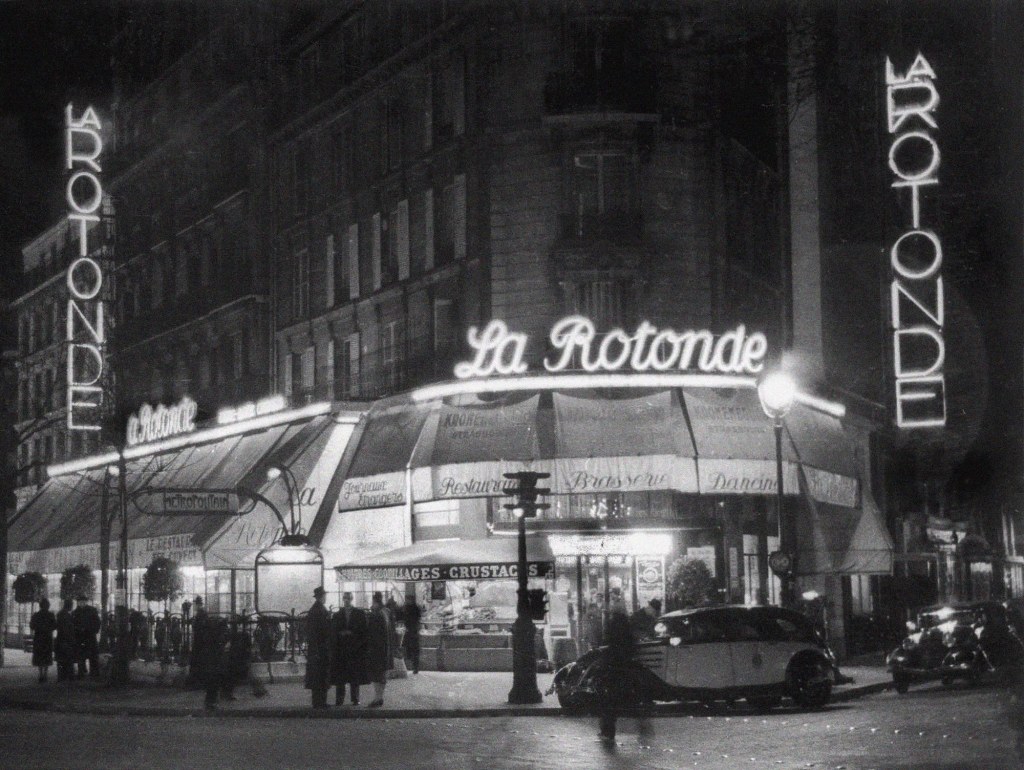 La Rotonde, Boulevard du Montparnasse, 1939 (Getty Images)
In the Latin Quarter, more downmarket than nearby Saint-Germain-des-Prés, Boulevard Saint-Michel is a grim commercial wasteland. Like the Café de Cluny and Gibert Jeune, many storefronts are boarded up. Some property owners prefer keeping buildings vacant, as speculative investments, rather than rent out the spaces at lower rates. The vacancy rate is nearly 20 per cent – double other districts in Paris. Shops still in business are mostly mobile phone stores, discount retailers, and sandwich outlets.
The bookshop on Place de la Sorbonne where I once purchased my university textbooks is now a Pret a Manger, which despite its name is British owned. An enticing sign on the window is in puzzling English: ‘The very goood lunch’.
The Café de Cluny had been struggling for years and converted to a French-owned Brioche Dorée baguette sandwich outlet. But it eventually went under. Tourists in the Latin Quarter are more interested in the familiarity of global brands such as McDonald’s and Burger King – and soon Five Guys.
Several explanations are given for the Latin Quarter’s commercial misfortunes. Some claim it’s the aftershock of the pandemic. Others blame the impact of online shopping and Deliveroo. Also, Airbnb has reduced the number of long-term rental flats and pushed out Parisians to attract tourists willing to pay higher rates.
Some are calling for the Latin Quarter to be designated an ‘International Tourist Zone’
Most agree the main culprit is sky-high commercial rents. Property owners, some of them big French insurance firms such as Groupama, are increasingly demanding exorbitant rates that reflect inflated market conditions. Traditional French brasseries and bookshops serving local residents don’t earn enough in revenues to pay these rents. When they go under and close, their locations are snatched up by fashion retailers and fast-food brands who can easily afford the high rents thanks to their robust turnover.
The same commercial juggernaut has transformed other districts of Paris. The Champs-Élysées has long been a vast strip mall of luxury car dealerships, fashion boutiques and fast-food chains (including Five Guys). For Parisians, the boulevard is a cultural no-go zone frequented mainly by foreigners and adolescents from the bleak Paris suburbs. The Marais district, too, has been transformed by mass tourism. Once the old Jewish quarter before becoming the city’s gay district, today the Marais is crawling with tourists drawn to the area’s trendy fashion boutiques. Local residents are fed up.
On the Left Bank, some elected officials are calling for the Latin Quarter to be designated an ‘International Tourist Zone’. That would allow shops to open on Sunday to boost their revenues. There is also discussion of imposing rent controls and taxing vacant properties.
Too late for the Gibert Jeune bookshop. Work has already begun to change it into a Manhattn’s Burgers outlet. Five Guys, meanwhile, is eyeing a second Left Bank outlet, this one near the Deux Magots, as part of its expansion plans in Paris.
For many local residents, the changing face of their neighbourhood brings a dispiriting message: adieu Rive Gauche.