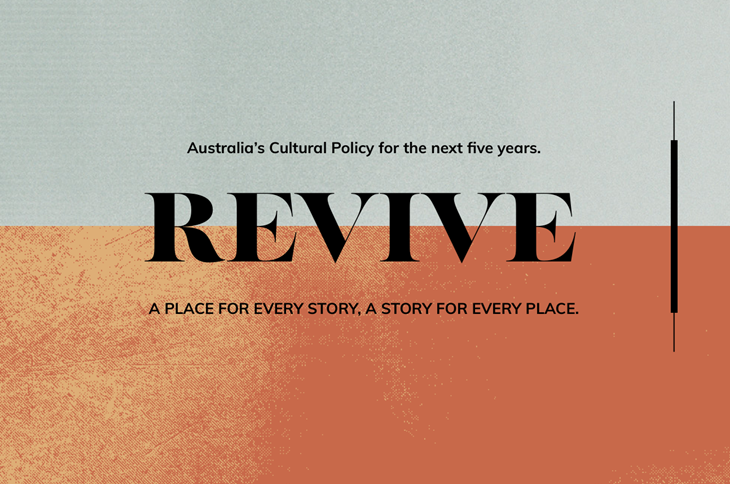
At the end of the week submissions for Australia’s next National Cultural Policy will close. It is two years until the expiration of the current policy, Revive, now in its third year of operation. In his intro, Minister Tony Burke calls for submissions, in a message permeated with a deeply, mythic hue. It’s the ‘next chapter in a story that stretches back to the first sunrise on our continent’.
This type of rhetoric, sprinkled with utopian fancy, and glimpses of a better society freed from ‘elitism’s pernicious effects’ fills the pages of Revive and set the tone for any revisions. Under the clarion call of a greater democratisation of the arts, Revive calls out for our creative industries to align with the UN Declaration of Human Rights. Noble aspirations, but small comfort for the Australian arts worker on an average salary of $14,000 per annum.
We live in a world where we recognise the connection between public consultation and public relations exercise, and that both are no strangers in a government’s armoury. Observers of cultural policy may remember back to 2008 when Kevin Rudd cast his leading lady Cate Blanchett as co-chair. Creative types travelled to Canberra to play with coloured crayons on large sheets of butcher’s paper and forge a new vision for a Creative Australia. Unmeasurable, grandiloquent statements were issued.
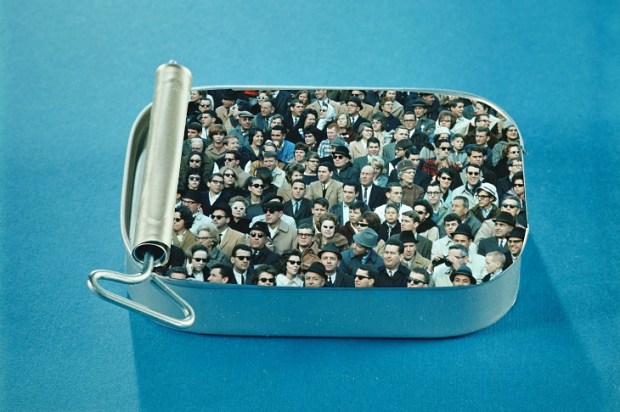
Whether that target was met has dissolved into the ether. Does it matter now? The hard reality is that as hundreds of individuals and organisations press send we know that fundamentally the bottom line is well, the bottom line. Revive claims a return to ‘arm’s length funding for artists and organisations’ but in my view it’s now more of a case of ‘rip your bloody arms off’ funding. Writers fight it out with gamers, opera competes with theatre, animators make their case vis-à-vis film makers and emerging graduates from all corners of the arts. Have we come to a point of oversupply? How many artists can our island sustain?
To be fair, Revive does raise the issue of working conditions and future employment within the cultural sector, albeit without proffering a solution. Administrative moves shredded the old structure – including a symbolic excision of the word ‘Arts’ – to form the new Creative Australia, subdivided into individual units – including First Nations First, Music Australia, and Writers Australia.
How’s the new structure working? The Venice Biennale episode doesn’t augur well but we won’t see a full picture for another two years. However, while the call out to Revive Revive is high on self-congratulations, it remains low on the zeitgeist counter. The very first pillar of Revive – First Nations First – claims that ‘first nations art and culture is the voice to the people in the same way that Voice to Parliament will be a centrally organised voice’.
Well, three years on, we now know how the public voted and how far it differed from Labor’s Dreaming. With all the will, the funding and administrative machinery in situ, Indigenous arts is still an area riddled with major challenges. For example, the Indigenous art code and the authenticity question are real threats to its survival. First pillar or not, I doubt whether a cultural policy on its own will matter to the future of the kids at Yuendumu learning how to paint their stories.
It’s fair to say that in terms of public consciousness cultural policy ranks lower than taxation or the size of government debt. But, at the same time, it’s a play for the hearts and minds of an industry committed to telling our stories, and to fashioning how this country is seen in the eyes of the world. Etymologically speaking the word policy and the word police come from the same roots. Should this even be an arena where government get to set agendas, predetermine outcomes and police the results? Is the notion of an independent artist now an outdated concept in contemporary Australia?
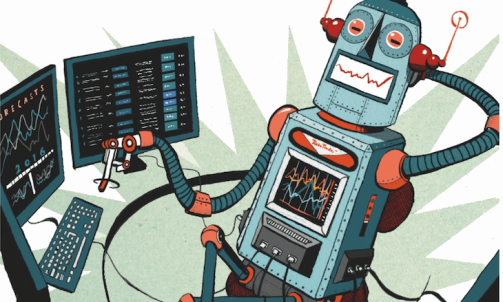
In closing, I see that artificial intelligence will be used to help process applications and identify common themes. Apparently, AI tools will only be used in a limited capacity and supervised by staff at the Office of Arts. As artists submit to the bureaucracy, I wonder how many of those staff will be replaced by new forms of intelligence as the next cultural policy review swings around and what species of artists they will be advocating for?