If there’s one message out of our current oil crisis, it is that we still live in a fossil-fuelled world.
Despite years of climate targets, we burn oil, coal and gas for two-thirds of Australia’s electricity generation and 90 per cent of our total energy consumption.
The debacle in the Straits of Hormuz shows that without fossil fuels not only can’t farmers plough, sow, and harvest, but they can’t fertilise either. Hydrocarbons give us plastics, pharmaceuticals, and explosives. They’re the tyres on every electric vehicle. Without them, there is no modern life and no energy transition.
Some of us are lucky enough to live in Queensland where the Crisafulli government has put energy security and reliability up front and centre, almost alone amongst governments in Australia.
First, they announced that they wouldn’t be putting reliability and cost front and centre for electricity and wouldn’t retain coal-fired power stations for as long as needed.
Their latest move is to accelerate development of the Taroom Trough, an oil region with the potential to significantly enhance Australia’s fuel security and self-sufficiency.
This doesn’t just bring energy security but adds to financial security as well.
Queensland’s ability to respond to a crisis has been hamstrung by wasteful decisions made by the previous Labor administrations which saw Queensland’s debt since 2015, Labor’s first year, explode from $74 billion to $147 billion now.
This debt mountain will need to be cleared sometime and revenue from natural resources must be a significant contributor.
But politicians everywhere else appear to have missed the memo. The Commonwealth Grants Commission penalised Queensland $5 billion for raising record sums from coal.
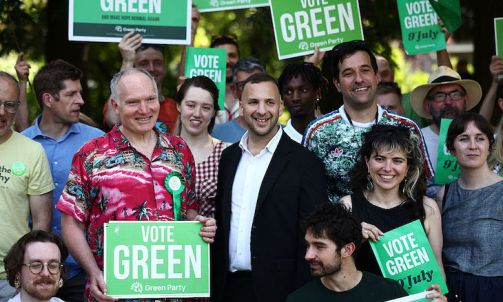
And the Greens, along with some Teals and Labor allies, are fighting to shut down the hydrocarbon industries.
The latest gambit in this war is the ‘Senate Select Committee on Taxation of Gas Resources’.
It’s the tip of the spear of a campaign that has been run for some years now.
Campaigners say Australia is giving its gas away to multinationals who do not pay royalties or Australian tax. It is boosted by a claim that the Commonwealth government subsidises the fossil fuel industry to the tune of $14.5 billion.
These claims have been advanced most strenuously by institutions and embraced by people on both the left and the right.
For example, one mining giant has been running strip ads on the bottom of a mainstream newspaper calling for a 25 per cent export tax on gas.
It is our view that this is assertion is not accurate.
All companies that extract gas either pay royalties if they are in a state’s jurisdiction, or the Petroleum Resource Rental Tax (PRRT), if they are in the Commonwealth’s, with the exception of the 50-year-old North-West Shelf development which pays royalties to the Commonwealth.
Last year Queensland received $1.7 billion in petroleum royalties most of which is from gas converted into liquefied natural gas. In 23-24 the Commonwealth received $1.5 billion in PRRT.
When the gas companies make profits they also pay company tax. Woodside, for example, paid $1.7 billion tax in 23-24. Shell paid $990 million, Chevron $3.5 billion.
In total, foreign gas companies paid $7.5 billion in company tax on $26 billion of profit.
As for subsidies, the Productivity Commission calculates these to amount to only $446 million for the entire mining industry, not just fossil fuels, 3 per cent of the exaggerated claim.
There is also a framing that because Norway has a different tax system and appears to reap more from their gas, then we should copy Norway. Norway’s gas is cheaper to extract, so there is more profit to play with. The Norwegian government is also the owner of 49 per cent of the oil production, so they get 100 per cent of half before taxing the other half.
They also subsidise oil companies. If a company drills a well that doesn’t hit oil or gas the government returns them 78 per cent of the cost.
The real measure of whether we are getting ripped-off is whether the return on Aussie gas projects is better or worse than those overseas. The answer to that is that our projects give a return on invested cash (ROIC) in the range of 5-8 per cent, depending on the project. Norway is 6-10 per cent. So, on an apples-to-apples comparison, despite a higher tax rate, Norwegian miners do better.
The litany of lies paves the way to the choke – the 25 per cent export tax. This is cast as rectifying bad deals done by previous politicians (who are also alleged to be corrupt) to give ‘us’ fair value for the resources we ‘own’.
If such a tax were implemented, it is our opinion that it would have a devasting impact on gas giants.
This might not directly affect Taroom, but it would hurt Queensland, and the pressures behind it, and the irrationality underlying it, along with the strong campaigning skills of hydrocarbon opponents will have an impact.
For the moment the federal government has ruled out any export tax, but then, they ruled out changes to negative gearing and capital gains.
Irrespective of any potential tax, it also moves the debate further in the abolitionist direction. When Queensland Senator Murray Watt reformed the Environmental Protection and Biodiversity Conservation Act to fast-track approvals, it was for renewables, critical minerals and some infrastructure. Hydrocarbons were left in the slow lane, even though we’ve just discovered they are the most critical minerals of all.
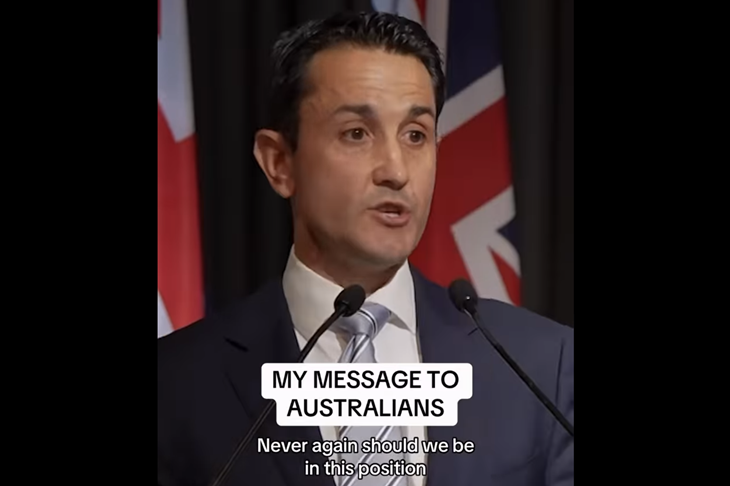
If Australia is going to fix its security problems, then Queensland’s David is going to have to slay some federal and environmental Goliaths. In the worst security situation since the second world war let’s hope he succeeds.