Australia faces its most uncertain strategic environment since the end of the second world war. In such times, governments must think carefully about sovereignty, security, and control of critical infrastructure.
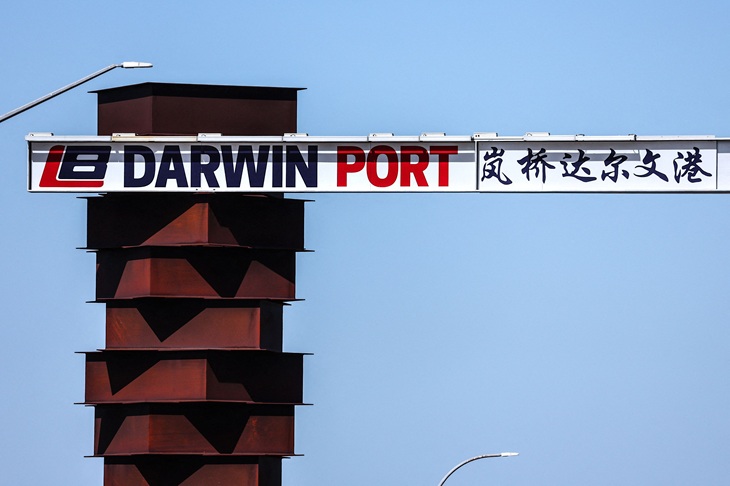
Few assets illustrate that challenge more clearly than the Port of Darwin.
The port sits at the northern gateway to the Australian continent and at the doorstep of the Indo-Pacific. It is our closest major port to Southeast Asia and lies adjacent to vital defence infrastructure, including facilities used by the rotational deployment of United States Marines. Geography alone makes the Port of Darwin strategically significant.
Yet in 2015, the Northern Territory government leased the port to the Chinese-owned company Landbridge for 99 years. At the time, the arrangement was defended as a straightforward commercial transaction. The argument was that the port required investment and that private capital would deliver it.
That explanation belongs to a different world order.
Over the past decade, the Indo-Pacific has become the centre of global strategic competition. Supply chains have become instruments of geopolitical leverage. Critical infrastructure can no longer be viewed solely through an economic lens. Rather, we must think about our infrastructure through the realities of national security and regional stability.
Nothing sits more squarely within that equation than the Port of Darwin.
The Port of Darwin is particularly sensitive because of its closeness to Australian and allied defence infrastructure. It sits beside a naval base and near facilities supporting the rotation of US Marines through northern Australia. In strategic terms, it occupies one of the most consequential locations on the continent.
No serious nation would willingly allow such infrastructure to remain under long-term control of a foreign-owned entity linked to an authoritarian regime that is actively reshaping the global rules-based order in ways that do not align with Australia’s interests.
This is not a general argument against foreign investment. Australia has long benefited from international capital and open markets. Mines, farms, and commercial property have attracted global investors for decades. That openness has been a strength and has brought a standard of living that is the envy of the world.
But critical infrastructure is different.
There are certain assets that underpin national resilience: energy systems, telecommunications networks, ports, and transport corridors. When those assets intersect directly with defence capability, the calculus must change. Sovereign control becomes essential.
This is a lesson we are learning now more than ever. Recent events have underscored how fragile global energy supply can be. The disruption in the Strait of Hormuz, a chokepoint through which a significant portion of the world’s oil supply flows, has brought into sharp focus Australia’s vulnerability to fuel shortages. As a nation heavily reliant on imported refined fuel, any sustained disruption has immediate and serious consequences for transport, industry, agriculture and defence readiness.
If Australia is to respond by rebuilding its domestic fuel refining capacity, and it should, then the infrastructure that supports that capability must be unquestionably secure.
Ports will be central to that effort. The movement of crude, refined product, and associated logistics all depend on reliable, sovereign-controlled gateways.
In that context, the Port of Darwin takes on even greater importance.
Many of Australia’s allies have already recognised this shift. Governments across North America, Europe, and Asia have strengthened scrutiny of foreign ownership in strategic sectors. Infrastructure once treated as purely commercial is now assessed for geopolitical risk.
Australia should show the same clarity and foresight.
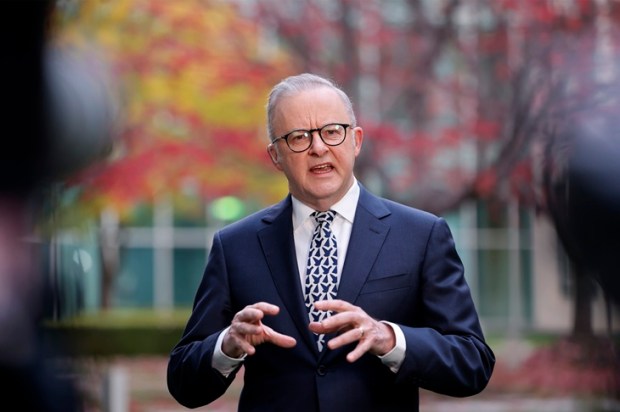
The Prime Minister, Anthony Albanese, recently posted on X about his discussions with China. He was silent on the Port of Darwin and Albanese’s silence in the face of foreign aggression is well known.
This need not be confrontational. It can be achieved through commercial negotiation, potentially involving Australian infrastructure funds or domestic investors. The objective is not to disrupt trade, but to ensure that control of critical infrastructure aligns with our national interest.
Such a step would remove an unnecessary strategic vulnerability while preserving the port’s commercial function. More importantly, it would ensure that its operation is fully aligned with Australia’s defence planning, energy security, and sovereign priorities.
The Port of Darwin has sat in foreign hands for too long. Returning the port to Australian hands is a vital strategic step and cannot be postponed any longer.
Senator Blyth is the Shadow Assistant Minister for Defence Infrastructure and President of the Liberal Party (SA Division)