Several things can be true at once.
A majority of Australians, as suggested by the Voice to Parliament referendum, disagree with ‘Welcome to Country’ utterances outside tourist settings.
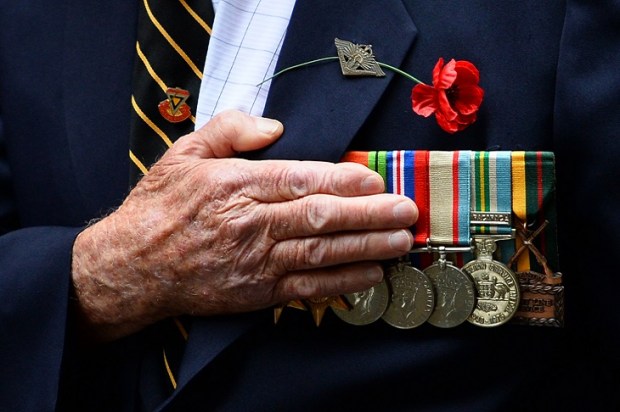
Perhaps even more Australians find ‘Welcome to Country’ particularly abrasive, even insulting, when issued as part of an Anzac Day memorial.
Others are simply exhausted by the messaging on every flight, website, government building, corporate email, and school address…
It is also true that the ‘Welcome to Country’ performance is part of a larger, racially-charged activist movement that includes a shadow-Parliament, enshrined racial privilege, the assumption of inherited legal authority over the land, and special exemptions and status in various parts of government. Even the justice system openly nods to Aboriginal heritage.
‘Welcome to Country’ is tangentially attached to the ‘Land Back!’ movement which brandishes disturbing slogans such as ‘Pay the rent!’ and the ‘Colonies must fall!’ Some of its enthusiasts drench their hands in red paint during marches and carry signs that, arguably, meet racial incitement and hate thresholds.
Graffiti and vandalism of this nature have been directed at colonial-era statues and war memorials, including on the eve of Anzac Day in which an RSL was defaced and several memorials in Victoria desecrated. Other culturally important figures, such as Captain Cook, have had their statues beheaded or cut apart without charges being laid. Something that has not gone unnoticed.
It is also true that politicians and activist groups, often publicly funded, use this wider political movement for their own purposes. It comes at us politely with ‘Welcome to Country’ and conceals a darker legislative and ideological side which attends our elections as a divisive campaign strategy.
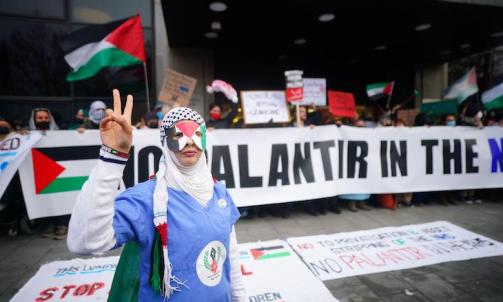
Parts of this ideology have attached themselves to the pro-Palestine movement, merging their slogans into, ‘From the river to the sea, always was always will be Aboriginal land…’ which has been equally, if not more, vile in its aggression toward Australian history and the memory of our war dead.
Keep in mind, Palestine is governed by a recognised Islamic terror group that preaches genocide against its neighbour which it views as a coloniser and settler. This same rhetoric is then directed toward the Australian population who remember what happened on October 7. The suggestion is horrific and yet the academic and political class refuse to acknowledge its implication and how it might make Australians feel to see it shouted on the streets.
That is not to say any particular person giving any particular ‘Welcome to Country’ over the Anzac Day weekend has involvement with the wider activist story, but rather that ‘Welcome to Country’ exists in this cultivated political world which every person listening to a ‘Welcome to Country’ is aware of. They have heard these slogans, seen the signs, and been the victim of aggressive equity policies.
These are Australians who are told they have no sacred connection to land and should ‘go back to England’ (despite being born here). Australians have had their ancestors falsely painted as rapists and murders, watched educational institutions tear out the pages of history and replace them with propaganda, been told they are ‘privileged’ because of their skin colour rather than the sacrifices they made, and have been openly discriminated against by society because they can’t tick a minority box.
These people don’t like being reminded of aggressive race activism when they are trying to peacefully remember their dead.
Many agree it is neither the time nor the place. Others would point out that it is impolite to push shades of coloniser rhetoric when remembering those young men and women who died to keep Germany and Japan from violating Australian sovereignty in two wars where those so-called colonisers bore a disproportionate blood cost compared to those who now live here thanks to their sacrifice. Sombre respect is all that is asked on Anzac Day.
And so yes, from a distance, some may feel a general sympathy for booing ‘Welcome to Country’ as a peaceful and democratic objection to ideological posturing politicians refuse to put to a public vote.
Most also understand that booing anything within an Anzac Day memorial is inappropriate.
This is because Australians were raised with strict moral codes and manners that allow them to set aside their deep unhappiness with ‘Welcome to Country’ for the sake of their ancestors. There are other days to fight.
Now, for the difficult part, another truth which risks derailing any sensible and valid attempt to dismantle ‘Welcome to Country’ in the future.
A poisoning of the well.
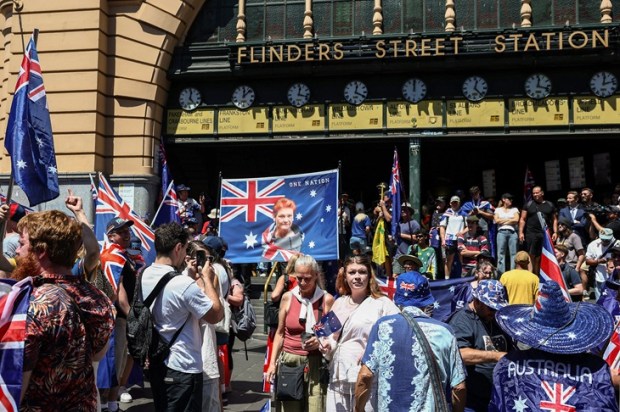
At least some of those who instigated the booing at various ceremonies, as with last year, have connections to unsavoury political movements. Their actions were pre-planned on social media. They said so on their Twitter Spaces and Telegram chats. It is alleged, or perhaps suspected, that the booing is, in some cases, part of raising attention for their movement rather than an organic reaction to ‘Welcome to Country’. Others were stopped from attending by police. These groups are known, as are their beliefs, which stand as an affront to the memory of the Anzacs.
This muddies the water considerably for politicians wishing to comment.
While many conservatives may agree with their voters when it comes to scrapping ‘Welcome to Country’ across a range of ceremonies, it does not mean they associate with the individuals behind the booing or their activism.
Nor does it mean that if you disagree with ‘Welcome to Country’ that you must also subscribe to the beliefs of this group.
Allow me to make it clearer, it is a similar situation to what faced the Let Women Speak rally in Victoria which was gatecrashed by scoundrels. Did their presence invalidate biological rights for women? No. Did their association mean those involved in the rally, or supported the rally, were part of the same movement as the gatecrashers? No. While that incident was easier to explain, the same thing has happened here at the Dawn Service. It was just better camouflaged. Mainstream media know this. They leave out the detail on purpose.
Given this, it is perfectly reasonable to condemn the individuals who booed while supporting the ‘right to boo’ of those who express their displeasure with ‘Welcome to Country’ events on planes, at sporting matches, or a myriad of other gatherings where it simply should not be happening. These are all reasonable places for democratic opposition. Certainly, other activists are not quiet about their views, are they?
Being able to separate out the behaviour of fringe activists from the wider cause is going to become critical going forward.
We have seen groups hijack genuine grievance and kernels of truth as a way to grow their movement in a sanitised way among people who have no idea what the full scope of these beliefs might be.
Just as many young leftists cannot name the river or the sea and have never read Hamas doctrine, conservatives do not understand what some of these people mean when they say ‘patriotism’.
It is with enormous sorrow that I say that many conservative words and causes have been poisoned by these groups, cheered on by the left-wing media, and allowed by the ambivalent right who either don’t know or don’t care that it’s happening.
With that in mind, let us set aside the specific acts of heckling and booing that took place on Anzac Day and instead talk about whether or not ‘Welcome to Country’ has a place on the stage.
Flat White is written by Alexandra Marshall. If you would like to support her work, shout her a coffee over at donor-box.