Losing one energy source may be misfortune. Losing two is carelessness. And losing three is alarming if you’re the world’s third biggest industrial nation. But to endanger your fourth energy source, the one that’s supposed to replace the first three, seems akin to a death wish. Amazingly, this is where Germany is now heading with its bungled energy transformation, or Energiewende, which some Germans still bizarrely insist is a model for the world.
In the mad rush for net-zero by 2045, nobody gave much thought to back-up conventional power plants
The first energy source to be axed was Germany’s nuclear fleet, which used to supply over 30 per cent of the nation’s electricity. The last nuclear plant closed in 2023, following decades of anti-nuclear campaigning and legislation by the Greens. The closedown timetable was first slowed under Christian Democratic Chancellor Angela Merkel and then abruptly speeded up after the 2011 Fukushima disaster.
The second source getting the chop are coal-fired power plants. Many are already shuttered or have reduced operations and the last coal plant will close no later than 2038.
Production of Germany’s third, potentially major, energy source, hydraulic fracturing, or fracking, of natural gas, has been mostly banned under a 2017 Merkel-era law. Nobody really knows how much fracking gas Germany could produce, because it’s not worth doing the geological research, but it’s estimated up to 20 years of total, current annual gas needs might be supplied from domestic fracking. Others say fracking could supply a quarter of long-term annual gas demand.
Now, the fourth energy source, the white knight of renewables that was supposed to replace all of this, is lurching into crisis as feed-in payments for green electricity plummet, costs skyrocket and crucial power lines and battery storage aren’t built.
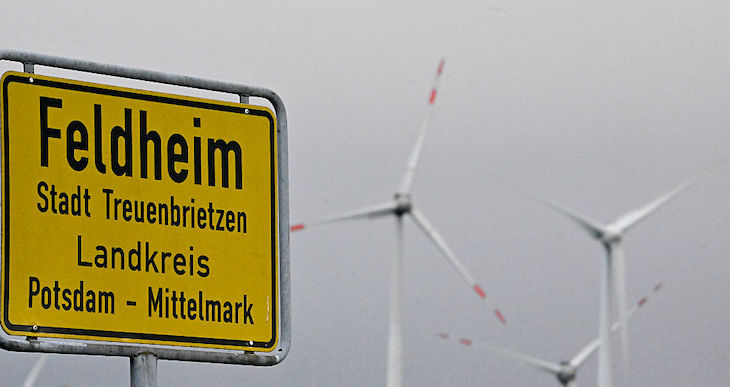
I have been attempting to establish a wind farm with my neighbours in Brandenburg state for the past six years. Glacial bureaucracy is still blocking approval of the 15 wind turbines. But electricity price cuts may kill it.
The company building the wind farm suddenly told us we must accept 80 per cent less revenue than contractually agreed. Our response is “get lost” – no land owner will accept peanuts for disfiguring their property. The revenue cut won’t just hit landowners but also our cash-strapped local government.
“Up to two-thirds of all renewables projects currently being planned in Germany may never be built,” said the chief financial officer of the company, whom I cannot name due to compliance reasons.
He has an interest in making things look bad to get us to accept less money, but my lawyer confirms Germany’s renewables crisis. “Everybody is being hit by demands to renegotiate contracts,” says Potsdam-based Ulrich Böcker.
Along with sinking electricity feed-in payments, renewables are suffering from a rise of at least 20 per cent in the cost of wind turbines, along with far higher interest rates than a few years ago. Many wind energy projects in Germany are 100 per cent debt-financed.
The German renewables transformation is also failing to build urgently-needed power lines from the wind-rich north to the energy-hungry south of the country. And talk about deregulating planning for crucial battery storage plants remains mainly talk. Nothing has happened on two battery projects I signed up for last year.
“The planning law approval process for battery storage is currently the main bottleneck for expansion,” says a report by BB Göttingen, a consultancy for renewable energy and agriculture. As usual, German red-tape strangles even politically-supported strategic national projects.
You might think that given all this the German government would consider reversing past energy decisions. But you would be wrong.
Christian Democrat Chancellor Friedrich Merz admits that closing nuclear power stations was a mistake but he rejects reversing the decision, even though it’s technically possible to restart some of the shuttered nuclear stations.
What about fracking for gas? Merz’s answer is a stern “nein.”
Regarding coal-fired power plants, the most Merz will say is that the 2038 shutdown deadline is “unrealistic.”
If these plants operate longer, where might coal come from? Not from Germany. Brown coal strip mines, such as the huge Hambach field in North Rhine-Westphalia, are being flooded. The stated goal is to create a lake. The unstated goal is to make it physically impossible to mine coal in the future. Germany’s Federal Institute for Geosciences and Natural Resources estimates there’s enough coal to provide all of the nation’s electricity for the next 150 years.
The tragedy of Chancellor Merz is that while he may be a reformer at heart, his Christian Democratic bloc won the 2025 election with a lousy 28.6 per cent and is now trailing the number-one placed nationalist-right Alternative for Germany (AfD) in opinion polls.
Merz has no electoral mandate for big energy or economic reforms, and these are rejected by his struggling Social Democratic coalition partner and even by the wets in his own CDU and Bavarian CSU branch.
The tragedy of Germany is that its allies are noticing how deeply unreliable a partner it is. Berlin has made massive policy blunders over past decades – based on a desire to be morally clean – that are utterly devoid of strategic logic. Think about relying on Vladimir Putin for energy; depending on China for your exports; believing that Donald Trump will defend Europe; hollowing out Germany’s armed forces; and Chancellor Merkel’s opening of the borders in 2015 to any and all migrants.
Glacial bureaucracy is still blocking approval of the 15 wind turbines. But electricity price cuts may kill it
But it’s the energy transformation debacle that wins the prize. It relied on cheap Russian gas – now gone; the closing down and banning of nuclear- gas- and coal-based domestic energy production; making net-zero the Holy Grail of country that grew rich on cheap, plentiful energy; and a belief that covering the nation with windmills and solar parks can power Europe’s biggest economy.
In the mad rush for net-zero by 2045, nobody gave much thought to back-up conventional power plants needed for German winters when there’s no wind or sun, the so-called Dunkelflaute. Germany needs base load continuous electricity on demand that wind and solar can’t always provide. Gas power plant tenders are only being invited this year. Given German bureaucracy, God knows when they will be built. And they are getting billions of euros in subsidies because no private investor will build a power plant that’s not allowed to run 24/7.
Oh, and also blithely dismissed is the idea that having the most expensive electricity in the European Union might just be a tiny problem. Who cares if electricity in Germany is now four times as expensive as in France? Well, Germany industry for starters. A few big users of electricity, including the steel, cement and chemicals industry squealed so loudly that they’re getting state-subsidised electricity worth 3.8 billion euros (£3.3 billion) from 2026 to 2028.
For the rest of Germany’s industry, tough luck. Man-up and get on with it.
Bavaria is Germany’s business powerhouse and a report by the Bavarian Industry Association is blunt: “High energy prices remain a key competitive disadvantage for Germany as an industrial location.” A survey of members in Germany’s Machinery and Equipment Manufacturers Association (VDMA) reveals 40 per cent of all companies are thinking about moving manufacturing abroad.
German industry is in a five-alarm fire
German industry is in a five-alarm fire. Some 300,000 industrial jobs have been lost since 2019, with a further 150,000 likely to vanish this year, warns Gesamtmetall, Germany’s Employers’ Association in Metal and Electrical Engineering.
It might behoove Chancellor Merz to look at the energy policies of Germany’s two global industrial peers: No. 1 ranked USA and No. 2 ranked China.
U.S. electricity is 43 per cent from natural gas, 21 per cent renewables, 19 per cent nuclear and 16 per cent coal. China’s is 60 per cent coal, 32 per cent renewables, 5 per cent nuclear and 3 per cent natural gas.
Germany may have produced 57 per cent of its power from renewables last year – but at massive cost to its economy. Weaning itself off the last 43 per cent of coal, natural gas and oil will come at a devastating price. Some estimates show the energy transformation costing 5 trillion euros (£4.3 trillion) by 2045.
With just 19 years until Berlin’s binding net-zero deadline, one is reminded of the German remonstrance for measures that are carried out correctly from a technical standpoint – but have catastrophic consequences: Operation gelungen, Patient tot – Operation successful, patient dead.